You can sell a house in Michigan without a single showing, open house or strangers walking through your rooms. The most direct way is to sell to a cash buyer who makes an offer based on the address and the condition you describe. On HouseGoodbye, several vetted local buyers bid on the same house, so you see competing as-is offers without listing, staging or cleaning.
TL;DR
- Cash buyers buy as-is, so there are no public showings, open houses or repair lists.
- Listing the home privately with an agent (a “pocket” listing) can cut showings, but rules limit how long it can stay off the MLS.
- Compare more than the headline number: timeline, contingencies, fees, and any debts that come out of your proceeds.
- Michigan sellers of one to four unit homes generally owe the buyer a written disclosure, with some exemptions such as estate and foreclosure transfers.
- With HouseGoodbye, multiple buyers bid against each other, you see every offer, and you can walk away if none work.
Table of Contents
- Why sellers want to skip showings
- Your options for selling without showings
- How selling to a cash buyer works, step by step
- How to compare cash offers, not just prices
- What about Michigan’s seller disclosure rules?
- Who benefits most from a no-showing sale
- Ready to see offers without a single showing
- Practical tips before you take offers
- FAQ
- Sources
Why sellers want to skip showings
Showings are the part of a traditional sale that people dread most. You clean the house on short notice, leave while strangers open closets, keep pets out of the way, and repeat it for weeks. If the home is vacant, damaged, full of an estate’s belongings, or occupied by a tenant or a spouse in a difficult divorce, each showing is harder still.
The reasons we hear most from Michigan homeowners:
- Privacy. Probate, divorce and foreclosure are not things you want advertised on a listing with photos of every room.
- Condition. Fire or water damage, code violations, or years of deferred repairs make a public showing uncomfortable and often unproductive.
- Time. Job loss, relocation or a foreclosure clock leaves no room for months of open houses.
- Distance. Heirs who live out of state cannot be there to unlock the door every time someone asks to see the house.
- Hassle. Some people simply do not want to leave the house tidy at 8 a.m. for a stranger.
The good news is that there are several legitimate ways to sell without showings. They are not equal, so it helps to know how each one works.
Your options for selling without showings
Sell to a cash buyer as-is
A cash buyer is an investor or company that pays with its own funds rather than a mortgage. Because there is no lender to satisfy, there is no lender-driven appraisal or repair demand, and the buyer prices the house in its current condition. You share the address, basic details and photos or a short walkthrough if needed. The buyer returns an offer. Your involvement ends at “yes” or “no.”
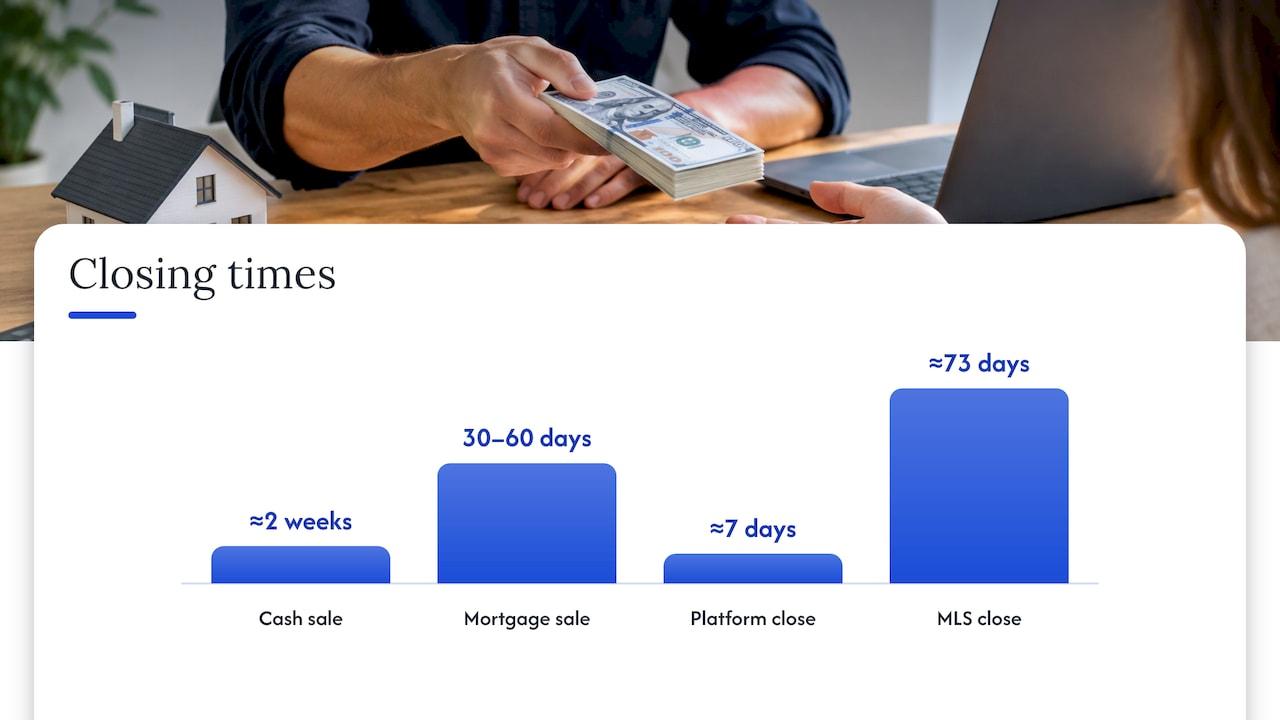
Zillow’s guidance on cash sales notes that a cash sale can often close in about two weeks, compared with the 30 to 60 days it typically takes when a mortgage is involved, because you deal directly with a buyer who already has the money. On our platform the typical close is about 7 days, versus roughly 73 days on the MLS.
That speed and convenience has a trade-off worth understanding. ProPublica reports that in exchange for speed and convenience, the buyer gets the house at a discount, and will likely repair and resell it, rent it, or assign the contract. That is exactly why we built a marketplace rather than a single buyer: when several investors compete for the same house, you get to compare numbers instead of accepting the only one on the table.
Sell privately through an agent (pocket or off-market listing)
A pocket listing means an agent markets your home privately to a select group of buyers instead of posting it publicly. Showings still happen, just fewer of them and by appointment. It also comes with rules. AmeriSave explains that the National Association of REALTORS® Clear Cooperation Policy requires members to submit a property to their local MLS within one business day of marketing it publicly, so private listings are far more regulated than they used to be.
Off-market sales are not necessarily worse for sellers on price. A March 2026 study reported by The Real Deal found that homes never put on the MLS sold for 1.7 percent more than comparable MLS-marketed homes, because sellers avoided the open market’s downward negotiation. Skipping the public listing is a recognized path, not a last resort.
Still, a pocket listing depends on an agent finding a buyer in a network, which can take time, and it usually carries an agent commission. If your priority is certainty and speed, direct cash offers are more predictable.
Sell for sale by owner with private showings only
You can list yourself and limit access to pre-screened buyers. That cuts casual visitors but still means you host showings, negotiate, and manage the paperwork. It suits people with time and a move-in-ready house, not people facing a deadline or dealing with a damaged property.
Quick comparison
| Route | Showings | Repairs expected | Typical speed | Commission |
|---|---|---|---|---|
| Cash buyers on HouseGoodbye | None required | No | About 7 days to close | $0 in agent commissions |
| Pocket or off-market agent listing | Fewer, private | Often negotiated | Depends on finding a buyer | Agent commission usually applies |
| For sale by owner | You host them | Often negotiated | Varies widely | None to a listing agent, but you do the work |
| Traditional MLS listing | Many, including open houses | Often requested after inspection | About 73 days on the MLS | Agent commissions apply |
How selling to a cash buyer works, step by step
The process is short, and nearly every step happens by phone, email or online. Zillow’s outline of a cash sale lists the main stages: assessing value, finding a buyer, comparing offers, verifying proof of funds, signing a purchase agreement, working with a title and escrow company, handling any inspection contingency, and signing closing documents. Here is how that looks on HouseGoodbye.
- Enter your address. Tell us the property’s location and condition. Include the hard parts: foreclosure, tenants, code violations, fire or water damage, a probate case.
- Receive competing offers. Vetted local cash buyers bid on your house. You see every offer side by side, with no obligation to accept any of them.
- Compare the terms. Look at the price, the closing date, the contingencies and any costs on your side. Our competing cash offers page explains how the bidding works.
- Choose a buyer or walk away. If no number works for you, you owe nothing.
- Sign the purchase agreement. The buyer’s earnest money goes into escrow with a title company.
- Close. A title company checks the title, prepares the documents, and pays you at signing. Our guide to the cash closing process walks through what to expect at the table, and why cash sales close faster explains where the time savings come from.
None of these steps requires you to open your door to the public. A buyer may ask for a quick walkthrough or photos to confirm condition, but that is one visit by one party you have already chosen, not a parade of strangers.
How to compare cash offers, not just prices
The highest number is not always the best offer. Zillow advises comparing the closing timeline, contingencies, seller costs and the buyer’s reputation alongside the price. When offers arrive, put them in a simple grid.
| What to check | Why it matters |
|---|---|
| Offer price | Your starting number before any deductions |
| Closing date | Matters if you face a foreclosure date, a move or carrying costs |
| Contingencies | Fewer conditions means fewer ways the deal can slip |
| Costs on your side | Closing costs, back taxes, liens or utilities that reduce what you walk away with |
| Proof of funds | Confirms the buyer can actually close |
| Earnest money | Shows commitment; Zillow says it is typically 1 to 2% of the sale price, held in escrow |
On proof of funds, Zillow suggests asking for a recent bank statement, a letter from a financial institution, or proof of investment-account liquidity before you accept. Every buyer on our marketplace is vetted, and you will still see these documents as part of a normal purchase agreement.
Know what comes out of your proceeds
Your net matters more than the offer. ProPublica notes that debts owed on the property, including mortgage liens, overdue water bills and delinquent property taxes, can be subtracted from the final price, and that a title report, which costs roughly $50 to $250, can reveal hidden debts. Ask for a net sheet from each buyer showing what you would receive at closing. Offers with the same headline price can leave you with very different amounts.
If your house has a roof problem, you may wonder what it would cost to fix before selling. A homeowner’s guide to roof inspection before repairs explains what an inspector looks at and why the findings should come before any repair decision. With an as-is cash sale you do not have to make those repairs to sell, which is the point: the buyer prices the condition in.
What about Michigan’s seller disclosure rules?
Skipping showings does not skip the paperwork. In Michigan, sellers of residential property with one to four units must give the buyer a written disclosure statement before the purchase agreement is signed. Delivering it late may let the buyer terminate, and leaving out known problems can lead to a fraud claim.
Some transfers are exempt. Nolo lists exemptions that include transfers by court order such as probate, foreclosure sale or bankruptcy, certain transfers in estate administration, and transfers to a spouse, parent, child or grandchild, under Michigan Compiled Laws § 565.953. Whether your sale qualifies depends on your facts, so confirm with a Michigan real estate attorney or title company. For a plain-language walkthrough, read our guide to Michigan seller disclosure and Act 92.
Who benefits most from a no-showing sale
Homeowners behind on the mortgage or facing foreclosure
Time is the main constraint. In Michigan, the redemption period after a foreclosure sale is six months if you owed more than 66⅔% of the original loan, or one year if you owed less, and shorter if the home is abandoned. Selling before the sheriff’s sale can protect your equity and your credit. Read our guides on stopping foreclosure in Michigan and the sheriff sale timeline, or go straight to our page for selling to avoid foreclosure.
If you would rather keep the house, ProPublica suggests starting with the Homeowner Assistance Fund, HUD-sponsored housing counseling agencies, or a legal aid office. A conversation with a housing counselor or legal aid attorney before you sign anything gives you a fuller picture of your options. If you are behind but not yet in foreclosure, see our page on selling a house behind on the mortgage.
Heirs selling an inherited or probate house
An inherited house often needs to be emptied, cleaned and repaired before a regular listing, and that is hard when you live elsewhere. A cash sale lets you sell with the contents and condition as they are. Probate adds its own steps, such as getting authority from the court, so start with our guide to selling a house in probate in Michigan and our page for selling an inherited house.

Owners of vacant, damaged or code-violation properties
Vacant houses are expensive to carry: taxes, insurance, utilities and the risk of break-ins or weather damage. Fire and water damage, deferred maintenance and open code violations make the house hard to show and hard to finance. Buyers who pay cash and buy as-is can price those problems in. See our pages on selling a vacant house, a house with code violations and a fire or water damaged house.
One more point about condition. Buyers using a mortgage often face lender requirements about the home’s condition. FHA-backed purchases, for example, come with roof inspection requirements that buyers need to understand. A cash buyer is not working through a lender’s checklist, which is one reason as-is homes move faster this way.
Divorce and rental sales
When two people must agree on a sale and neither wants strangers in the house, a single private offer process helps. Landlords with tenants in place can avoid disrupting tenants with showings. We cover both on our pages for selling during divorce and selling a rental property with tenants.
Our perspective
Most people who ask us about selling without showings are not trying to be difficult. They are tired, short on time, or dealing with a house that is not ready to be seen. Our view is that they should not have to pick between a stranger-filled listing and a single investor’s take-it-or-leave-it number.
That is why we built HouseGoodbye as a marketplace. Vetted local buyers bid against each other on the same house, you see every offer, and you decide. There is no listing fee, no agent commission and no repair list. If none of the numbers work, you walk away with no obligation.
Our advice is simple: ask for offers before you spend a dollar on cleaning, repairs or staging, compare the net you would take home as well as the price, and choose the closing date that fits your life. Selling should fit around your situation, not the other way around.
Bryan
Ready to see offers without a single showing
If you want to find out what buyers would pay for your house as it stands, start with your address. We bring vetted Michigan cash buyers to you, across Metro Detroit, Grand Rapids, Flint, Lansing and the rest of the state. You compare offers, and typical closings take about a week when you are ready.

There is no cost to you and no obligation. See cash offers for your house, or learn more about how selling as-is works. You can also read how the no-fee sale process works and why a cash offer means no staging costs.
Practical tips before you take offers
- Gather your paperwork. Have the mortgage statement, tax bills and any notices from the city or lender on hand. They help buyers price accurately and help you spot deductions.
- Be upfront about condition. Mention the roof, foundation, water damage, liens and tenants. Surprises later lead to renegotiation, and Michigan’s disclosure rules can apply to what you know.
- Pick your timeline first. Decide whether you need to close in days or want a few weeks to move, then compare offers against it.
- Ask who the title company is. The title company handles the funds and the documents, so you should know it before signing.
- Get advice when stakes are high. If you are in foreclosure, probate or a divorce, speak with a Michigan real estate attorney, a HUD-approved housing counselor or legal aid before you sign.
FAQ
Is it legal to sell a house without showings?
Yes. Nothing requires you to hold showings or open houses. A buyer can purchase based on the address, your description and photos, or one private walkthrough. You must still meet Michigan’s disclosure and contract requirements, and the title company handles the closing.
Will I get a lower price if I skip showings?
Not necessarily. A March 2026 study reported by The Real Deal found that homes sold without ever being on the MLS sold for 1.7 percent more than comparable listed homes. With a cash sale, compare the net amount you keep after costs, since you also avoid commissions, repairs and months of carrying costs.
How fast can I close without showings?
Cash sales are quicker because there is no mortgage underwriting. Zillow says a cash sale can often close in two weeks. On HouseGoodbye, the typical close is about 7 days, and you can choose a later date if you need more time to move.
Do I still need to disclose problems with the house?
In many cases, yes. Michigan requires a written seller disclosure for one to four unit residential property, with exemptions such as certain court-ordered and estate transfers, as Nolo explains. An as-is sale means you do not repair the house, not that you hide what you know.
Can I sell a house in foreclosure without showings?
Yes, if you sell before the foreclosure is completed and the buyer’s offer covers what is owed. Timing matters, so act early and speak with a housing counselor or attorney about your deadline. Our page on selling to avoid foreclosure outlines the process.
Sources
- Homes marketed off MLS get better prices, independent study finds (The Real Deal)
- Pocket Listing: What It Means for Home Buyers in 2026 (AmeriSave)
- How to Sell My House for Cash (Zillow)
- Want to Sell Your Home for Cash? Read This First (ProPublica)
- Selling a Michigan Home: What Are My Disclosure Obligations? (Nolo)
- Michigan Foreclosure Process: Laws, Steps, and Homeowner Rights (Nolo)
- The Role of Roof Inspection Before Repairs: A Homeowner’s Guide
- FHA Roof Inspection Requirements: What Buyers Need to Know