Run three checks before you take your house off the market: confirm the proof of funds directly with the issuing bank, confirm the buyer’s business registration and past closings in public records, and insist on a reputable title or escrow company, verifying any wiring instructions by phone. Consumer agencies like the CFPB back that last step. If you want several vetted offers at once, we offer that too.
TL;DR:
- Match the buyer’s legal name across the bank letter, offer, and state filing, then compare a redacted closing statement with county deed records.
- No recorded deeds are a reason to slow down, not automatic grounds to reject a new buyer; strengthen bank and title checks instead.
- Treat emailed wiring changes as untrusted; call the settlement agent using your own verified number, and contact your bank immediately if a wire goes astray.
- Stop if the buyer demands upfront fees, pressures you to transfer the deed early, or communicates only by email or text.
Table of Contents
- Step-by-step checklist to verify a cash home buyer
- How to check the buyer’s business records and reputation
- Verify past closings and transaction history in public records
- How to confirm the closing process and avoid wire fraud
- Red flags that should stop you in your tracks
- Exact documents to ask for before you sign
- When to involve a title company, attorney, or housing counselor
- A practical note from the author
- How we help you get multiple verified cash offers
- FAQ
- Sources
Step-by-step checklist to verify a cash home buyer
You can run the checks in order: proof of funds first, company second, title company third. Each step either ends the deal quickly or gives you confidence to continue.
- Request proof of funds. Ask for a bank letter or a bank confirmation showing the buyer can cover your price. Then find the bank’s phone number on its official website, call it, and confirm the letter is real and the signer works there.
- Check the company. Ask for the buyer’s legal business name and EIN or state registration number. Look up the business on your state’s Secretary of State website and compare the name and address.
- Check the title company. Ask which title or escrow company will handle closing. Find its number yourself and call to confirm it has the file and the buyer’s name.
- Decide. If any step fails or gets dodged, pause the deal.
What counts as acceptable proof of funds:
- A recent bank letter on letterhead with a named contact
- A bank wire confirmation showing the balance or a transfer
- Contact details for the issuing bank officer
Pro Tip: Never call a number printed on the letter itself. A fake letter can list a fake phone number, so always use the number from the bank’s own website.
Large deposits are normal in cash deals, and lenders typically verify the source of funds, so a legitimate buyer should not be surprised when you ask for documentation. For a deeper look at what a valid letter looks like, see our post on bank proof of funds.
How to check the buyer’s business records and reputation
A real investor leaves a paper trail. Spend a few minutes on public records and reputation searches before you trust a friendly voice on the phone.
Start with your state’s Secretary of State business search. Look for the buyer’s LLC or assumed name, and confirm that the filing is active and the registered address makes sense. A company formed last week with no history deserves extra questions.
Then work through these checks:
- Compare the name on the proof of funds, the offer, and the state filing. All three should match.
- Look for a local office or a real mailing address, and ask to meet in a professional office.
- Check whether the EIN appears on the buyer’s paperwork.
- Ask which title agent or closing partner the buyer uses, and whether it is listed on the buyer’s website.
- Search the company name plus “complaint” or “scam,” then check the Better Business Bureau and the FTC’s consumer alerts.
Meeting face to face matters. The FTC notes that scammers often avoid in-person meetings and push for speed and exclusively electronic communication, while a legitimate investor will typically meet you in a professional setting.
If a buyer cannot give you a legal name, a registration number, or a working address, treat that as your answer. Our guide on three checks before choosing a cash buyer goes further on what a solid buyer profile looks like.
Verify past closings and transaction history in public records
A buyer who says they close deals all the time should have deeds to show for it. County land records let you check that claim yourself, usually for free.
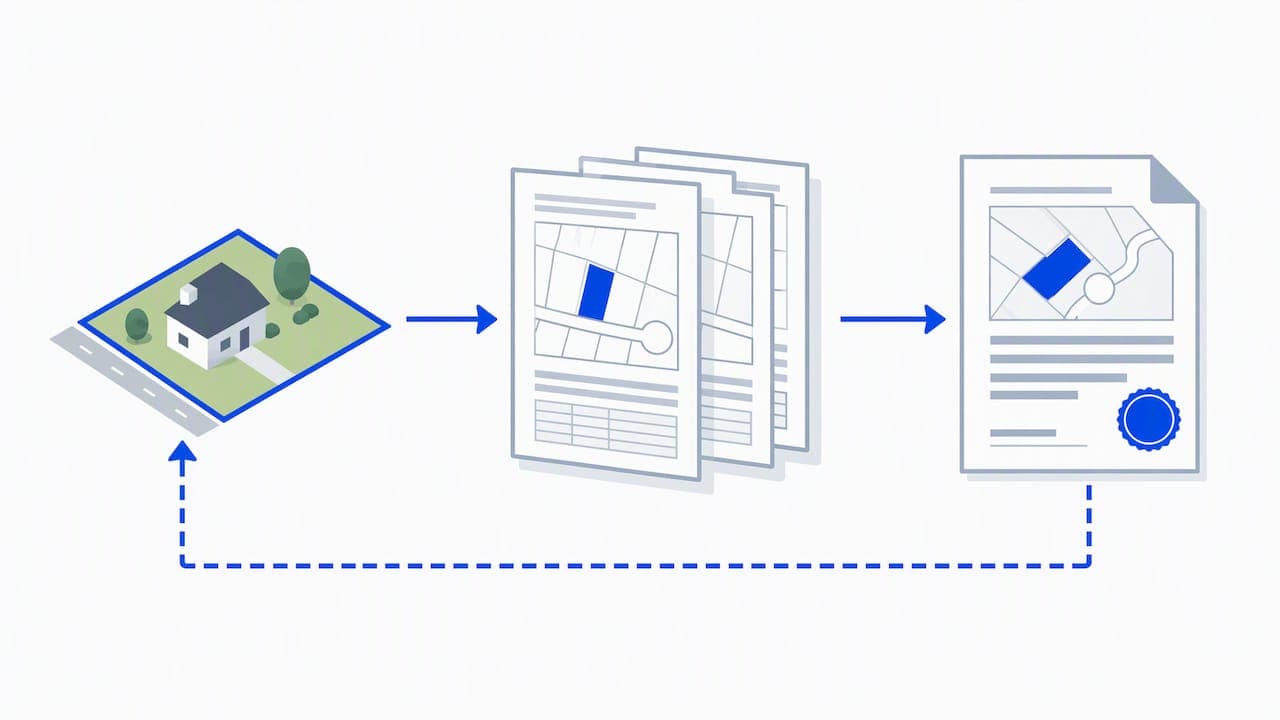
Search your county recorder or register of deeds website for deeds recorded in the buyer’s name or the buyer’s LLC. You are looking for recent purchases of similar homes in your area. A handful of recorded deeds over the past year is a good sign. Dozens may mean an active, experienced investor.
Then ask the buyer for a redacted sample closing statement from a past deal. Strip out the private details, but keep the property address and date. Look that address up in the land records and confirm the sale was recorded around that date.
- Search by the buyer’s name and by the LLC name, since many investors buy through an entity.
- Match sample closing statements to recorded deeds.
- Note the title company named on past deals and see whether it matches the one proposed for yours.
Pro Tip: Search a few variations of the company name, including abbreviations and “LLC” versus “Inc.” Land records are picky about exact spelling, and a missed match is not the same as no history.
If you find no recorded deeds anywhere, ask why. Some buyers are new, or they operate under another entity name. Others are not real buyers at all. Lack of history is a caution point, not an automatic disqualifier, but it is a reason to slow down and lean harder on the bank and title checks. You can also read how a title company fits into a fast sale.
How to confirm the closing process and avoid wire fraud
Most fraud in cash deals happens at the very end. A scammer slips in fake wiring instructions, and the money lands in the wrong account. The FBI’s Internet Crime Complaint Center reports that business email compromise actors frequently target real estate transactions by spoofing or hacking email accounts to send fraudulent wiring instructions.
Business email compromise is a 12 billion dollar scam, and real estate transactions are a frequent target.
Here is how to protect yourself at closing:
- Never rely on wiring instructions sent only by email or text. Call your settlement agent at a number you verified from a public source or the company’s official website.
- Name two trusted contacts, such as your settlement agent and your real estate or legal adviser, and agree in person or by phone on how payment will be handled.
- Set up a code phrase you can use to confirm identities if instructions change at the last minute.
- Ask your closing agent which forms of payment are acceptable, since closings typically use a cashier’s check or a wire transfer.
- After any wire, ask the title company to confirm receipt.
If something looks wrong after a wire goes out, call your bank immediately to ask for a recall and report it to IC3. Speed matters, because recalls are far more likely to work in the first hours.
The CFPB’s closing checklist also warns against emails with last-minute changes. For the full walkthrough, read how the cash closing process works.
Red flags that should stop you in your tracks
Some behaviors are enough to pause a deal on the spot. If you see any of these, stop and verify before you do anything else.
- Upfront fees. Legitimate investors do not ask for “administrative” fees, “tax” payments, or deposits before a sale. The FTC calls requests for money upfront a hallmark of scams.
- Pressure to move fast. Be wary of a buyer who rushes you to sign or asks you to transfer your deed before funds are verified and the title company records it.
- Deed transfer first. Sale-leaseback and overpayment schemes can leave you owing the mortgage while someone else holds title, which can end in eviction or foreclosure.
- Electronic-only contact. A buyer who will not meet or talk by phone, and who communicates only by email or text, is hiding something.
- Odd payment accounts. Instructions to wire money to an account unrelated to a title or escrow company are a serious warning.
- Hard-to-reverse payments. Scammers favor cashier’s checks, wires, and payment apps because they are difficult to undo.
See our breakdown of sale-leaseback traps for concrete examples of risky offers.
Exact documents to ask for before you sign
Keep this list handy when an offer lands. Each item has a quick way to confirm it.
- Proof of funds letter or bank confirmation: call the bank using the number on its official website.
- Buyer business registration: look it up on the Secretary of State site.
- Sample prior closing statement or Closing Disclosure: match the address to a recorded deed in county land records.
- Title company contact details: call the company yourself and confirm it has your file.
- Draft purchase agreement: read it fully, and have an attorney or title agent review it.
| Document | Fastest way to verify |
|---|---|
| Proof of funds | Call the issuing bank at its official number |
| Business registration | State Secretary of State search |
| Prior closing statement | County recorder or land records |
| Title company details | Independent phone call to the company |
Print this and check each box before you sign anything.
When to involve a title company, attorney, or housing counselor
Bring in a professional the moment something feels off. Call a title company or attorney if you are asked to transfer the deed before closing, if a buyer demands upfront fees, or if wiring instructions are unclear.
Before you hire anyone, check them out:
- Confirm an attorney’s license with your state bar and a title company’s license with your state regulator.
- Ask for local references and whether they handle cash closings regularly.
- Find their phone number yourself rather than trusting one a buyer gives you.
If you feel pressured or at risk of losing your home, a HUD-approved housing counselor can help at no cost, and you can report scams to the FTC. Another useful note: the FTC points out that a “title lock” service only monitors public records, and you can check your title yourself in state land records for free.
A practical note from the author
These checks work, and they are doable in an afternoon. I have seen how much calmer a sale feels when a seller has verified the bank, the company, and the title firm before signing, rather than hoping for the best. The biggest risk usually comes from depending on a single buyer who sets the pace. That is why we built a marketplace where several vetted investors bid, so you can compare real offers without repairs or agent fees and without one buyer holding all the leverage.
— Bryan
How we help you get multiple verified cash offers
We deliver multiple competing cash offers from vetted local investors, so you can compare real numbers and choose the highest, with no repairs, no agent fees, and no obligation. You sell as-is, and we aim for fast closings.

Start on our competing cash offers page, or head straight to Sell Your House Fast to see your next step. Curious how the process runs? Read how selling your house for cash works.
FAQ
How do you know if a cash buyer is legit?
A legitimate cash buyer can show verifiable proof of funds, a registered business, and a record of past closings. Confirm the bank letter by calling the bank directly, check the state business registry, and look for recorded deeds in county land records.
How do you show proof of funds when buying a house with cash?
A buyer typically provides a recent bank letter or a bank wire confirmation naming a bank contact. As the seller, call the bank at a number from its official website to confirm the letter and the signer.
Is buying a house in cash suspicious?
No, large deposits and cash purchases are common, and lenders typically verify the source of funds. What is suspicious is a buyer who avoids verification, pressures you, or asks for money upfront.
What should I confirm before closing a cash sale?
Confirm the title or escrow company independently, agree on a verification protocol with your trusted contacts, and never follow wiring instructions that arrive only by email.
Sources
- Risky business: offers to cash out your home equity through a “sale-leaseback” | Consumer Advice
- Mortgage Closing Scams: How to protect yourself and your closing funds | Consumer Financial Protection Bureau
- Mortgage Relief Scams | Consumer Advice
- Internet Crime Complaint Center (IC3) | Business E-mail Compromise The 12 Billion Dollar Scam