TL;DR:
- A title company is a licensed third party that verifies property ownership, manages escrow funds, and issues title insurance. Its efficiency determines how quickly a fast home sale can close, as title searches, document coordination, and claims resolution directly impact the timeline. Early preparation and choosing an experienced, proactive title company help prevent delays and ensure smooth, rapid transactions.
A title company is defined as a licensed third party that verifies legal ownership of a property, manages escrow funds, and issues title insurance to protect all parties in a real estate transaction. When you need to sell fast, the role of title company in a fast sale becomes the single biggest factor controlling how quickly you reach closing. Title companies perform title searches, coordinate document signing, and disburse funds, all in a precise sequence that either speeds your sale or stalls it. Understanding what they do, and how to work with them, puts you in control of your timeline.
What is the role of title company in a fast sale?

A title company acts as the neutral guardian of your property’s ownership record. It confirms you have the legal right to sell, clears any claims against the property, and holds funds securely until every condition of the sale is met. Without this function, no buyer, lender, or investor will proceed to closing.
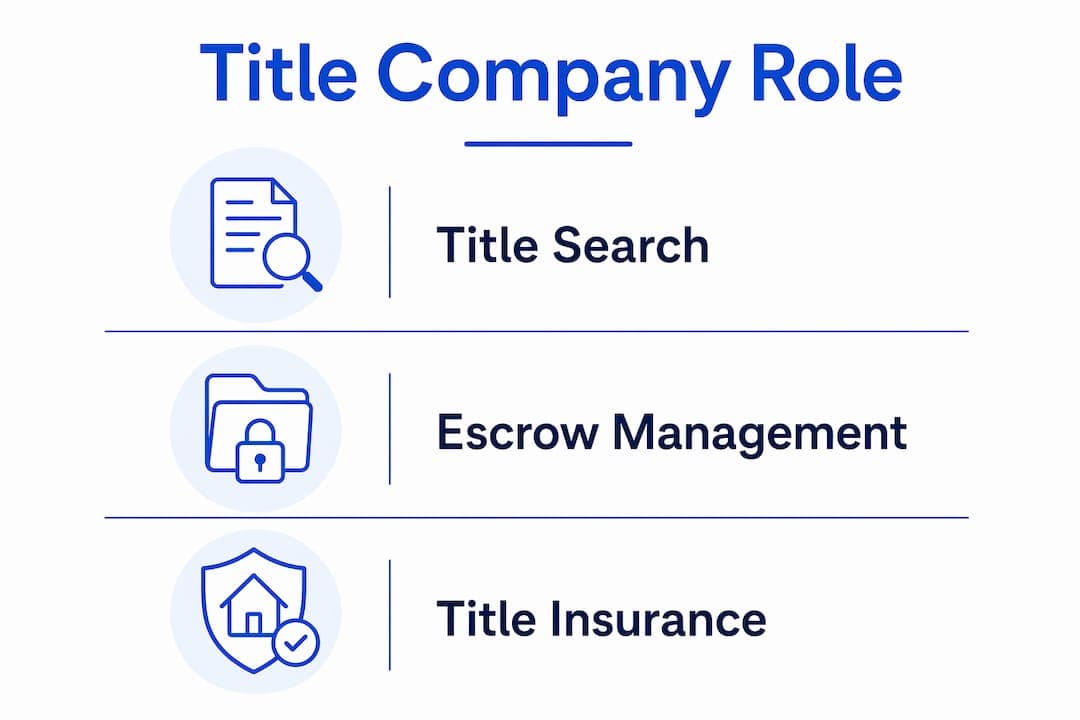
The three core title company functions are the title search, escrow management, and title insurance issuance. Each one directly affects how fast your sale closes. A title company that moves quickly through all three can take a transaction from signed contract to funded closing in as few as seven days. A slow or disorganized title company can add weeks to that timeline, even when a buyer is ready and willing.
Title companies protect both the buyer and seller by acting as a neutral third party, guaranteeing a clean and legitimate transfer of ownership. That neutrality is not just a legal formality. It is the mechanism that keeps money and documents safe while both sides fulfill their obligations.
How does a title search clear ownership issues quickly?
A title search is the process of reviewing public records to confirm who legally owns a property and whether any claims exist against it. Title searches cover county records, court filings, tax records, and federal lien databases going back 20–50 years. That scope is necessary because a lien filed a decade ago can still block your sale today.
The search uncovers what the industry calls “clouds on title.” These are unresolved issues that prevent a clean transfer of ownership. Common clouds include:
- Unpaid mortgage balances where the lender never recorded a release
- Federal or state tax liens attached to the property
- Judgment liens from old lawsuits against a prior owner
- Unpaid homeowners association (HOA) dues
- Gaps in the ownership chain caused by probate or divorce proceedings
Each cloud must be resolved before the title company can issue clear title insurance. Resolving them takes time, which is why early action matters so much. Even if a buyer is ready to close in seven days, unresolved title clouds such as unrecorded mortgage releases, unpaid HOA balances, or probate gaps will stop the closing cold.
Understanding property due diligence helps you see why title searches are not optional steps. They are the foundation of every legitimate real estate transaction.
Pro Tip: Gather your deed, mortgage payoff statement, HOA account records, and any court documents related to the property before you list it. Handing these to your title company on day one can shave days or weeks off your closing timeline.
How does escrow management prevent closing delays?
Escrow is the process by which a neutral third party holds funds and documents until all conditions of a sale are satisfied. The title company fills this role in most residential transactions. The title company holds funds and documents securely, ensuring that disbursements to sellers, agents, and tax authorities are executed accurately once all contractual conditions are met.
That neutrality is not just a courtesy. It is a legal protection. Neither the buyer nor the seller can access the other’s assets until every requirement is fulfilled. This structure prevents disputes, fraud, and last-minute holdups that derail fast sales.
A well-run escrow process follows a clear sequence:
- The buyer deposits earnest money into the escrow account.
- The title company collects all required documents from both parties.
- Payoff amounts for existing mortgages, liens, and taxes are confirmed.
- The title company prepares the settlement statement, detailing every dollar.
- At closing, funds are disbursed to each party in the correct amount.
“The financial side of a real estate deal involves large sums of money and a precise sequence of events. To manage this without bias, the title company acts as a neutral third party, or an escrow agent. Secure handling of funds and detailed settlement statements prevent transaction errors and delays.”
When the escrow agent is experienced and communicates proactively, this sequence moves fast. When the agent is slow to collect documents or confirm payoffs, each step creates a new delay. Choosing a title company with a track record in fast closings is not a minor preference. It is a decision that directly controls your closing date.
Why does title insurance matter in a quick sale?
Title insurance protects you and your lender from financial loss due to title defects that surface after closing. Title insurance covers hidden defects, fraud, and errors that no title search can fully predict. That protection is what allows buyers and investors to commit to fast closings with confidence.
There are two types of title insurance policies in a standard transaction:
- Owner’s policy: Protects the buyer against claims that arise after the sale closes. This policy remains in force for as long as the buyer owns the property.
- Lender’s policy: Required by nearly every mortgage lender. It protects the lender’s financial interest in the property up to the loan amount.
In a fast sale, particularly a cash sale to an investor, the lender’s policy may not apply. But the owner’s policy still matters. An investor who skips title insurance on a fast purchase takes on real financial risk. Most experienced cash buyers require clear title insurance before they fund.
The connection between title insurance and closing speed is direct. A title company that can issue a clean title insurance commitment quickly signals that the title search is complete and no major clouds remain. That commitment is the green light for closing. Without it, no responsible buyer will release funds.
If a last-minute title dispute surfaces, title insurance also gives the parties a path forward. The insurer steps in to defend the claim or compensate the affected party, which keeps the transaction from collapsing entirely.
What title issues most commonly delay fast home sales?
Several specific problems appear repeatedly in fast sales and cause the most damaging delays. Knowing them in advance lets you address them before they become emergencies.
The most common obstacles fall into two categories: documentation gaps and unresolved financial claims.
| Issue type | Common examples | How to address it early |
|---|---|---|
| Documentation gaps | Missing mortgage release, probate gap, divorce decree not recorded | Pull title history and request a preliminary title report before listing |
| Unresolved financial claims | Unpaid HOA dues, tax liens, judgment liens | Contact lienholders directly and request payoff statements |
Requesting a preliminary title report is the single most effective step a homeowner can take before entering a fast sale. This report shows exactly what the title company will find during its full search. Surprises at closing are almost always surprises that a preliminary report would have revealed weeks earlier.
Probate and divorce situations deserve special attention. When a property passed through an estate or changed ownership during a divorce, the chain of title often has gaps. Courts may have issued orders that were never recorded in the county property records. A title company cannot clear what it cannot find, so tracking down those court documents falls on the seller.
Selling a property as-is does not eliminate title obligations. The physical condition of the home is separate from the legal condition of its title. Both must be addressed for a sale to close.
Pro Tip: Ask your title company for a preliminary title report within the first 48 hours of opening escrow. Review it with a real estate attorney if you see anything unfamiliar. Early resolution costs far less time and money than a last-minute fix.
Key Takeaways
A title company’s speed and expertise directly determine whether a fast home sale closes on schedule or stalls for weeks.
| Point | Details |
|---|---|
| Title search is the foundation | Title searches cover 20–50 years of county records to clear liens and ownership disputes before closing. |
| Escrow neutrality protects everyone | The title company holds all funds and documents until every condition is met, preventing fraud and errors. |
| Title insurance enables fast commitments | A clean title insurance commitment signals the transaction is ready to close and gives buyers confidence to fund quickly. |
| Early document prep saves weeks | Sellers who provide deeds, payoff statements, and lien records upfront cut days or weeks from the closing timeline. |
| Preliminary title reports prevent surprises | Requesting this report early exposes title clouds before they become closing-day emergencies. |
Why the right title company changes everything
I have watched fast sales fall apart at the last minute, and in nearly every case, the title company was either unprepared or uncommunicative. The homeowner had done everything right. The buyer was funded and ready. But the title agent had not followed up on a lien release, or had not flagged a probate gap until the day before closing.
A proactive title company prevents delays by identifying and resolving title defects early rather than at closing. That distinction matters enormously when you are selling under financial pressure or a personal deadline. You do not want a title company that processes paperwork. You want one that manages risk and communicates every step of the way.
When I advise homeowners in urgent situations, I tell them to ask one question before choosing a title company: “How many fast closings have you handled in the last 90 days?” The answer tells you everything. A team that closes fast sales regularly knows the shortcuts, the common problems, and the right contacts to resolve issues quickly. A team that handles mostly conventional 30-day closings will treat your seven-day deadline as an anomaly, not a specialty.
Preparation on your end matters just as much. Gathering your documents before escrow opens is not just helpful. It is the difference between closing in a week and closing in a month. The title company can only move as fast as the information you give them.
— Bryan
Housegoodbye makes fast closings straightforward
Housegoodbye connects homeowners with multiple competing cash investors, generating real offers without agent fees or repair requirements. Every transaction is backed by experienced title professionals who know how to move fast.

When you work with Housegoodbye, the title and escrow process is coordinated from day one. Document collection, lien resolution, and closing scheduling happen in parallel, not in sequence. Homeowners in Michigan can get a fast cash offer in Flushing, or explore options in Fenton and Farmington Hills. Housegoodbye guarantees closing in as little as seven days, and the title process is built to match that pace. Learn more about how cash sales work and what to expect at every step.
FAQ
What does a title company do in a fast home sale?
A title company searches public records to confirm ownership, manages escrow funds, and issues title insurance so the property can legally transfer. These functions must be completed before any closing can occur, regardless of how fast the sale moves.
How long does a title search take for a quick sale?
A title search typically takes two to five business days, though experienced title companies familiar with fast closings can prioritize the process. Sellers who provide ownership documents upfront can reduce this time significantly.
What is a cloud on title and why does it matter?
A cloud on title is any unresolved claim or defect in the ownership record, such as an unpaid lien, a missing mortgage release, or a probate gap. Clouds must be cleared before a title company can issue title insurance and close the sale.
Can I sell my home fast if there are title issues?
Title issues do not automatically prevent a fast sale, but they must be resolved before closing. Identifying problems early through a preliminary title report gives you time to fix them without delaying your closing date.
Do cash buyers still need a title company?
Cash buyers require a title company to confirm clear ownership and issue title insurance, even without a lender involved. Skipping this step exposes the buyer to future ownership claims and is not standard practice among experienced investors.