A fast closing home sale can happen in as little as 7 to 10 days when you work with a cash buyer or an investor marketplace, since there’s no lender, underwriting, or appraisal contingency standing between contract and keys. Financed sales normally run about one to two months, and only compress to about two to three weeks when the buyer’s loan file is already clear to close. If speed is the priority, an all-cash offer or a vetted investor platform like Housegoodbye is your fastest legitimate path, though it usually comes with some price trade-off.
TL;DR:
- Cash offers or sales through vetted investor marketplaces can close in as little as seven days, bypassing lender underwriting and appraisal delays.
- A fast closing largely depends on removing contingencies such as inspections, financing, or sale-of-home clauses, which cash buyers often waive.
- Preparing all necessary documents and initiating title work early can shave several days off the closing timeline, especially when working with cash or preapproved buyers.
- Shorter timelines may involve discounted sale prices due to the convenience and speed, with cash offers typically below market value to compensate for the lack of contingencies.
- For urgent situations, a marketplace that allows submitting your property once and receiving multiple competitive offers can lead to a final sale in about a week.
Table of Contents
- What Controls a Closing Timeline?
- Your Step-by-Step Checklist for a Fast Closing Home Sale
- What a Fast Closing Home Sale Actually Costs You
- Timeline Scenarios: Cash, Expedited Financed, and Standard Closings
- When a Vetted Investor Marketplace Is the Right Call
- Get Cash Offers on Your Home Without the Wait
- Sources
- FAQ
What Controls a Closing Timeline?
Every day added to a closing usually traces back to one of four things: the lender, the title company, the paperwork, or the contingencies still attached to the contract.
Financed deals move slowly because of underwriting. A lender has to verify income, assets, and credit, then order an appraisal to confirm the home is worth what the buyer offered. That appraisal alone can add a week or more, and it’s one reason cash buyers can often close in as little as 7 to 10 days while financed buyers wait a month or longer. Cash sales skip underwriting entirely because there’s no loan to approve.
Title work runs on a separate clock. A title company has to search for liens, unpaid taxes, or old easements before it can issue clear title, and missing payoff or lien information is a common reason closings stall. Sellers who request their title company’s role in a fast home sale early, and hand over payoff letters before they’re asked, routinely shave days off this step.
Contingencies are the other lever. Each one adds a built-in delay:
- Inspection contingency: typically 7 to 10 days for the buyer to inspect and negotiate repairs
- Financing contingency: tied directly to the lender’s underwriting timeline
- Sale-of-home contingency: the buyer’s own house has to sell first, which can add weeks or months
Cash offers routinely waive all three, which is the single biggest reason they close faster than anything else on the market.
Your Step-by-Step Checklist for a Fast Closing Home Sale
Speed doesn’t come from luck. It comes from having your paperwork ready before you need it and moving on every task the same day it becomes available.
- Gather your documents now. Pull your mortgage payoff letter, deed, most recent tax bill, photo ID, and any HOA certificates before you accept an offer. Getting preapproved paperwork and lender responses moving early shortens the entire chain, and the same logic applies to seller documents.
- Choose your buyer route deliberately. A vetted cash offer or an as-is sale to an investor removes contingencies outright; a traditional listing with a financed buyer means building in appraisal and underwriting time from day one.
- Order title work immediately after signing. Ask the title company to start the search the same day the contract is executed, not after attorney review, and set a target closing date right then.
- Lock in your inspection and appraisal windows fast. If you’re working with a financed buyer, ask whether an appraisal waiver applies. Many conventional loans with strong equity positions qualify, and skipping the appraisal can save five to seven days outright.
- Prepare for a remote or mobile-notary closing. Confirm in advance whether your state and title company support remote online notarization, since scheduling an in-person signing around multiple parties is often the last delay standing between you and funded proceeds.
- Negotiate smart, not just fast. If you need more time to move out, ask for a short leaseback instead of pushing the closing date. If the buyer wants repairs, offer a credit at closing instead of scheduling contractors, which can add a week you don’t have.
Pro Tip: Request your mortgage payoff statement the day you decide to sell, not after you accept an offer. Payoff letters can take five to seven business days to arrive, and that single document is one of the most common reasons title work stalls right before closing.
What a Fast Closing Home Sale Actually Costs You
Speed has a price, and it’s worth understanding before you sign anything.
Cash and investor offers typically come in below full market value. Sellers considering a cash offer should weigh the discount against the certainty and speed they’re buying, since investors price in repair risk, holding costs, and the convenience they’re providing. An as-is sale also means you’re not paying for staging, repairs, or a lengthy listing period, which offsets some of that gap.
There’s a logistical squeeze too. A 7 day close means:
- Movers, storage, or a temporary rental need to be lined up in advance, not after the offer arrives
- A short possession window can be negotiated as part of the offer instead of rushing your move
- Utility transfers and forwarding mail have to happen faster than a typical 45 day timeline allows
Legal caution matters most when things move quickly. Rushed paperwork sometimes surfaces title exceptions nobody caught in a slower deal, and wire fraud targeting closings has become common enough that you should always confirm wiring instructions by phone with a known number at the title company, never by email alone.
Timeline Scenarios: Cash, Expedited Financed, and Standard Closings
Where you land depends almost entirely on how the buyer is paying and how prepared your documents are before the contract is even signed.
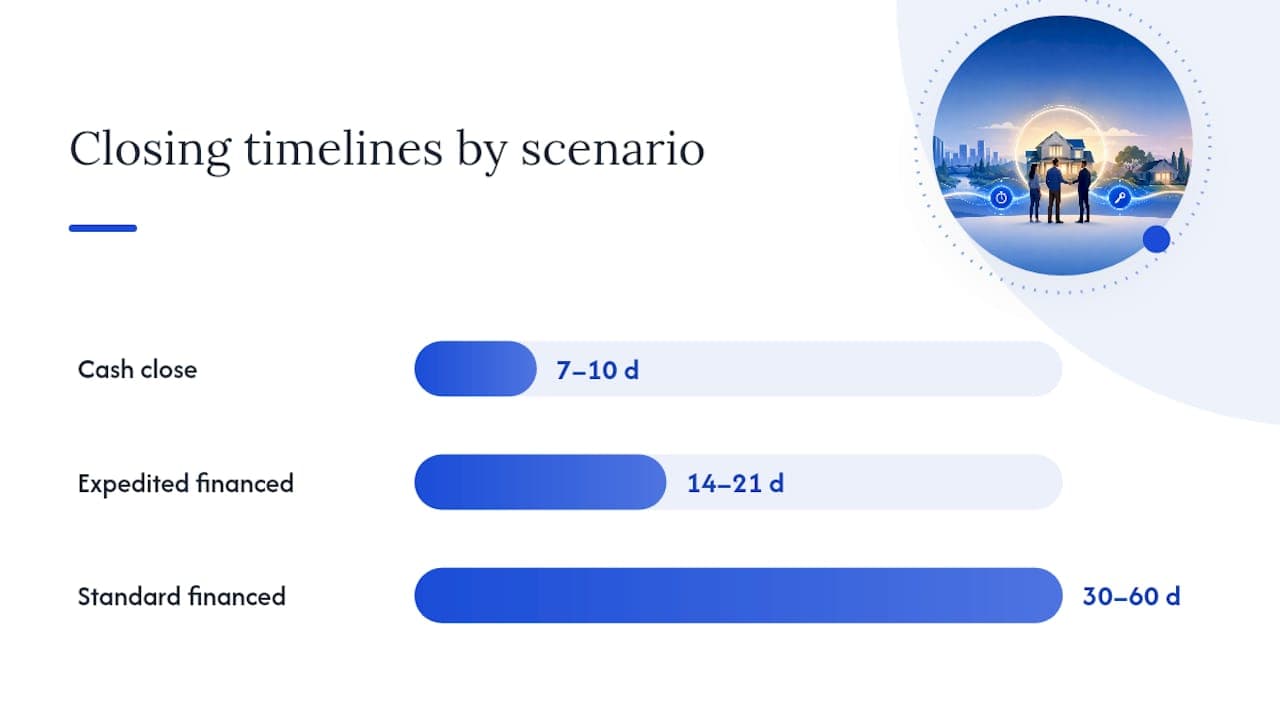
| Scenario | Typical Duration | Key Milestones |
|---|---|---|
| Cash close | 7 to 10 days | Contract signed → title search and lien payoff verification → funds wired → closing |
| Expedited financed close | 14 to 21 days | Buyer already preapproved and clear to close → appraisal ordered day one → underwriting finalized → closing |
| Standard financed close | 30 to 60 days | Loan application → appraisal → underwriting conditions cleared → Closing Disclosure issued → closing |
A 14 to 21 day financed closing only happens when the lender has already completed employment, asset, and credit verification before the contract is even signed, leaving just the appraisal and final underwriting sign off. Without that groundwork, a compressed financed timeline is unrealistic no matter how motivated everyone is.
One legal constraint applies to every financed deal regardless of how fast it’s moving: buyers must receive and sign the Closing Disclosure at least several business days before closing. That three day window is fixed by federal disclosure requirements, so no amount of urgency shortens it. Recent national data puts the average time to close around 42 days, which makes anything under three weeks the exception rather than the rule for financed buyers.
When a Vetted Investor Marketplace Is the Right Call
Not every seller needs 7 days, but some genuinely do. Urgent relocation for a job, an inherited property nobody wants to manage from out of state, a looming foreclosure date, or a financial emergency all point toward the same answer: skip the listing process and go straight to competing cash offers.
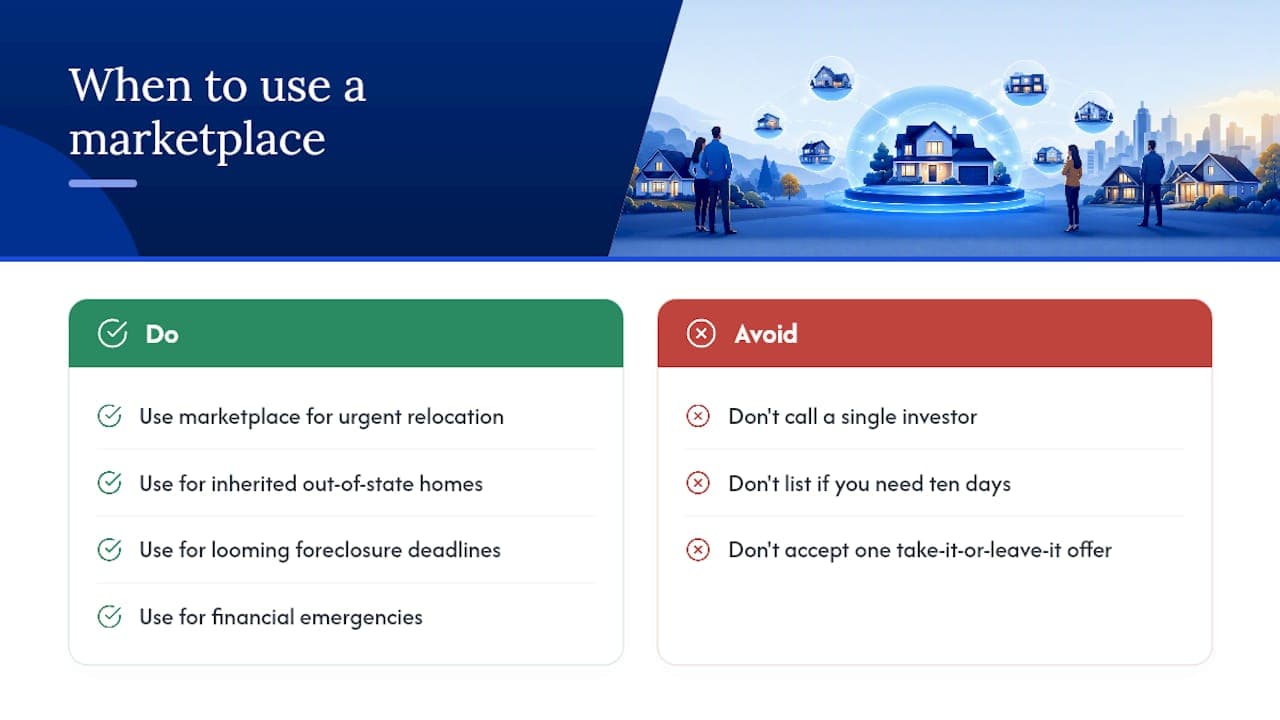
The reason a marketplace beats calling one investor is simple. When multiple vetted buyers bid on the same property, you get real price competition instead of a single take it or leave it number, and centralized coordination of title work, scheduling, and paperwork through one platform removes most of the back and forth that stretches out a slower sale.
Housegoodbye runs exactly this model for homeowners across Michigan. You submit your property once, receive multiple competing as-is offers from local investors, and can close in as little as seven days with no repairs, no staging, and no agent commissions. There’s no obligation to accept any offer, which means you’re comparing real numbers rather than guessing at what a single buyer might pay.
— Bryan
Get Cash Offers on Your Home Without the Wait
If you’ve read this far, you already know the fastest path to closing runs through a cash buyer, not a traditional listing. Housegoodbye gets you there without picking up the phone and calling investors one at a time. Instead of negotiating with a single buyer who knows they’re your only option, you submit your property once and let vetted local investors compete for it, which puts real upward pressure on the offer you actually accept.

The process runs in three steps. Submit your property details through the cash home buyer marketplace, review the competing offers that come back, then pick the one that fits your price and timeline and schedule closing, often within seven days. If you’re in the Holland area, you can start directly on the Holland, Michigan fast-sale page; sellers near Cedar Springs have their own dedicated Cedar Springs cash offer page. No repairs, no showings, no agent fees. Submit your address and see what local investors are willing to pay.
Sources
Timeline figures come from Rocket Mortgage’s closing guide, Zillow’s closing timeline data, and Chase’s cash offer guidance. Sellers navigating a reverse mortgage should also review selling a home with a reverse mortgage before listing.
- How long does it take to close on a house? Timeline guide | Rocket Mortgage
- How Long Does it Take to Close on a House? | Zillow
- Should I Accept a Cash Offer for My House? | Chase
FAQ
What Is the Quickest You Can Close on a House?
With an all-cash buyer, closing in 7 to 10 days is realistic because there’s no lender underwriting or appraisal contingency to wait on.
What Is the Quickest a House Sale Can Take Overall, Start to Finish?
If you accept a cash or investor offer within the first few days of listing, the entire process from acceptance to funded closing can wrap up in as little as a week, though most financed sales still take 30 to 60 days.
What Is the Three Day Rule for Closing?
Federal disclosure rules require that buyers receive and sign the Closing Disclosure at least three business days before closing on any financed transaction, which sets a hard floor on how fast a financed deal can legally close.
What Is the Hardest Month to Sell a House?
Winter months, particularly December and January, tend to see fewer buyers and slower activity, though a cash buyer or investor marketplace like Housegoodbye can still close quickly regardless of the season since the timeline depends on the buyer type, not the calendar.
Is a Cash Offer Always Lower Than a Financed Offer?
Not always, but cash offers often come in below full market value in exchange for speed and certainty, which is why comparing multiple competing cash offers matters more than accepting the first one you receive.