
You can sell a house in the middle of a renovation without finishing it. The fastest route is an as-is cash sale, where buyers price the remaining work themselves, so you do not pay for more materials, contractors or months of carrying costs. On HouseGoodbye, several vetted Michigan cash buyers bid on the same house, you see every offer, and you can walk away if none works. Closing can happen in about 7 days, with no listing fees, no agent commissions and no required repairs.
This guide covers what to do first, how to decide between finishing, pausing and selling now, what to document, and what the paperwork looks like in Michigan.
TL;DR
- A half-finished house can be sold as-is. You do not have to complete the work, clean up or stage before you sell.
- Before choosing a path, write down what is done, what is left, what it would cost and whether any permits are open.
- Finishing everything can be expensive and slow. A cash sale lets you stop spending now.
- Comparing several competing cash offers beats accepting the first number you hear.
- Michigan sellers should read the state’s seller disclosure rules before signing anything.
Table of Contents
- What counts as a mid-renovation house
- Step 1: Stop the spending and take stock
- Step 2: Choose finish, pause or sell now
- Step 3: Understand what the work does to value
- Step 4: Know the paperwork
- Step 5: Sell as-is and compare competing offers
- Perspective
- Ready to sell the house as it stands?
- FAQ
- Sources
What counts as a mid-renovation house
A mid-renovation house is any home where work has started and stopped. That can mean a gutted kitchen with no cabinets, a bathroom with new tile but no fixtures, or a basement with framing and no drywall. One national brokerage describes an unfinished house as one that is not move-in ready and may lack working plumbing, finished floors, complete electrical systems or drywall. It can be a bare shell, a framed structure or a partly renovated home.
The label matters less than the reason the work stopped. Common reasons we hear from Michigan owners include:
- The budget ran out, or the quotes came in higher than planned.
- A contractor disappeared or the project stalled.
- A job loss, divorce or move changed your plans.
- You inherited the house and the previous owner’s project is half done.
- An inspection or the city flagged a problem, such as a code violation, and the work stopped.
Each of these points to the same question: do you want to keep spending money and time on this house, or do you want out?
Step 1: Stop the spending and take stock
Before you decide anything, pause optional work. Every new purchase of materials is money you only recover if the house sells for more because of it. Then take stock in four parts.
What is finished. List each room and system: roof, electrical, plumbing, heating, floors, walls, kitchen, baths.
What is left. Be specific. “Kitchen unfinished” is vague. “Cabinets ordered, not installed; no countertop; plumbing capped” is useful.
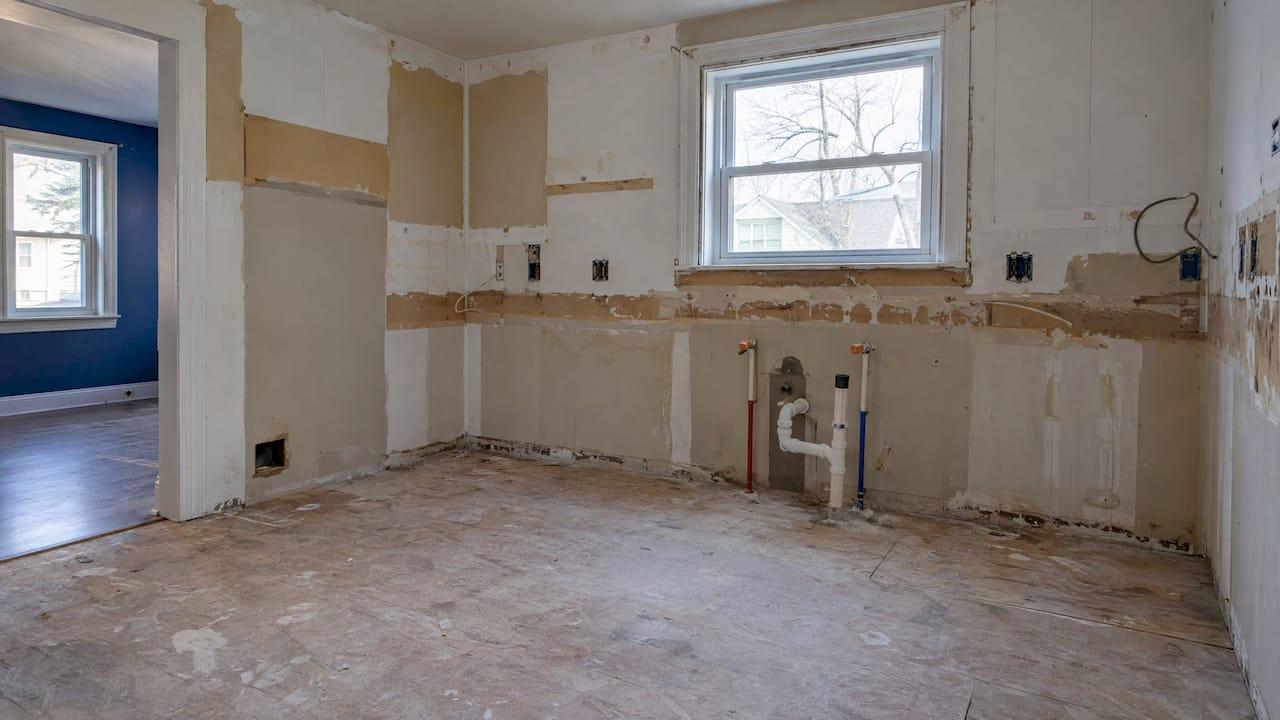
What is unsafe. Exposed wiring, missing stair rails, open floor joists, water intrusion, a roof that is open to weather. Make these safe or cover them. Protecting the house from further damage keeps the value you already have.
What is on paper. Permits, inspection results, contractor contracts, invoices and receipts. The records worth gathering are permits, contractor invoices, material receipts, before-and-during photos, plans and warranty information. Put them in one folder, paper or digital.
If the house has a foundation or masonry question, such as sagging floors over a crawl space, inspecting crawl space brick piers before repair work helps you understand what a buyer will see when they look underneath.
Step 2: Choose finish, pause or sell now
There are three real choices.
| Path | What it asks of you | Typical timeline |
|---|---|---|
| Sell as-is for cash | Share the condition, review offers, pick one | About 7 days to close with HouseGoodbye |
| Finish the work, then list | Money for contractors, permits, carrying costs, showings | Weeks to months of work, then a listing period |
| Pause and hold | Keep paying taxes, insurance, utilities and any mortgage | Open ended |
HouseGoodbye’s own figure for a typical close is about 7 days, versus roughly 73 days on the MLS (the multiple listing service where agents list homes). That gap does not include the months a renovation can add before you even list.
What finishing really involves
Finishing is not just the remaining work. A national brokerage’s guide notes that finishing safety and livability work such as kitchens, bathrooms, plumbing and electrical can widen the pool of buyers, but that finishing everything can be expensive and time-consuming. You would pay for:
- Contractor labor and materials, at today’s prices rather than the prices you budgeted.
- Permits and inspections for any work that needs them.
- Carrying costs while you wait: mortgage, property tax, insurance, utilities.
- Possibly a second place to live if you are in the house.
- Agent commissions, showings and a listing period once you are done.
If you do consider finishing, get several written quotes. Realtor.com’s advice for sellers is to identify three projects, compare their likely return with the cost, and get three qualified contractor prices, and to account for carrying costs and any temporary housing. Be careful with big upgrades chosen for resale. Large luxury kitchen and bathroom remodels, additions and extensive landscaping may return less than they cost, especially if you plan to move soon. Even smaller curb-appeal work should be judged by what local buyers actually pay for.
When selling now makes the most sense
The same brokerage guide says selling as-is may suit a seller who has to relocate quickly, lacks money for renovation, or faces major structural work. Those match the situations Michigan owners come to us with:
- Behind on the mortgage or facing foreclosure. Time is the scarce resource. Our pages on selling to avoid foreclosure and selling a house when you are behind on the mortgage explain how a quick sale fits.
- Inherited or probate houses. If a relative left an unfinished project, you do not have to complete it to sell. See how to sell an inherited house.
- Job loss or a move. You cannot supervise a contractor from another city.
- Divorce. Two people who disagree about finishing a house can agree on a fast sale. See selling a house during divorce.
- Vacant or damaged properties. A vacant house with fire or water damage on top of unfinished work is hard to list. We cover fire and water damaged houses too.
Step 3: Understand what the work does to value
Buyers look at a half-finished house and subtract the remaining work and the risk. You cannot control that math, but you can understand it.
Start from what the house would be worth finished, using recent sales of comparable completed homes nearby. Then think through completion costs, carrying costs and risk, and get written estimates for the remaining work so you know what you are handing off.
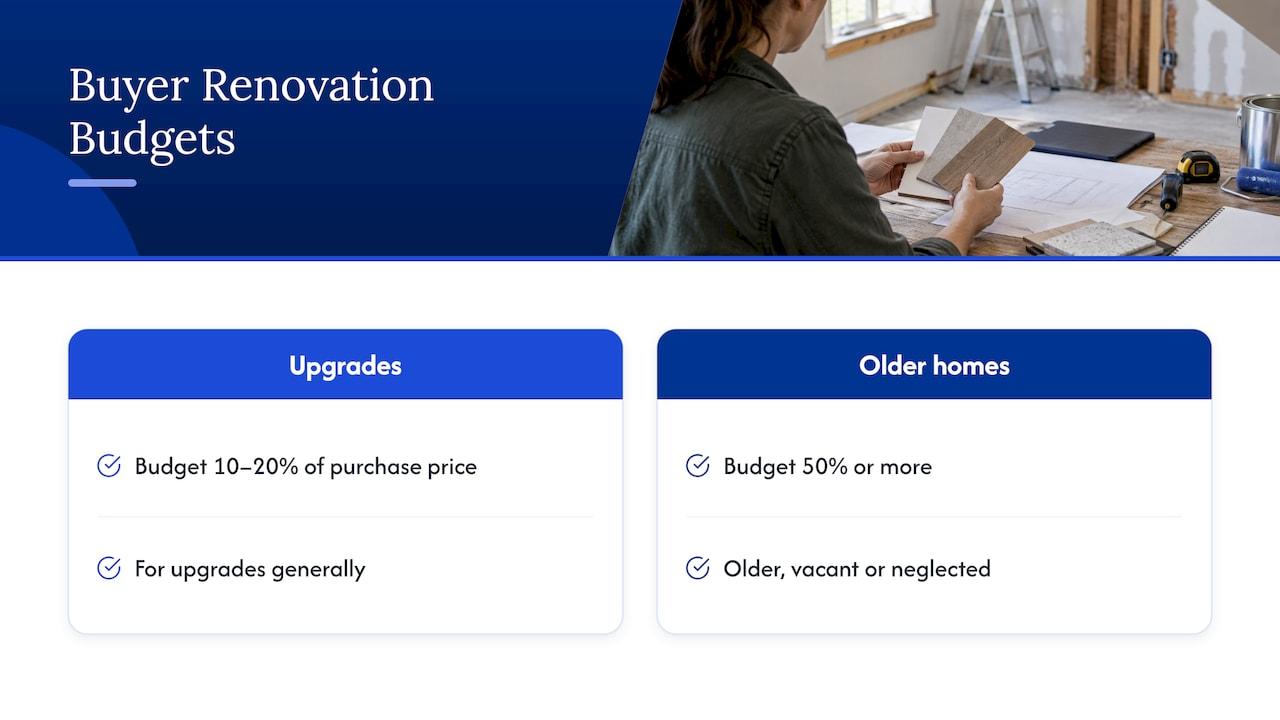
For scale, buyers of older or neglected homes plan for a lot of work. Realtor.com’s December 2025 report says experts suggest budgeting 10% to 20% of the purchase price for upgrades, while older, vacant or neglected houses may need 50% or more. Those are buyer estimates, not a rule for what your house will sell for, but they show why investors who handle renovation as a business are often the natural buyers for unfinished homes.
That is also why the number of buyers looking at your house matters. One investor makes one calculation. Several investors, each with their own crews, suppliers and plans, make several. When they compete, the spread between offers is visible to you.
Step 4: Know the paperwork
Unfinished work raises three paperwork questions.
Disclosure
Disclosure rules depend on state and local law. The National Association of REALTORS consumer guide, as summarized in a seller guide from a brokerage network, says requirements generally concern known material defects and property characteristics. Another guide advises that you disclose known defects, incomplete work and failed inspections, and notes that specific requirements vary by state. Some states are adding rules about contractor work. California, for example, has considered a bill requiring disclosures about contractor-performed improvements and permits, but that is a California measure, not a Michigan or national rule.
For Michigan, read our guide to the Michigan seller disclosure rules under Act 92. If you have questions about what applies to your situation, a Michigan real estate attorney is the right person to ask.
Permits
Check your permit history with the city or township building department early. Open permits can cause friction for buyers and lenders and may require an inspection or completion before closing. If the house has an active citation, our guides on selling a house with code violations in Michigan and our code violations page apply.
Why financing matters
Most people shopping on the open market use a mortgage, and lenders care about condition. The same seller guide says Fannie Mae expects financed homes to be safe, sound and structurally secure, so a house with missing systems can stall a conventional loan. Rehab loans exist: HUD’s FHA 203(k) program funds purchase plus renovation, with Standard 203(k) requiring a $5,000 minimum renovation cost and Limited 203(k) capped at $75,000, and it comes with contractor, inspection, permit and completion requirements. Cash buyers do not need a lender’s approval of the property, which is one reason an as-is cash sale can move so quickly.
Step 5: Sell as-is and compare competing offers
An as-is sale means you do not agree to make repairs. On the open market, an as-is listing tells buyers you will not make repairs, though buyers may still request an inspection. With HouseGoodbye the offers are made on the house as it stands, so the unfinished kitchen, the open wall and the leftover materials stay where they are.
Here is how the process goes:
- Enter your address. Tell us about the house and where the project stands.
- Receive offers. Multiple vetted local cash buyers bid with as-is offers.
- Compare. You see every number side by side, not one investor’s take-it-or-leave-it price.
- Choose or walk away. There is no obligation. If no offer works, you owe nothing.
- Close. Closing can happen in about a week, with $0 in commissions.
We do not charge homeowners. Our guide to the as-is sale checklist for sellers walks through what to have ready, and how property condition affects your offer explains what buyers look at.
What to compare in each offer
- The price, of course, and whether it is a firm number.
- The closing date, and whether it fits your deadline, such as a foreclosure date or a move.
- Who pays closing costs and any other fees.
- Contingencies. A cash offer with few conditions is simpler than one with many.
- What stays in the house. Say what to do with leftover materials, appliances and tools.
If you are behind on a mortgage, ask for your payoff figure first so you know what each offer leaves you after the lender is paid.
Perspective
Most people who call us about a half-finished house are not looking for a bargain. They are tired. The project cost more than planned, the contractor left or life changed, and the house has become a weight.
We built HouseGoodbye because one investor making one offer puts all the power on one side. When several vetted Michigan cash buyers bid on the same house, each has to sharpen their number, and you get to see them all. We buy as-is: no repairs, no showings, no commissions, and no obligation to accept.
If your house is stuck in the middle of a renovation, the question is not whether it is “ready” to sell. The question is what you want your next six months to look like. A competing-offer sale gives you the answer in days, not seasons.
Bryan
Ready to sell the house as it stands?
If you are done with the project, enter your address and see what competing Michigan cash buyers will offer for the house as it is. We buy in any condition across Metro Detroit, Grand Rapids, Flint, Lansing and the rest of Michigan, and there are no listing fees, agent commissions or required repairs.

Start with our page on competing cash offers, or read how we buy houses as-is. Local owners can go straight to Detroit, Warren, Grand Rapids or Ann Arbor.
FAQ
Can I sell a house that is in the middle of a renovation?
Yes. You can sell it as-is, with the work unfinished, to a cash buyer. The buyer prices the remaining work, so you do not complete it first. Be ready to share what has been done, what is open and any permits.
Should I finish the renovation before selling?
It depends on your money, your timeline and your deadlines. Finishing means more contractor bills, permits and carrying costs before you can list. If you need to move quickly, are short on funds or face major structural work, selling as-is is often the simpler route. Our pros and cons of selling as-is guide lays out the trade-offs.
Do I have to disclose unfinished work in Michigan?
Michigan has seller disclosure rules, and known defects and incomplete work are the kind of facts sellers are expected to be honest about. Read our overview of Michigan’s seller disclosure rules, and talk with a Michigan real estate attorney about your specific house.
What if the house has open permits or code violations?
Check the permit history with your local building department. Open permits can complicate a traditional sale, but you can still sell as-is to a cash buyer. See our guide to selling with code violations in Michigan.
Sources
- How to Successfully Sell an Unfinished House
- Is It Better to Renovate or Sell As-Is?
- A Practical Guide to Selling an Unfinished House in 2025
- Should You Sell Your Home As Is, or Spring for a Renovation?
- The Real Cost of an As-Is Home: Repairs, Risk, and Financing
- Selling a House With Unfinished Construction: A Seller Guide
- California AB 968 committee analysis
- HUD 203(k) Program Comparison Fact Sheet
- How to Sell a House As-Is When it Needs Repairs
- Crawl space brick piers: inspect before you repoint
- Landscaping fixes that boost ROI for homes