If you need to stop a foreclosure in Michigan fast, the quickest lawful route is usually selling your home as-is for competing cash offers through a vetted marketplace like Housegoodbye. Do this before your county’s sheriff’s sale, or during redemption, and you can walk away with equity intact instead of losing it. Skip anyone who asks for a fee upfront, and call an MSHDA-approved counselor today.
TL;DR:
- Selling your home as-is through a cash marketplace is the fastest way to stop foreclosure, with closing often occurring within about seven days.
- Confirm your sheriff’s sale date with the county before acting, and request multiple cash offers with written payoff timelines to compare net proceeds.
- You can sell during the redemption period after the sale, but paying the full bid plus interest and fees is rarely feasible for distressed owners.
- Moving quickly to contact your lender and a certified housing counselor improves your chances of finding an effective loss mitigation option before foreclosure progresses too far.
- Beware of scams by insisting on written, obligation-free offers and verifying the buyer’s credentials before sharing sensitive information.
Table of Contents
- What Are Your Realistic Options to Stop Foreclosure in Michigan?
- How Does a Multiple-Offer Cash Marketplace Work?
- What Should You Do Right Now to Sell Before the Sheriff’s Sale?
- How Long Do You Have Before a Michigan Sheriff’s Sale?
- How Do You Spot a Foreclosure Rescue Scam?
- When Selling for Cash Actually Makes Sense
- Get Multiple Cash Offers Through Housegoodbye
- Sources
- FAQ
What Are Your Realistic Options to Stop Foreclosure in Michigan?
Every Michigan homeowner facing foreclosure has roughly five paths, and which one fits depends almost entirely on timing and how much cash cushion you have left.
A short sale requires your lender’s sign-off to accept less than what’s owed, and it works best if you have a cooperative servicer and weeks, not days, to spare. It’s rarely fast. Selling as-is through a cash marketplace is usually the quickest route when your priority is speed and certainty over squeezing out the last few thousand dollars a traditional listing might get. Loan modification or reinstatement can work if you qualify and you act while you’re still early in the delinquency, before the servicer refers your file to foreclosure counsel. Bankruptcy can pause a sheriff’s sale through an automatic stay, but it comes with long-term credit consequences and court costs that outlast the immediate crisis. And redeeming after the sheriff’s sale exists under Michigan law, but it means paying the full sale bid plus interest and fees, which is rarely realistic for someone who was behind on payments in the first place.
Here’s how they stack up for someone racing a clock:
- Short sale: slow, needs lender approval, best when you have time
- Cash sale (as-is): fastest option, best when speed matters more than max price
- Loan modification: only works if you act early and qualify
- Bankruptcy: buys time via automatic stay, but has lasting downsides
- Post-sale redemption: legally available, but the math rarely works for distressed owners
If you’re behind on payments and unsure which lever to pull, Housegoodbye’s guide on mortgage options breaks down what loss mitigation actually looks like before you decide to sell.
How Does a Multiple-Offer Cash Marketplace Work?
A cash marketplace flips the usual home-selling script. Instead of listing your house and waiting for one buyer to show interest, you submit basic details once and let investors compete for the deal.
- You submit property details. Address, condition, approximate mortgage balance, and why you’re selling. No repairs, no staging, no photos of a freshly painted living room.
- Vetted investors review your listing and submit offers. Because several buyers see the same property at once, competition tends to push the net offer higher than a single lowball bid would.
- You compare offers side by side. Each one should come in writing, with no obligation to accept, so you can weigh price against closing speed.
- A brief inspection confirms condition. As-is sales still typically involve a walk-through, but it’s about confirming what the investor already priced in, not renegotiating repairs.
- Title company or closing attorney handles the paperwork. You’ll need your mortgage payoff statement, deed, and government ID ready to keep things moving.
- Closing happens, often within about seven days once you accept an offer and the title work clears.
Pro Tip: Ask every investor for their payoff timeline in writing before you accept. A verbal promise to “close fast” means nothing if the title company hasn’t confirmed your mortgage payoff amount yet.
Housegoodbye runs exactly this kind of process for Michigan homeowners, generating multiple competing bids instead of leaving you stuck negotiating alone against one buyer’s first number.

What Should You Do Right Now to Sell Before the Sheriff’s Sale?
Time works against you here, so sequence matters. Move through these in order, not all at once.
- Call your lender today and ask specifically for loss mitigation options, a single point of contact, and a written payoff estimate. Servicers are required to make live contact and offer written options once you’re delinquent, according to MSHDA’s stages-of-foreclosure guidance.
- Confirm your sheriff’s sale date with your county Register of Deeds. Sale notices publish for four consecutive weeks and get posted on the property itself, so the date is public record even before you get a letter about it.
- Reach out to an MSHDA-approved housing counselor. This is free, and it’s the fastest way to confirm which options actually apply to your loan and timeline, according to MSU Extension’s foreclosure timeline breakdown.
- Request multiple cash offers and start gathering your payoff statement, deed, and ID now, before you have a signed offer. Allow a reasonable inspection window instead of dragging it out.
- Compare net proceeds, not sticker price. The highest offer isn’t always the best one once you subtract payoff amounts, liens, and closing costs. Pick the offer with the earliest closing date you can accept and lock it in.
Housegoodbye’s Michigan foreclosure guide walks through this same sequence with more detail on what documents matter most before auction day.
How Long Do You Have Before a Michigan Sheriff’s Sale?
Michigan’s foreclosure timeline moves faster than most homeowners expect once it starts, but it isn’t instant either. Understanding the stages tells you exactly how much runway you have left.
- Days 2 to 36: Delinquency notices begin. Your servicer should attempt live contact.
- By day 45: Written notice of loss mitigation options is required.
- Around day 121: The foreclosure process itself typically begins if nothing has resolved the delinquency.
- Before the sale: Notice publishes for four consecutive weeks and gets posted on the property, per MSHDA’s guidance and confirmed by MichiganLegalHelp’s foreclosure resources.
Redemption doesn’t end the story at the sheriff’s sale. Under MCL 600.3240, Michigan gives homeowners a redemption period, commonly six months or one year depending on the loan’s specifics, during which you can still reclaim the property. But redemption means paying the full sale bid plus interest, fees, and any taxes or insurance the purchaser paid after the sale. That math is often steeper than people assume; get the exact figure from the purchaser’s affidavit or your county Register of Deeds before you count on it as a real option.
Here’s the detail most guides skip: Nolo’s analysis of Michigan’s redemption rules confirms you can still sell your home during redemption, and if the sale nets more than the redemption amount, you keep the difference. That’s exactly why acting before the sheriff’s sale, or quickly during redemption, tends to be simpler and more profitable than waiting to see if you can afford to redeem later.
How Do You Spot a Foreclosure Rescue Scam?
Once your sheriff’s sale notice becomes public record, expect calls and mailers from strangers claiming they can “save your house.” Some are legitimate investors. Many are not.
- Red flag: anyone asking for money upfront before doing anything.
- Red flag: pressure to sign over your deed “temporarily” to stop the sale.
- Red flag: guarantees that foreclosure prevention is certain, with no written terms.
- Verification step: insist on a written, obligation-free offer before sharing sensitive documents.
- Verification step: confirm the buyer, title company, or attorney is real and checks out against MichiganLegalHelp’s guidance or your MSHDA counselor’s referral list.
Public notices are exactly why the outreach spikes; investors monitor sheriff’s sale filings to find distressed properties, so a sudden wave of calls doesn’t mean you’re being targeted specifically, it means the system works that way for everyone in your position.
Pro Tip: If someone contacts you before you’ve listed anywhere, ask for their offer in writing first. Legitimate buyers don’t mind waiting a day for you to verify who they are.
When Selling for Cash Actually Makes Sense
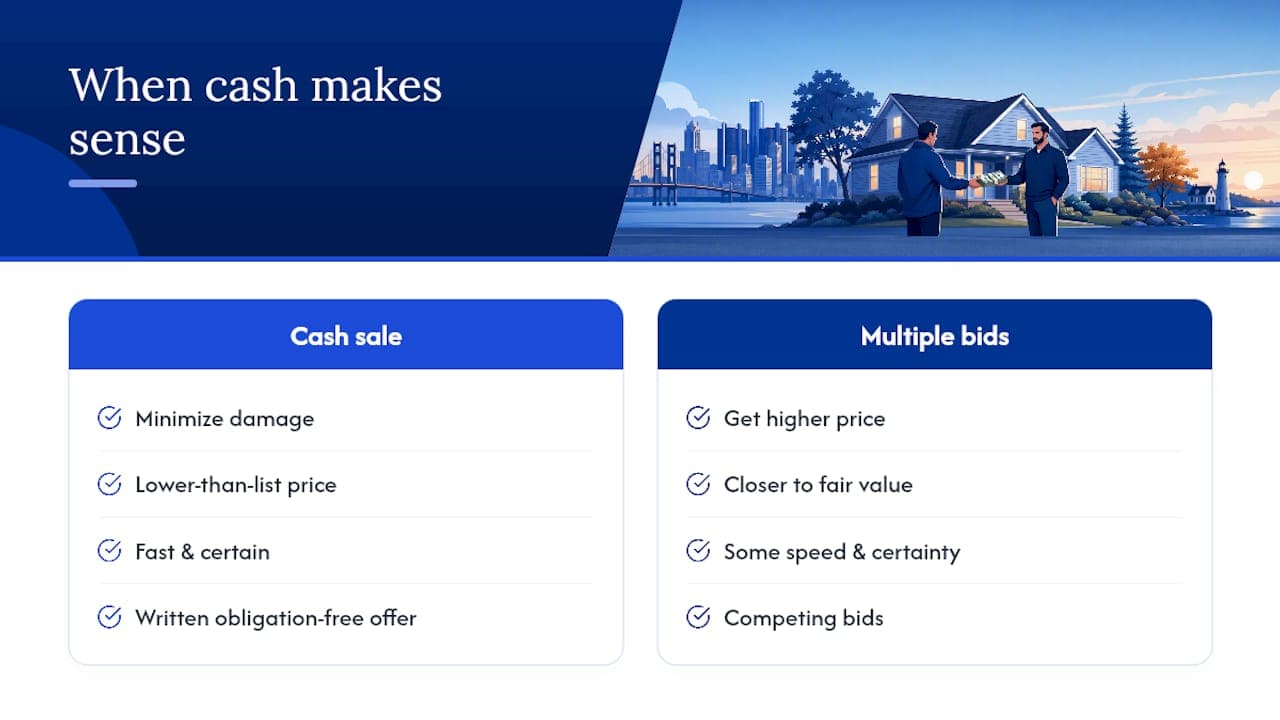
Most homeowners I talk to about foreclosure aren’t looking for the best possible price. They’re looking for the least amount of damage. That distinction changes which advice actually applies to you.
A multiple-offer marketplace works because it replaces one buyer’s take-it-or-leave-it number with several competing bids, which tends to close the gap between a fire-sale price and something closer to fair value. You’ll usually trade some top-end price potential for speed and certainty, and for someone racing a sheriff’s sale date, that trade is worth it. What you shouldn’t expect is a listing-agent price; what you should expect is a written, obligation-free number you can compare against your payoff balance before you sign anything. Validate every closing step, from title search to payoff confirmation, and you’ll come out the other side with your credit and your equity mostly intact.
— Bryan
Get Multiple Cash Offers Through Housegoodbye
Housegoodbye is the alternative to listing with an agent and waiting for a single buyer. For Michigan homeowners racing a sheriff’s sale date, the real advantage is competition: instead of one offer you either take or leave, vetted local investors bid against each other for your property, as-is, with no repairs and no agent commissions eating into your proceeds.

Sign up and you’ll get written, obligation-free bids you can compare side by side, plus help understanding what you’ll actually net after your mortgage payoff and closing costs. Closings can happen in as little as seven days when speed matters more than anything else. Start by comparing cash home buyers in Michigan or read how selling your house for cash works to see the exact steps before you commit to anything.
This article is general information, not a substitute for advice from a qualified financial advisor. Consult a qualified financial professional about your own circumstances before acting on anything here.
Sources
- Stages of foreclosure — MSHDA
- MCL 600.3240 — Michigan Legislature
- Foreclosure and Eviction for Homeowners — MichiganLegalHelp
- Michigan foreclosure redemption period explained — Nolo
FAQ
Can I Sell My House During Pre-Foreclosure in Michigan?
Yes. You can sell as-is any time before the sheriff’s sale, and doing so through a competing cash offer marketplace typically closes faster than a traditional listing.
How Long Is Michigan’s Redemption Period After a Sheriff’s Sale?
It’s commonly six months or one year, depending on loan specifics, under MCL 600.3240.
Can I Sell My Home During the Redemption Period?
Yes, Nolo’s coverage confirms you can sell during redemption and keep any proceeds above the redemption amount owed.
How Fast Can Housegoodbye Close on a Michigan Home?
Closings can happen in as little as seven days once you accept a cash offer and title work clears.
What Documents Do I Need to Sell Quickly?
You’ll need your mortgage payoff statement, property deed, and a government-issued ID to keep the closing process moving without delays.
How Do I Know a Cash Offer Isn’t a Scam?
Insist on a written, obligation-free offer with no upfront fees, and verify the buyer or title company before sharing any personal documents.