Yes, you can sell your house before a Michigan sheriff’s sale, because you stay the legal owner until the auction happens. The sale only works if it closes before the sale date and the price covers what you owe. A cash sale as-is is the route built for that deadline. On HouseGoodbye, several vetted local cash buyers bid on your house, you see every offer, and a close can happen in about 7 days with $0 in commissions. Michigan Legal Help lists selling your home as one way to avoid foreclosure during the sheriff’s sale notice period.
This guide walks you through the steps, the math and the traps, in the order you will meet them.
TL;DR
- Until the sheriff’s sale happens, you still own the house and can sell it. After the sale, Michigan generally gives a redemption period, but your options narrow.
- Start with a payoff quote from your lender. The sale price must cover the payoff, back taxes, selling costs and foreclosure fees, or the lender must approve a short sale.
- A traditional listing can take months. Our typical close is about 7 days versus roughly 73 days on the MLS, and the house is bought as-is.
- Get any lender permission in writing, and compare more than one cash offer before you pick.
- A sale that closes late does not stop the auction. Work backward from the sale date.
Table of Contents
- Why you can still sell before the sheriff’s sale
- Step 1: Find your sale date and your real payoff number
- Step 2: Run the math before you pick a route
- Step 3: Tell your lender and get permission in writing
- Step 4: Choose how to sell, with the calendar in mind
- Step 5: Line up the closing before the auction date
- What if the price is lower than what you owe?
- What if the auction date has already passed?
- When your buyer backs out or the contract falls through
- Mistakes that cost homeowners their equity
- Our view: speed and competition protect your equity
- Get competing cash offers on your house
- FAQ
- Sources
Why you can still sell before the sheriff’s sale
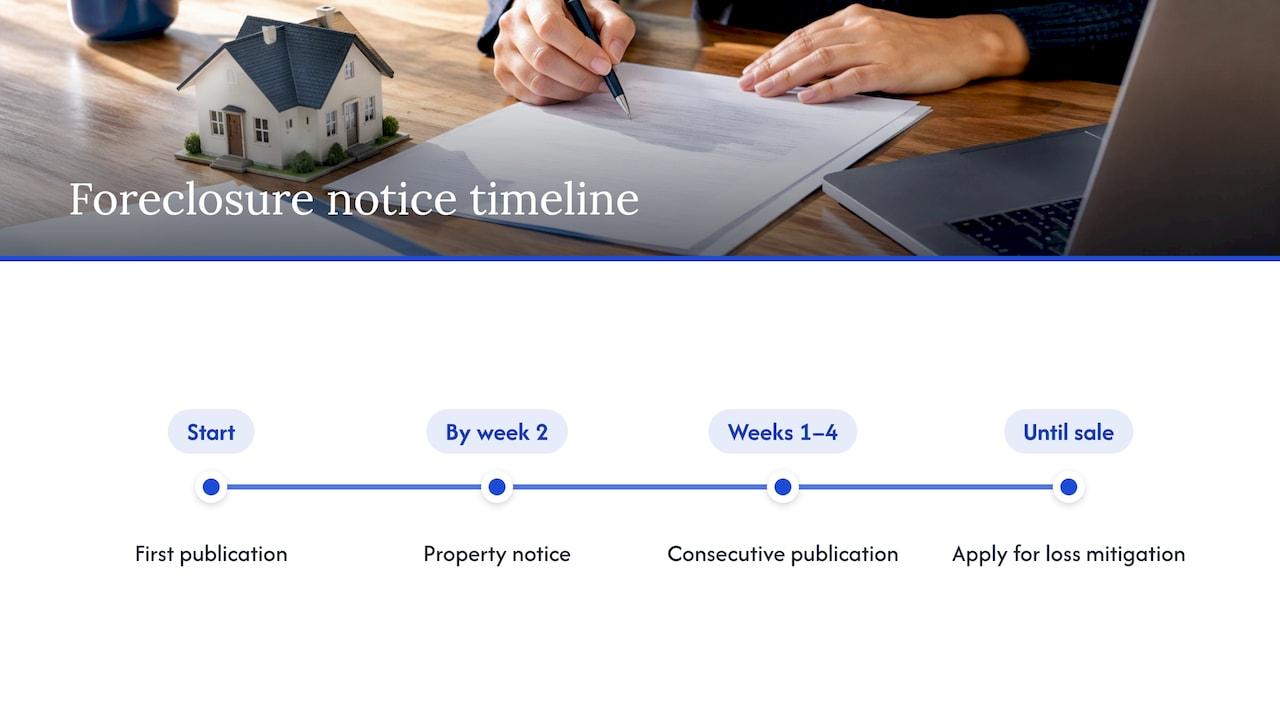
Michigan’s housing agency explains that the sheriff’s sale date is scheduled and published in the county newspaper for four consecutive weeks, with a notice posted on the property within two weeks of the first publication, according to MSHDA’s Stages of Foreclosure guide. That notice is your clock. The same guide says that until the sale has occurred, you can still submit a loss mitigation application, which is the lender’s process for reviewing alternatives to foreclosure.
A “pre-foreclosure sale” is simply a sale after foreclosure has started and before it ends. FindLaw explains that during this window the homeowner still legally owns the home and can sell it to satisfy the debt. The auction does not take that right away. Only the calendar does.
If you want a Michigan-specific walk through of the stages, our guides on the sheriff sale timeline in Michigan and selling during pre-foreclosure go step by step.
Step 1: Find your sale date and your real payoff number
Two numbers decide everything: the date of the sheriff’s sale and what it takes to pay off the loan.
The date. Look at the notice posted on your door, the published notice in your county, and the letters from your servicer (the company that collects your mortgage payments). Write down the sale date and count backward. A buyer needs time to inspect, a title company needs time to clear the title, and closing needs a signing appointment. Do not plan to close on the last possible day.
The payoff. Your statement balance is not your payoff. Nolo advises getting a payoff quote from your lender, which shows the amount needed to pay off the loan including principal, interest, fees and costs. Foreclosure adds legal fees, so the payoff is often higher than the balance you see on your last statement.
Also check for other claims on the house. MSU Extension says a pre-sale works when the price is high enough to cover the mortgage, any home equity loans, back taxes, selling expenses and foreclosure fees. If you owe property taxes, see our page on selling a house with back taxes or tax liens in Michigan.
Step 2: Run the math before you pick a route
A simple worked example shows how this goes. The figures below are made up for illustration.
| Item | Example amount |
|---|---|
| Cash offer for the house | $150,000 |
| Lender payoff quote | $128,000 |
| Second mortgage or home equity loan | $9,000 |
| Back property taxes | $4,500 |
| Closing costs and other fees | $3,000 |
| Left for you | $5,500 |
In this example the sale clears every debt and you walk away with money. If the same house drew a $135,000 offer, the debts of $144,500 would exceed the price and you would be in short sale territory, which is covered below.
The point of the exercise: you do not need a perfect price. You need a price that clears the debts before the auction date. Then every extra dollar is yours.
Step 3: Tell your lender and get permission in writing
MSU Extension recommends asking the lender to delay the foreclosure and to give permission to complete the pre-sale, and it stresses getting the agreement in writing. Do that as soon as you have a buyer in view. A verbal “we will hold off” is not something a title company can rely on.
When you call the servicer, ask for:
- The written payoff quote, with a good-through date.
- Written confirmation that the sale date will be postponed or cancelled if a purchase contract is signed and closing is scheduled.
- The name of one person or department that handles your file, so you are not repeating yourself.
If you have missed several payments, our guide on what to do when you are behind on mortgage payments in Michigan covers the options alongside a sale. A HUD-approved housing counselor or a Michigan foreclosure attorney can also help you deal with the lender. Michigan Legal Help offers free information for homeowners.
Step 4: Choose how to sell, with the calendar in mind
There are three practical routes, and the date decides which one fits.
Listing with an agent
An agent can help with pricing and the overall sale process, as Nolo notes. But listing means preparing the house, showings, buyer financing, appraisal and inspection. Even if the market is good, your timeline is set by the buyer’s lender. If your auction is weeks away, that is a risk you control poorly.
Selling to a single cash buyer
One cash buyer can be quick, but you only get one number. If that number is low, you have nothing to compare it with, and with a deadline pressing, a single buyer knows it.
Letting cash buyers compete
This is where we come in. HouseGoodbye is not one investor making one offer. You enter your address, and several vetted local cash buyers bid on the same house as-is. You see every number and can walk away if none of them work. There are no listing fees, no agent commissions and no required repairs, and the typical close is about 7 days. When the date on the notice is close, speed and competition together are what protect your equity. You can see how the process works on our competing cash offers page.
A sale like this can also suit a house that is vacant, damaged, or has code violations, since the buyers purchase in any condition. See our pages on selling a house as-is and selling a house with code violations if that is your situation.
Step 5: Line up the closing before the auction date
Once you accept an offer, the work shifts to the calendar.
- Sign the purchase agreement and give a copy to your lender along with your request to stop the sale.
- Order a payoff update so the number at closing is accurate. Foreclosure fees and interest keep accruing.
- Choose a closing date well ahead of the sale date, not on it. A buffer of even a few days gives you room if a document is missing.
- Confirm the postponement in writing before the sale date. A closing scheduled for after the sale does not stop it.
A cash sale helps here because there is no buyer mortgage to approve. Our typical close is about a week, compared with roughly 73 days on the MLS, which is why cash sales are the usual tool for tight deadlines. Our guide on how to sell your house for cash in Michigan covers the paperwork you can expect.
If you want to read about the broader picture of what a cash sale does for a homeowner in default, cash sale before foreclosure explains how the benefits stack up when you skip repairs, showings and commissions.
What if the price is lower than what you owe?
This is the most common worry, and it has a clear answer. A short sale means selling for less than the mortgage balance. Fannie Mae’s fact sheet defines it that way and says a borrower can sell and pay off a portion of the balance with the proceeds.
The key issue is who forgives the rest. FindLaw explains that if the price is below the debt, the lender must agree to the sale and forgive the remaining balance for the sale to satisfy the debt in full. Otherwise you remain responsible for the shortfall. Fannie Mae also notes there may be tax consequences when remaining debt is forgiven, and advises borrowers to consult a tax professional. Talk to a tax professional before you sign.
Two practical points on timing:
- MSU Extension says short sale requests are often finalized only after a signed purchase agreement is submitted, and that many servicers want the home listed at fair market value for 60 to 90 days first. That is a long stretch if an auction date is near, so ask the servicer early what they require.
- A purchase contract in hand, with the best offer you found, gives the lender something concrete to review.
Seeing several competing offers helps with a short sale too. A lender reviewing your request wants to know the price reflects the market, and several bids on the same house show what buyers will pay as-is.
What if the auction date has already passed?
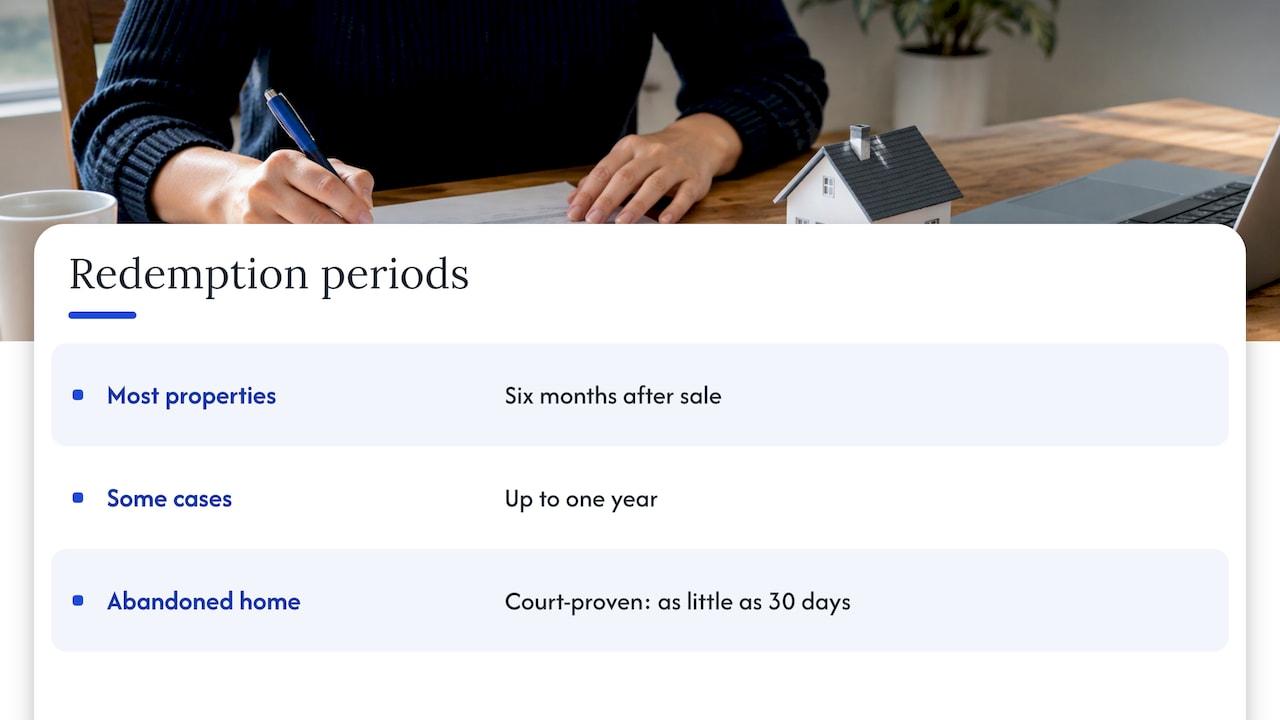
Sometimes the notice arrives late or the calendar slips. The sheriff’s sale is not always the end of the road. For most properties, Michigan provides a redemption period of six months after the sale, and in some cases up to a year, according to Washtenaw County’s foreclosure options material. MSU Extension adds that during this time you can usually keep living in the house and the right to sell it to another person remains, though if the price is below the mortgage owed, the bank must agree to the short sale.
There are limits. The same Washtenaw County material says that if the holder of the sheriff’s deed shows in court that the house is abandoned, the redemption period can be cut to as little as 30 days. To redeem, you generally need to pay the amount the purchaser paid plus allowed costs and interest, so an after-auction sale has to clear that figure, not just your old mortgage.
The difference is leverage. Before the auction you negotiate with the lender about a payoff you know. After it, the purchaser’s price sets the bar, and the clock is a hard one. Selling before the auction is simpler.
One more detail for later: if a tax-foreclosed property sells for more than the delinquency, Michigan law lets former owners claim the surplus through a notice and motion process with strict deadlines, as Otsego County explains. It is another reason to deal with taxes early.
When your buyer backs out or the contract falls through
You may also be searching because a sale is already under contract and something went wrong, either before closing or after a cancellation. A few principles help.
When a contract ends without a default by either side, the parties typically sign a release that directs the earnest money deposit back to the buyer, as a contract termination packet from a Virginia real estate group describes. Your own contract’s terms govern, so read the cancellation and contingency language, and ask your title company or attorney to confirm what your contract allows before you accept a second offer.
If your house sale is tied to a foreclosure date, a collapsed deal is urgent. Tell your lender right away, and get a new buyer lined up quickly. Because cash buyers are not waiting on a mortgage approval, this is when a competing-offer process makes the most difference. If an earlier buyer’s financing fell through, a cash close in about a week can still beat a short deadline, though the date you have left sets the limit.
Mistakes that cost homeowners their equity
- Waiting for the perfect offer. The date does not move. A good offer in hand beats a perfect one that arrives after the auction.
- Using the statement balance, not the payoff. Fees can raise the amount owed.
- Skipping the written lender agreement. MSU Extension is explicit on this point.
- Taking the first and only number. One offer tells you nothing about the market.
- Ignoring other liens. A tax lien or second mortgage must be paid at closing too.
- Closing on the last day. Any delay, such as a title issue or a missing signature, can push you past the sale.
Our view: speed and competition protect your equity
When a homeowner contacts us with a sheriff’s sale on the calendar, the worry is almost always the same: that selling means taking a lowball offer from the only buyer who picked up the phone.
That is why we built HouseGoodbye as a marketplace instead of a single buyer. Several vetted local cash buyers bid on the same house, the seller sees every offer, and the seller can walk away if none work. Competition does what a deadline would otherwise take away from you: it puts pressure on the price in your favor.
Our position is simple. Selling before the auction is often the best way to keep control of what happens to your home and whatever equity it holds. We buy as-is, so there are no repairs, no showings and no agent commission, and a close in about a week is realistic. Check your numbers, get your lender’s agreement in writing, and compare offers before you decide.
Bryan
Get competing cash offers on your house
If your sheriff’s sale date is coming up, you can start with your address. We bring several vetted local cash buyers to bid on your house as-is, anywhere in Michigan, from Metro Detroit to Grand Rapids, Flint and Lansing. There is no obligation, and you can compare every number before you decide.

See how it works on our page to avoid foreclosure by selling before the auction, or go straight to competing cash offers. If your situation involves a bankruptcy filing, read about selling a house during bankruptcy in Michigan first. For the wider picture, our guide to how to stop foreclosure in Michigan covers ways to buy time.
FAQ
Can I sell my house after the foreclosure notice but before the auction?
Yes. Until the sheriff’s sale happens, you remain the legal owner and can sell. The sale must close before the date, and the price must cover your payoff and other debts unless your lender approves a short sale. Start by requesting a written payoff quote.
How fast can a cash sale close?
Our typical close is about 7 days, compared with roughly 73 days on the MLS. The actual timing depends on title work and the paperwork on your house, so share your sale date as soon as you start. That lets you plan the closing well ahead of it.
What happens if I owe more than the house is worth?
The lender must agree to accept less than the balance, and it must forgive the rest for the sale to settle the debt in full. Otherwise you could still owe the shortfall. Forgiven debt can also carry tax consequences, so speak with a tax professional before closing.
Can I still sell after the auction?
Often yes. Michigan generally gives a redemption period of six months for most owner-occupied homes, and you can usually stay in the house during it. But the figure you must clear is now tied to the auction purchase, and the period can be shortened if the house is found abandoned.
What if my buyer cancels before closing?
Check your contract’s cancellation and contingency terms, and tell your lender at once if an auction date is pending. Earnest money typically goes back to the buyer when a contract ends without default. Then line up a replacement buyer quickly, ideally a cash buyer with no financing to approve.
Sources
- Foreclosure and Eviction for Homeowners, Michigan Legal Help
- Stages of Foreclosure, MSHDA
- Options in Foreclosure, Washtenaw County
- Options for a Smooth Transition, MSU Extension
- Do I have to move out of my home before the sheriff sale? MSU Extension
- How to Sell Your House Before Foreclosure, Nolo
- How Do Pre-Foreclosure Sales Work? FindLaw
- What is a short sale? Fannie Mae
- Foreclosed Properties Claimants Process, Otsego County
- Contract Termination packet