
You can sell a house with plumbing problems, and you do not have to fix them first. In Michigan you have three routes: repair and list, list as-is with full disclosure, or sell as-is to a cash buyer. If the problem is big (a failing sewer line, a slab leak, old supply pipes) or you are short on time or money, the strongest route is usually to collect several as-is cash offers and compare them. That is what we built HouseGoodbye to do: vetted local cash buyers bid on your house as it stands, with $0 in commissions, no repairs and no showings.
This guide covers what counts as a serious plumbing problem, what Michigan law makes you disclose, which repairs are worth the money, and how to judge an offer.
TL;DR
- Plumbing problems do not stop a sale. They change the price, the buyer pool and the timeline.
- Michigan sellers must hand the buyer a written Seller Disclosure Statement before the buyer signs. Selling “as-is” does not cancel that duty for defects you know about.
- Small safety fixes are usually worth doing. Main-system problems (sewer line, whole-house piping, slab leaks) are costly and unpredictable, so many sellers sell as-is instead.
- Compare more than one cash offer. One offer tells you little. Several competing bids show you the real price of your house in its current condition.
Table of Contents
- Which plumbing problems actually matter
- What you must disclose in Michigan
- Your three options, side by side
- How plumbing problems change your price
- Which repairs are worth doing first
- How to sell with plumbing problems, step by step
- Water damage from a plumbing failure
- Our view
- See what buyers will pay for your house as it is
- FAQ
- Sources
Which plumbing problems actually matter
Not every plumbing issue is a deal-killer. A plumber quoted by Realtor.com says leaky faucets, running toilets and a water heater with a couple of years left are normal and usually handled with a bid and a credit. The problems that change deals are main-system issues: the sewer line, whole-house supply piping, slab leaks and repeated drain backups. The reason is not only the cost. It is that the cost range is wide and nobody can be sure of it until someone opens the wall or the ground.
The same article puts sewer work at roughly $3,000 for a spot repair and up to $15,000 for a full replacement that involves street work. Those figures are one contractor’s range and vary by location, so treat them as a sense of scale, not a quote for your house.
A home inspector looks at specific things, and it helps to know them. The professional inspector association’s Standards of Practice say an inspector examines the main water and fuel shut-off valves, the water heater including its temperature and pressure relief (TPR) valve, every fixture by running water, every toilet by flushing, every sink, tub and shower for drainage, and the drain-waste-vent system. Active leaks, loose or damaged toilets and supply deficiencies are reported as needing correction.
Warning signs to write down
A pre-listing plumbing checklist from a Texas inspection firm lists these as red flags worth a professional look:
- Slow drains that keep coming back
- Sewage odors
- Unexplained jumps in the water bill
- Damp spots or mold
- Gurgling drains
The same checklist suggests a sewer scope (a small camera sent through the main line) for older homes, dated pipe materials, recurring clogs or missing maintenance records. A sewer-camera inspection is also the way to find main-line defects that hide underground, according to a California plumbing company’s guide, which adds that a dated report, camera footage and repair receipts document the condition for a buyer.
What you must disclose in Michigan
This is the part sellers most often get wrong, so read it before you sign anything.
Michigan’s Seller Disclosure Act requires most sellers of one-to-four-unit residential property to complete a standardized Seller Disclosure Statement. According to Nolo’s Michigan guide, you answer based on what you actually know, you may mark “unknown” when that is true, and you must amend the statement in writing if conditions change after you deliver it. It has to reach the buyer before the buyer signs a purchase agreement. If it comes late, the buyer may be able to terminate. If you fail to disclose a defect you knew about, the sale can be cancelled or you can face a fraud suit.
For plumbing, that means reporting what you know about the plumbing materials, known plumbing problems, water intrusion and drainage. If you know the basement floods when it rains or the main line backs up every spring, it goes on the form.
Two points follow:
- “As-is” is not a way around the form. Selling as-is means you will not repair. It does not remove your duty to report known defects.
- Disclosure protects you. A known problem that is written down and priced in cannot become a dispute after closing. Our guide to Michigan’s seller disclosure rules goes through the form in more detail.
Selling an inherited house, or a home in foreclosure? The form’s requirements can differ for those transfers. Ask a Michigan real estate or probate attorney whether the statement applies to your sale. Do not assume you are exempt from being honest about what you know.
Your three options, side by side
| Repair, then list | List as-is on the market | Sell as-is for cash | |
|---|---|---|---|
| Up-front cost | Contractor bills, paid before you see a dollar | None, but inspection requests and credit demands follow | None |
| Showings | Yes | Yes | No |
| Agent commission | Yes | Yes | $0 through HouseGoodbye |
| Timeline | Repairs plus a listing period | Listing period plus buyer financing and inspection | Closing in about 7 days is typical with our buyers, versus about 73 days on the MLS |
| Best when | The fix is small and you have time | The house is otherwise in good shape | The problem is large, the clock is short, or you do not want to manage a sale |
The timing figures in the last row are ours: typical closing on our platform is about 7 days, against roughly 73 days for a house sold on the MLS (the multiple listing service where agents list homes).
An as-is listing also has a hidden cost. Buyers can still request an inspection on an as-is home, and what the inspection finds becomes a negotiation. Financing adds another layer. An FHA loan’s appraisal checks minimum property requirements for safety, soundness and security, and it can lead to required repairs. A conventional loan’s appraisal estimates market value, but lenders may still ask for repairs if they see a condition concern. A buyer paying cash, as the buyers on our platform do, does not depend on that loan approval.
How plumbing problems change your price
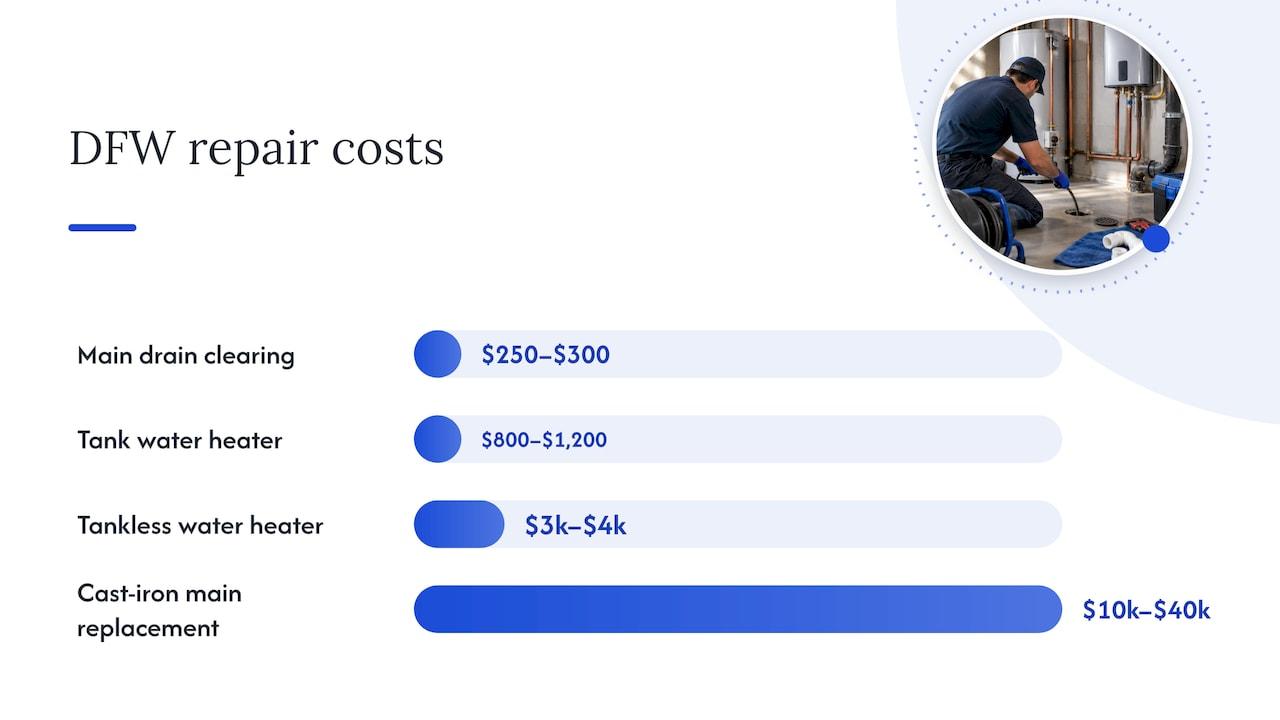
Buyers expect a lower price for problems that are not fixed. The size of the discount depends on how big and how uncertain the problem is. One Texas inspection firm’s checklist notes industry examples where defects that imply major future expense or structural risk reduce appraised value by roughly 10 to 20 percent. It also gives Dallas-Fort Worth repair ranges to show the spread: clearing a main drain at about $250 to $300, replacing a tank water heater at about $800 to $1,200, a tankless unit at about $3,000 to $4,000, and a full cast-iron main replacement at $10,000 to $40,000. Michigan prices will differ, but the pattern holds: a drain clearing is an afternoon, a main replacement is a major project.
That gap is why plumbing problems divide into two groups.
Problems with a known, small price. A leaking trap, a failing toilet flapper, a water heater near the end of its life. A buyer can price these in minutes, and a small credit settles them.
Problems with an unknown, large price. A sewer line with root intrusion, a collapsed pipe under the slab, polybutylene or galvanized supply lines, a basement that backs up. A buyer who cannot price the problem will either walk away or assume the worst when making an offer. This is where listing on the open market tends to go wrong, because every inspector, lender and agent in the chain adds uncertainty.
Which repairs are worth doing first
There is a line between repairs that protect a sale and repairs that only protect your pride.
Realtor.com’s seller guide says an inspection does not by itself legally force you to repair anything, but lenders can require fixes such as a broken water heater before approving a loan. It says safety and code items, like active leaks, a missing TPR discharge pipe or venting that could send carbon monoxide indoors, need to be dealt with. Small safety fixes are usually cheaper to complete before closing, with the receipts kept. Larger items are often better handled with a credit to the buyer.
If you have a limited budget, the sensible order is:
- Active leaks and anything that is causing water damage or mold.
- Safety items such as a TPR discharge pipe or water heater venting.
- Cheap fixes a buyer’s inspector would list in the first five minutes (dripping faucets, running toilets).
- Everything cosmetic, last. A living room makeover guide is useful once the plumbing is no longer the thing holding the sale back, not before.
On a budget, put it into deal-stopping issues such as leaks and mold rather than appearance, as Zillow’s seller guidance puts it.
For a large plumbing job, the math often works against repairing. You pay the contractor now, wait for the work and permits, and then still pay commission and carry the house through a listing period. Our posts on why repairs cost sellers more than expected, the most common mistakes when fixing a home before selling and the repairs that kill home deals walk through that arithmetic.
How to sell with plumbing problems, step by step
1. Find out what you actually have
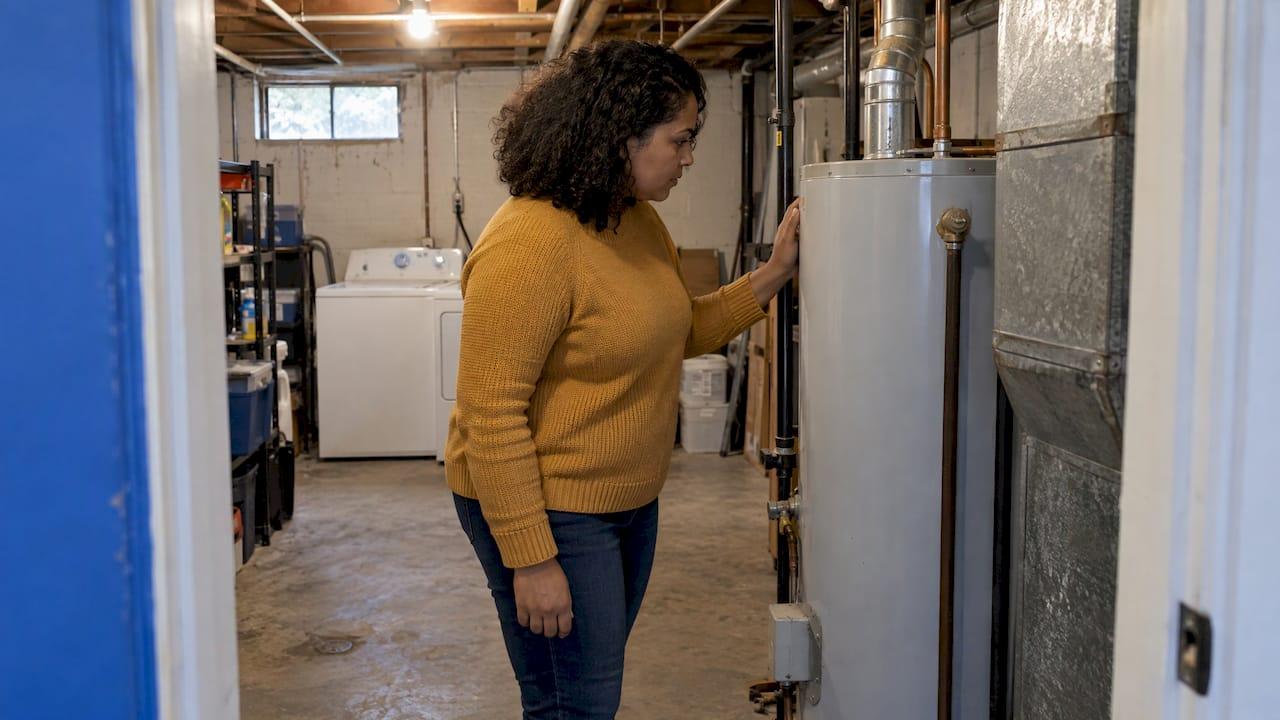
Walk the house with a notepad. Run every faucet, flush every toilet, check under sinks, look at the water heater, and look at the basement or crawl space for stains. Check your last few water bills for jumps. If you suspect the main line, a sewer scope gives you footage and a defect description instead of a guess. You do not need to pay for a full repair estimate to sell as-is, but knowing what you know matters for the disclosure form.
2. Fill out the disclosure form honestly
Write what you know. Mark “unknown” only when it is true. If you learn something new before closing, amend the statement in writing. The Michigan disclosure rules make this a legal duty, not a courtesy.
3. Decide how long you can wait
If you have months, money and a mild problem, a repair and listing can make sense. If you are behind on the mortgage, handling an estate, relocating for work or paying taxes and utilities on a vacant house, every month of waiting has a cost. For those situations, time is the main variable. We have pages written for each: selling to avoid foreclosure, selling an inherited or probate house and selling a vacant house.
4. Get competing as-is offers
On HouseGoodbye you enter your address and multiple vetted local cash buyers submit as-is offers on the same house. You see every number, you can compare them, and you can walk away if none work. There is no obligation. Because the buyers bid against each other, you are not relying on one investor’s idea of what your plumbing problem is worth. See how competing cash offers work.
5. Read each offer carefully
Cash buyers commonly subtract their estimated repair costs from what they offer, so compare the offers with each other and with what you would net by listing. Net is the number that matters: the sale price minus commission, repairs, carrying costs and the months you wait. A higher listing price that needs $12,000 of work, a commission and four months of mortgage payments may leave you with less than a clean as-is offer.
6. Close and hand over the house as it is
No repairs, no staging, no cleaning. Our as-is sale checklist covers the paperwork and what to do with belongings.
Water damage from a plumbing failure
A burst pipe or a long-running leak can leave behind rotted subfloor, mold and ruined drywall. That moves a house from “plumbing problem” into “damaged property.” Disclosure still applies, and so does the option to sell as-is. See how we handle a fire or water damaged house. If the damage has led to a notice from the city, our guide to selling with code violations in Michigan is the next read. For the way condition feeds into offers in general, see how property condition affects your sale offer.
Our view
Sellers come to us with a plumbing problem and a worry that it makes the house unsellable. It does not. What it does is make one buyer’s offer a poor guide to the price.
That is the reason we built HouseGoodbye as a marketplace and not as a single cash buyer. Several vetted local buyers bid on the same house, each pricing the plumbing in its own way. You see every offer and you choose, or you walk away.
Our advice is simple. Be honest on the disclosure form. Skip big repairs you cannot recoup. Put your limited energy into comparing offers, because the spread between them is where the value is. With no commissions, no showings and a typical close of about a week, you control the timeline.
Bryan
See what buyers will pay for your house as it is
If your plumbing problem is more than a dripping faucet, or you simply do not want to manage repairs, inspections and showings, enter your address and let vetted Michigan cash buyers compete. You see each as-is offer, with no listing fees, no commissions and no obligation to accept. Start with our cash home buyers in Michigan page, or go straight to selling your house as-is.

We buy across Metro Detroit, Grand Rapids, Flint, Lansing and the rest of Michigan, including in Detroit and Grand Rapids.
FAQ
Can I sell my house in Michigan if the plumbing is broken?
Yes. You can repair first, list as-is, or sell as-is to a cash buyer. In every case you must complete the Seller Disclosure Statement and report the plumbing problems you know about. A cash sale removes the need for repairs, showings and agent commissions.
Do I have to disclose plumbing problems if I sell as-is?
Yes. An as-is sale means you will not repair the problem, but Michigan’s disclosure law still applies to defects you know about. Sellers answer from their own knowledge and may mark “unknown” when they truly do not know. Failure to disclose a known defect can lead to cancellation of the sale or a fraud suit.
Is it better to fix plumbing before selling?
Small, cheap and safety-related fixes, such as a leak, a TPR discharge pipe or a running toilet, are usually worth doing, and you should keep the receipts. Large jobs like a sewer line or whole-house repiping are costly and slow, and many sellers choose to sell as-is and let the price reflect it.
How fast can I sell a house with plumbing problems for cash?
Typical closing on our platform is about 7 days, compared with about 73 days on the MLS. Your timeline depends on the buyer you choose and on title and paperwork, such as probate for an inherited house.
Sources
- Selling a Michigan Home: What Are My Disclosure Obligations? (Nolo)
- Home Inspection Standards of Practice (NACHI)
- The ‘Ticking Time Bomb’ Hiding in Plain Sight in The Home (Realtor.com)
- Mandatory Fixes After a Home Inspection Every Seller Should Know (Realtor.com)
- Pre-Listing Plumbing & Drainage Checklist (Alert Home Inspections)
- Pre-Listing Plumbing Inspection (Black Mountain Plumbing)
- Home Inspection Requirements By Loan Type (Lower)
- How to Sell a House As-Is When it Needs Repairs (Zillow)