A mobile home cash sale can close in days, because a cash buyer skips mortgage underwriting, listing and showings. What decides the speed and the price is paperwork: the title, any lien, and whether the home sits on land you own or in a park. The strongest move is to get several cash buyers bidding on the same home, so you compare real numbers instead of accepting the first one. That is how HouseGoodbye works: you enter your address, vetted local cash buyers compete with as-is offers, there are no commissions or required repairs, and you can walk away if no number works.
TL;DR
- Cash sales skip lender approval, so the typical close on our platform is about 7 days, against roughly 73 days on the MLS.
- Everything starts with classification: a titled home in a park or on leased land is handled differently from a home permanently fixed on land you own.
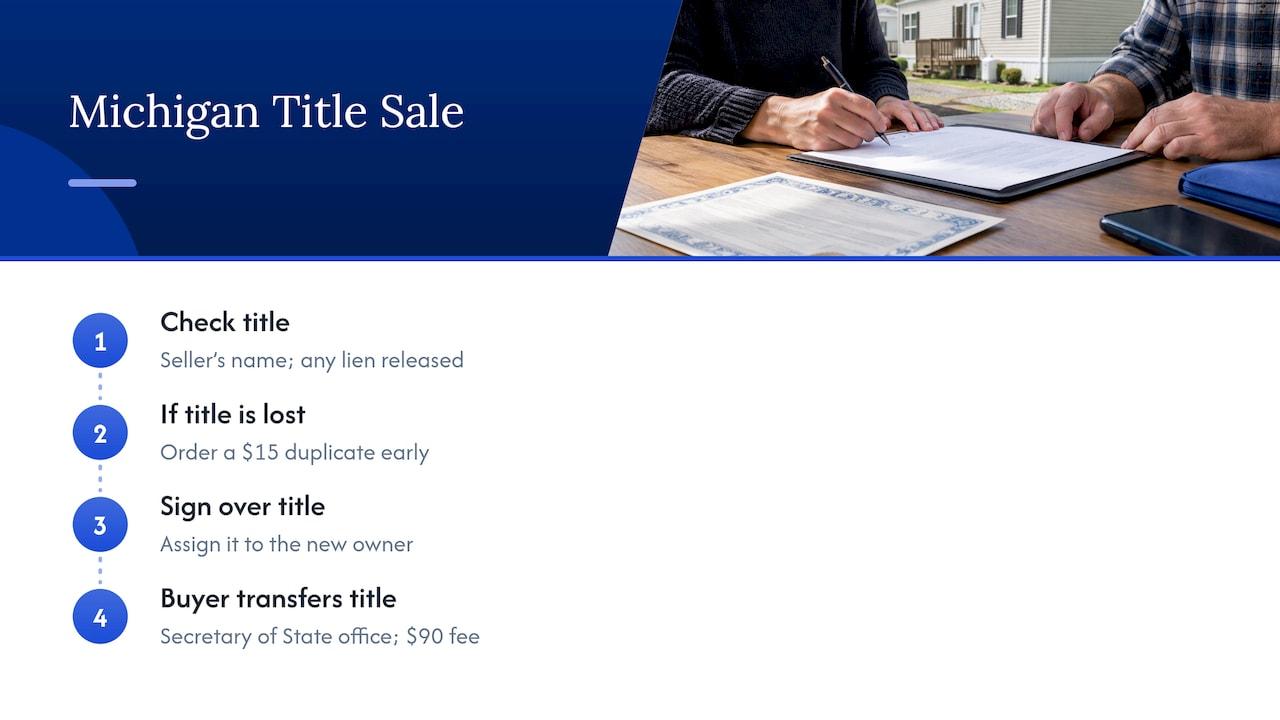
- In Michigan, the seller assigns the mobile home title to the buyer, and the buyer transfers it at a Secretary of State office.
- Compare net proceeds, not headline price: fees, credits, and the closing date all change what you take home.
- Multiple competing as-is offers beat a single buyer’s number, and you owe nothing for looking.
Table of Contents
- Mobile, manufactured and modular: why the label matters to a buyer
- How a cash sale of a mobile home works
- Title and ownership: the part that decides your timeline
- If the home is in a park
- Condition: selling as-is
- Costs and paperwork to expect
- Comparing offers without getting burned
- Special situations
- Our perspective
- Get competing cash offers for your home
- FAQ
- Sources
Mobile, manufactured and modular: why the label matters to a buyer
People use these words loosely, but buyers, lenders and title offices do not.
- Mobile home: the older term, used for homes built before the federal construction standard. Freddie Mac notes that homes built on wheels before June 15, 1976 had no uniform building code, and mortgages secured by them are not eligible for sale to Freddie Mac. That is one reason financed buyers struggle here and cash buyers matter.
- Manufactured home: built in a factory to the federal HUD code, which applies to homes from mid-1976 on. Most people who say “mobile home” today mean this.
- Modular home: built in sections in a factory but to state, local or regional building codes, and usually classified as real property, generally treated like a site-built house for financing and appraisal.
Why it matters for a cash sale: a modular home on your land is usually sold like any house, with a deed and a title search. A mobile or manufactured home often has its own title, like a vehicle, and that changes the paperwork. The year on the data plate and the way the home is attached to the ground tell a buyer what they are dealing with.
How a cash sale of a mobile home works
The sequence is short, which is the point.
- Gather the basics. Year, make, serial number, size, location, and whether the title is in hand.
- Request offers. Instead of calling buyers one by one, you enter your address once and several vetted local buyers bid against each other.
- Compare in writing. Look at the net amount, the fees, and the proposed closing date, not the biggest number on the page.
- Accept one offer or none. There is no obligation. If the numbers do not work, you walk away.
- Close. Title paperwork is signed, any lien is paid from proceeds, and you receive funds. On our platform the typical close is about 7 days, versus roughly 73 on the MLS.
If you want the general mechanics of a cash closing, our walkthrough of the cash closing process covers each stage, and how multiple cash offers work explains why competing bids tend to lift the number you see.
Title and ownership: the part that decides your timeline
Most delays in a mobile home sale come from the title, not the buyer. Three situations cover nearly every seller.
The home has a Michigan title and sits in a park or on leased land
The State of Michigan treats mobile homes as titled property. The Secretary of State explains that since 1978 they are titled as mobile homes, with a document that looks and works like a vehicle title. When you sell, you assign the title to the new owner, who takes it to a Secretary of State office to have it transferred. The fee for an original or transferred mobile home title is $90 according to the same page.
In practice that means you need the title in your name, signed over correctly, with any lien released. If the title is lost, a duplicate can be ordered, and the state lists the cost at $15. Start that early, because a missing title is the single most common reason a quick sale stalls.
The home is permanently fixed on land you own
A home that has been permanently affixed to land you own can be treated as real property rather than a titled vehicle-style asset. The process of converting it differs by state, and Barnes Walker, a Florida law firm, explains the Florida version: the home counts as real property when the owner owns the land, the home is permanently affixed, and the title has been surrendered. In that case the sale uses a purchase agreement, a title search, title insurance and a deed. Michigan has its own affixation rules, so confirm your home’s classification with the county register of deeds or a title company before you sign.
The home must be moved
Some buyers want the structure only, and some sellers sit on a lot they do not own or are being asked to clear. Moving a home brings its own costs and tax questions. Counties can require taxes to be settled when a home leaves, as Island County, Washington, describes for its own jurisdiction. Ask your county treasurer how Michigan handles it for your parcel before you agree to a move.
If the home is in a park
Park sales add a third party. Florida attorneys point out that a buyer in a park may need park approval, a background check and a new lease, and some parks hold a right of first refusal to match any offer before the sale can proceed. Park rules vary by state and by park, so read your lot lease and your park’s rules for Michigan before you list the home anywhere.
Two practical points:
- Lot rent and fees owed to the park should be cleared or accounted for in the closing numbers.
- Park approval timing can be longer than the rest of the sale. Raise it with each bidder up front so the proposed closing date is realistic.
Condition: selling as-is
Older homes often have soft floors, roof leaks, outdated electrical or water damage. A traditional buyer’s lender and inspector will push you to repair them first. Cash buyers price the condition in, which is why selling as-is is the main reason owners choose this route.
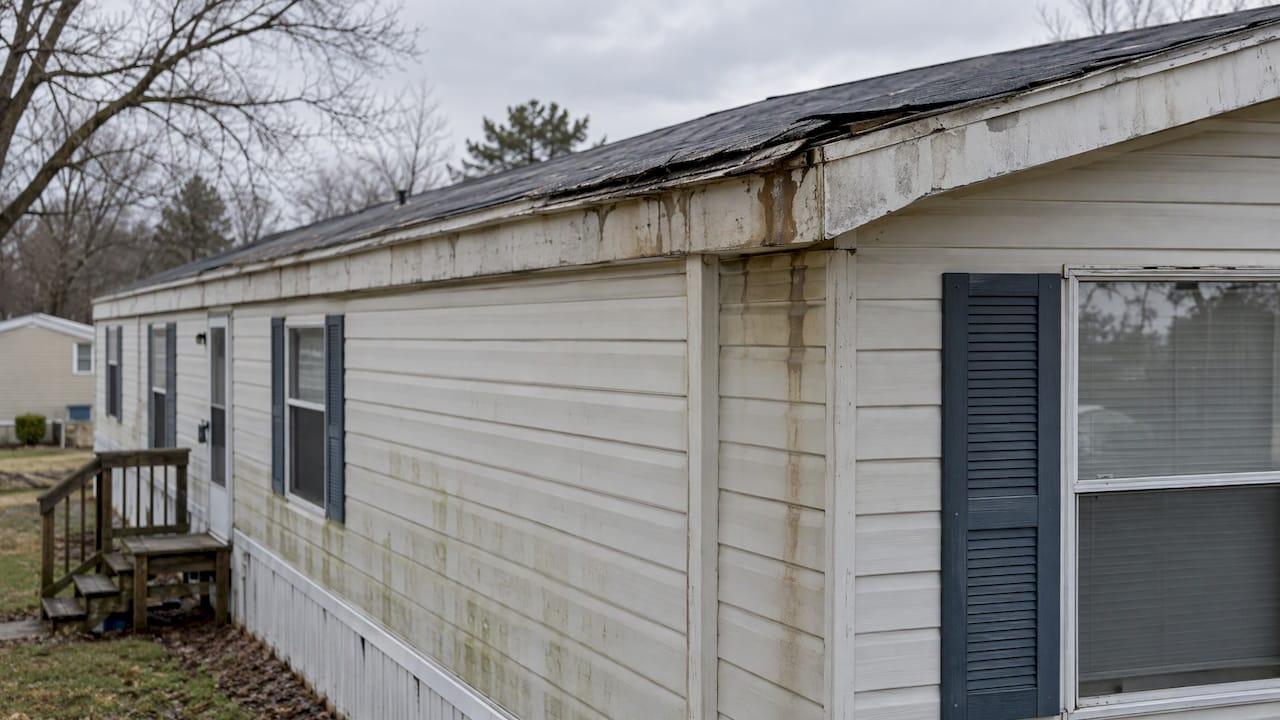
With HouseGoodbye you do not clean, repair or stage. We buy houses in any condition across Michigan, including fire and water damage, vacant homes, and homes with code violations. If your home fits one of those situations, these pages go deeper: selling a fire or water damaged house, selling a vacant house, and selling a house with code violations. Our guide to cash offers with no staging costs explains what you skip.
Costs and paperwork to expect
A cash sale removes agent commissions and listing fees, but a few costs remain regardless of buyer.
| Item | What to expect |
|---|---|
| Agent commission and listing fee | $0 with HouseGoodbye |
| Title transfer in Michigan | $90 for an original or transferred mobile home title, per the Secretary of State |
| Duplicate title if lost | $15, per the same page |
| Remaining mortgage or lien | Paid off from the proceeds at closing |
| Back taxes, lot rent, utilities | Settled at or before closing |
| Repairs | Not required for an as-is sale |
The fees in other states differ. For example, Clackamas County, Oregon, lists a $55 state transfer fee plus property taxes and a signed ownership document from seller and lienholder for manufactured homes there. Treat those as an illustration of the kind of paperwork involved, not as Michigan’s rules.
A reasonable document folder before you ask for offers: the title (or a plan to get a duplicate), lien payoff statement, the data plate or serial number, recent tax bill, lot lease and park rules if applicable, and ID matching the name on the title.
Comparing offers without getting burned
Cash is not automatically a good deal, so judge each bid on four things.
- Net proceeds. Subtract fees, credits and concessions from the headline price. A bid that is $2,000 higher but charges fees may leave you with less.
- Closing date. Fast is useful only if it fits your move or your court or foreclosure timeline.
- Certainty. Ask who the buyer is, how they are funded, and which title company will close.
- Terms for the park or the title. A buyer who already understands your title situation is less likely to renegotiate later.
The benefit of a marketplace is that you see every bid side by side, and the buyers know they are competing. A single investor making a single offer has no reason to improve it. Our guide to verifying a cash buyer shows what to confirm in about an hour, and our overview of cash house buyers explains how vetted buyers differ from random callers. When a sale involves a lien, an estate or a divorce decree, have a Michigan real estate attorney review the documents before you sign.
Special situations
Behind on payments or facing foreclosure. Time matters most here. A cash sale can pay off the loan and stop the process, but only if it closes before the deadline. See selling to avoid foreclosure and selling when you are behind on your mortgage. Your mortgage servicer and a HUD-approved housing counselor can explain your options and your dates.
Inherited home. If a relative left you a mobile home, you generally need the legal authority to sell, which in Michigan usually runs through probate. Our guides on inherited homes sold as-is and selling a house in probate in Michigan walk through it, and a probate attorney should confirm the steps for your estate.
Divorce. Both names on the title usually have to sign. See selling a house during divorce.
Rented out. If tenants live there, see selling a rental property with tenants.
Our perspective
Most mobile home owners we hear from are not shopping for a clever price. They want certainty: a buyer who will take the home as it is, a date they can plan around, and no surprise bills at the table.
The mistake we see people fear is taking one cash offer because it was the only one. A single buyer sets the price and the pace. When several vetted Michigan buyers bid on the same home and you can see every number, the decision is yours, and you can say no to all of them.
Start with the title. Know whether it is in your name, whether a lien sits on it, and whether the home is in a park. Put those facts in front of every buyer, then compare what you would actually keep.
Bryan
Get competing cash offers for your home
If you want to see what Michigan cash buyers will pay, enter your address and let vetted local buyers bid on your home as-is. You pay no commissions or listing fees, you do no repairs, and you can decline every offer. Start on our competing cash offers page, or read how we sell homes for cash in Michigan.

We work across Metro Detroit, Grand Rapids, Flint, Lansing and the rest of the state, with local pages for places like Detroit, Warren and Grand Rapids.
FAQ
How fast can I sell a mobile home for cash?
The typical close on our platform is about 7 days, compared with roughly 73 days on the MLS. The pace depends mostly on the title: a clean title in your name closes fastest, while a missing title, a lien or park approval can add time.
Do I need the title to sell a mobile home in Michigan?
Michigan titles mobile homes, and the seller assigns the title to the buyer, who then has it transferred at a Secretary of State office, according to the state’s guidance. If it is lost, you can order a duplicate. Get that started before you request offers.
Can I sell a mobile home that is damaged or vacant?
Yes, as-is sales are built for that. Our buyers bid on homes in any condition, including fire and water damage and vacant properties, and you do no repairs or cleaning.
Is a modular home different from a mobile home when selling?
Usually, yes. Modular homes are built to state or local building codes and are generally treated as real property, so they sell much like a site-built house. Mobile and manufactured homes may carry a separate title.
What does it cost me to use HouseGoodbye?
There are no listing fees or agent commissions for the seller, and offers carry no obligation. Remaining costs, such as a lien payoff or title transfer fee, come from the transaction itself.
Sources
- Mobile homes, Michigan Secretary of State
- Seller/Servicer Guide FAQs, Freddie Mac
- Selling a Mobile Home by Owner in Florida, Barnes Walker
- Selling, Moving or Demolishing a Manufactured Home, Clackamas County, OR