
After-repair value, or ARV, is the estimated market worth of a property once planned repairs and renovations are finished. House flippers and investors rely on it to cap their purchase offers, and lenders reference it when underwriting rehab or refinance loans, since it tells them what the asset will likely be worth once the work is done.
TL;DR:
- Use renovated sales from the past 90 days to six months; multiply their median price per square foot by the property’s finished area.
- The 70% rule subtracts repair costs from 70% of ARV; offers at 75% to 80% leave less room for overruns or falling prices.
- Choose sold comps within about half a mile, similar in size and condition; widen distance before date, and avoid comps needing over three adjustments.
- Confirm ARV with fresh local comps because a lender’s eventual appraisal can be lower, especially when prices shift during renovation.
- When time or repair cash is tight, compare offers for the home as it stands; HouseGoodbye says closings can take as little as seven days.
Table of Contents
- What ARV Is and How It Differs From Current Value and Appraisal
- How to Calculate ARV Step by Step
- Choosing Reliable Comps and Making Simple Adjustments
- How Investors Turn ARV Into Offers and Financing Decisions
- Common Mistakes That Skew ARV and How to Fix Them
- When Renovating for ARV Isn’t the Right Choice
- Impact of Market Trends and Seasonality on ARV Accuracy
- How ARV Compares With a Formal After-Repair Appraisal
- Limitations of ARV in Hot, Slow, and Thin Markets
- A Word on Using ARV Responsibly
- Compare Cash Offers Before You Commit to a Renovation
- FAQ
- Sources
What ARV Is and How It Differs From Current Value and Appraisal
ARV answers a forward-looking question: what will this house sell for after the kitchen is redone, the roof is replaced, and the floors are refinished? That is different from the home’s current, as-is value, which reflects its condition today, flaws included. A flipper buying a distressed property cares almost entirely about ARV because it sets the ceiling on what they can pay and still profit. An owner planning a remodel for their own use cares less about ARV as a number and more about whether the upgrade is worth the cost to live with.
A formal appraisal is related but not the same thing. Appraisers use the sales comparison approach, pulling recently sold comparable homes and adjusting for differences, to arrive at a defensible, documented value as of a specific date. ARV is an investor’s own estimate of what that future appraisal is likely to say, built the same way but without the formal report.
A few distinctions worth keeping straight:
- Current value reflects the property’s condition right now, including any damage or deferred maintenance.
- ARV projects value after a defined scope of renovation is complete.
- Appraised value is a licensed appraiser’s documented conclusion, usually required by a lender at a specific point in time.
Because ARV is a forecast, it can be wrong. Comps shift, buyer demand changes, and a market that looks stable in January can cool by the time the renovation wraps in June.
How to Calculate ARV Step by Step
The most common approach is also the simplest: find homes that sold recently in similar condition to what your subject property will look like after renovation, calculate their price per square foot, and apply that figure to your property’s finished square footage.
- Gather comps. Pull three to ten properties that sold, not just listed, within roughly the past 90 days to six months and that are already renovated or in comparable finished condition.
- Calculate price per square foot for each comp. Divide each comp’s sold price by its square footage.
- Find the median. Using the median rather than a simple average reduces the influence of one unusually high or low sale.
- Multiply by your subject property’s finished square footage. That gives you the estimated ARV.
Here is a worked example. Say you find five renovated comps that sold in the past four months, with sold prices per square foot of $180, $190, $195, $200, and $210. The median is $195 per square foot. Your subject property, once renovated, will have 1,500 finished square feet. Multiply $195 by 1,500 and the estimated ARV comes out to $292,500.
Pro Tip: Always anchor your comps to sold prices, never asking prices, since list prices reflect a seller’s hope, not the market’s actual behavior.
From that ARV figure, many investors apply a shortcut known as the 70% rule to set their maximum purchase offer: multiply ARV by 70%, then subtract estimated repair costs. In our example, 70% of $292,500 is $204,750. If repairs are estimated at $35,000, the maximum offer comes out to $169,750.
The 70% rule exists because it builds in margin for the unknowns: holding costs, selling costs, and the risk that the final sale price lands below the original ARV estimate. Some investors in highly competitive or fast-appreciating markets stretch to 75% to 80% of ARV, but that leaves a thinner cushion if repair costs run over or the market softens before the sale closes. Underestimating renovation scope is one of the fastest ways that cushion disappears, and it is worth reading up on costly repairs that kill home deals before locking in a number.
Choosing Reliable Comps and Making Simple Adjustments
The quality of an ARV estimate is only as good as the comps behind it. Loose comp selection is the single biggest reason two people can calculate wildly different ARVs for the same property.
A solid comp generally meets these criteria:
- Sold within the last 90 days to six months, since older sales may not reflect current market conditions.
- Located within about half a mile of the subject property, ideally in the same neighborhood and school zone.
- Within roughly 10% of the subject’s square footage and similar in architectural style.
- Renovated or in comparable finished condition, not a distressed sale that needs its own rehab.
Sold prices beat asking prices because they reflect what a buyer actually paid, not what a seller hoped for. When too few comps exist within that tight radius and window, widen the search gradually, first by distance, then by time, before loosening condition or style, since condition mismatches distort price per square foot the most.
Once you have comps, small adjustments sharpen the estimate further. A comp with one more bedroom than your subject might warrant a downward adjustment of a set dollar amount per bedroom difference. A finished basement typically adds value and should be adjusted for if your subject lacks one, or vice versa. Condition differences, like a comp with a brand-new roof versus one that will need one soon, also call for a adjustment in either direction.
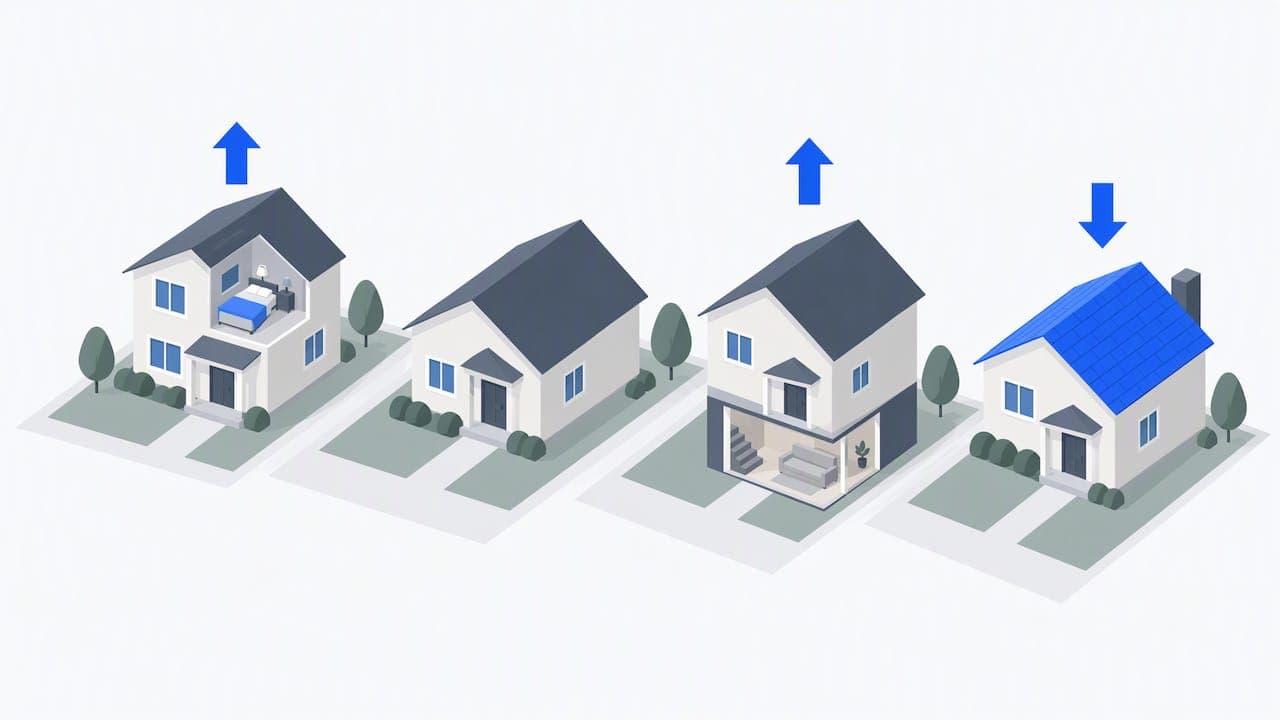
Pro Tip: When a comp needs more than two or three adjustments to match your subject, it is probably not a strong comp, find a closer match instead.
How Investors Turn ARV Into Offers and Financing Decisions
Once ARV is calculated, it becomes the backbone of several investor decisions, from what to offer a seller to how a lender will size a rehab loan.
- Setting the maximum offer. The formula is straightforward: maximum offer equals 70% of ARV minus estimated repair costs. This protects profit margin against cost overruns and unexpected holding time.
- Running the BRRRR model. Investors following the buy, rehab, rent, refinance, repeat strategy depend on ARV to estimate how much equity they will have to pull out when refinancing into a long-term rental loan, since the refinance amount is based on the property’s post-renovation appraised value, not the purchase price.
- Meeting lender underwriting expectations. Banks and private lenders financing a rehab or a BRRRR refinance will typically cap their loan at a percentage of ARV, so a conservative, well-supported ARV estimate matters as much to the lender as it does to the investor.
The risk sitting underneath all of this is that the appraiser’s eventual number may not match the investor’s ARV estimate. A lender’s appraiser may apply market condition adjustments when comps sold at different points in a shifting market, which can pull the final appraised value below what the investor projected months earlier.
Common Mistakes That Skew ARV and How to Fix Them
A handful of recurring errors are responsible for most bad ARV estimates.
- Using asking prices instead of sold prices inflates the estimate, since list prices often sit above what buyers actually pay.
- Pulling from too small a comp pool makes the median unreliable, since one outlier sale can swing the whole number.
- Mixing comps from different micro-markets, like a different school district or a busier street, that do not actually compete with the subject property for buyers.
- Ignoring recent market movement. A comp that sold six months ago in a market that has since cooled or heated up needs a market condition adjustment before it is usable.
- Over-improving relative to the neighborhood. Installing finishes well above what the surrounding homes support will not raise ARV past what the neighborhood’s comps justify, since buyers compare the home to its surroundings, not to the renovation budget.
Fixing most of these comes down to discipline: pull more comps than you think you need, verify sold prices directly, and discount any comp that required more than a couple of adjustments to make it comparable.
When Renovating for ARV Isn’t the Right Choice
Chasing ARV through renovation only pays off when the math, the timeline, and your risk tolerance line up. Repairs cost real money upfront, take weeks or months to complete, and the final appraisal can still land lower than projected if comps shift in the meantime. For a seller who needs certainty now, more than a projected number later, an as-is cash sale can be the more pragmatic route.
Through HouseGoodbye, we put a property in front of multiple vetted local investors at once, who submit competing cash offers rather than a single take-it-or-leave-it number. A few things that shape the decision:
- No repair work is required, since offers are made on the home’s as-is condition.
- Multiple competing bids let a seller compare real numbers side by side instead of negotiating against one buyer.
- Closings can happen in as little as seven days, which matters when a slow renovation-and-list timeline isn’t realistic.
- A free instant estimate gives a quick read on as-is value before committing to any repair spending, through our house value estimate tool.
Sellers facing a tight timeline, limited cash for repairs, or a property that would need extensive work to reach a strong ARV are often better served comparing as-is offers before investing further, a trade-off we break down in how property condition affects your home sale offer.
Impact of Market Trends and Seasonality on ARV Accuracy
ARV is only as current as the comps behind it, and markets move. A comp that sold in the spring selling season, when buyer demand typically peaks in many regions, may not represent pricing accurately by the following winter. Appraisal standards account for this directly: guidance from Freddie Mac requires market condition adjustments whenever a comp’s contract date differs meaningfully from the appraisal’s effective date, because prices can shift in that gap.
For investors calculating ARV without a formal appraisal, the same logic applies informally. A renovation that takes four months to complete means the comps used at the start of the project may be stale by the time the home is ready to sell. In a fast-appreciating market, that works in the investor’s favor. In a cooling market, it erodes the margin the 70% rule was supposed to protect.
Seasonality compounds this in markets with strong seasonal buying patterns, where homes listed in peak months can command stronger prices than the same home listed in a slower season. Building a buffer into the ARV estimate, rather than taking the median comp price at face value, helps absorb both normal seasonal swings and the lag between calculating ARV and actually selling the finished property.
How ARV Compares With a Formal After-Repair Appraisal
ARV and a formal after-repair appraisal are built on the same underlying method, the sales comparison approach, but they differ in rigor and purpose. An investor’s ARV is a working estimate meant to guide an offer quickly, often put together in an afternoon using public sold data. A formal appraisal is a licensed, documented valuation that follows standardized reporting requirements, including the Uniform Appraisal Dataset specification that Fannie Mae and Freddie Mac require for loans sold on the secondary market.
That standardization means an appraiser’s adjustments for things like condition, lot size, or market timing follow defined fields and documentation rules, while an investor’s adjustments are informal and can vary from one deal to the next. The appraisal is also the number a lender will actually use to underwrite a refinance or purchase loan, regardless of what the investor’s own ARV calculation said.
The practical takeaway is that ARV should be treated as a planning tool, not a substitute for the eventual appraisal. A wide gap between an investor’s ARV estimate and the formal appraisal that follows usually traces back to comp selection, since appraisers and investors do not always have access to, or choose, the same data.
Limitations of ARV in Hot, Slow, and Thin Markets
ARV works best in markets with a steady stream of recent, comparable sales. In a hot market with plenty of turnover, there are usually enough sold comps within the ideal 90-day window to build a confident estimate, though rapid appreciation can also make older comps stale faster than usual.
Slow markets create the opposite problem: fewer transactions mean investors have to widen the time window or geographic radius to find enough comps, which introduces more uncertainty into the median price per square foot. Rural areas and markets with highly varied housing stock face a similar issue, since finding homes that are genuinely similar in size, style, and condition can be difficult even with a wider search.
Thin markets, where very few homes sell in a given area and period, make ARV the least reliable, since a single unusual sale can swing the whole estimate. In these cases, leaning more heavily on price-per-square-foot medians rather than raw averages, and being honest about the uncertainty in the number, matters more than in markets with abundant data.
A Word on Using ARV Responsibly
ARV is a genuinely useful number, but it is still a forecast, and forecasts are wrong often enough to warrant caution. My own view is that too many first-time investors treat their ARV calculation like a guaranteed sale price instead of what it actually is: a disciplined guess built on the best available comps at a given moment.
Before committing real money to a renovation budget, it is worth confirming your own ARV estimate against a second opinion, whether that is a local agent pulling fresh comps or a paid appraisal. Use ARV to decide whether a deal is worth pursuing, not as the number you build your entire exit plan around.
— Bryan
Compare Cash Offers Before You Commit to a Renovation
Not every seller wants to carry the cost, time, and appraisal risk that come with renovating toward a projected ARV. Through HouseGoodbye, we connect homeowners with multiple vetted local investors who compete for the property as-is, with no repairs, staging, or agent fees involved, and closings possible in as little as seven days.

If you would rather see real numbers than calculate a projection, you can request multiple cash offers on your home today and compare them side by side before deciding which path makes more sense for your situation.
FAQ
What does 70% of ARV mean?
The 70% of ARV refers to the 70% rule, a shortcut investors use to set a maximum purchase offer. The formula is 70% of the after-repair value minus estimated repair costs, which leaves margin for selling costs, holding costs, and pricing risk.
What’s a good ARV for a rental property?
There is no single “good” ARV figure, since it depends on the property’s finished square footage and local comp prices. What matters more for a rental is whether the maximum offer, calculated using the 70% rule, still leaves room for positive cash flow and a workable refinance under BRRRR underwriting.
What is 75% ARV?
Some investors use 75% of ARV instead of 70% when setting a maximum offer, typically in competitive or fast-appreciating markets. This leaves a thinner profit margin than the standard 70% rule, so it carries more risk if repair costs run over or the market cools.
How do you calculate the ARV?
ARV is calculated by finding the median price per square foot of several recently sold, renovated comparable homes, then multiplying that figure by the subject property’s finished square footage. For example, a median of $195 per square foot applied to a 1,500 square foot home produces an estimated ARV of $292,500.
Sources
- ARV: Everything you need to know about after-repair value
- What Is ARV in Real Estate and How Is It Calculated?
- What is After Repair Value? | The Motley Fool
- Exhibit 44 (Freddie Mac UAD guidance / Bulletin 2025-7)