If your Michigan house has sat empty for a month or two, your standard homeowners policy may no longer cover it the way you think. Most insurers limit or end coverage for perils like vandalism, glass breakage and water damage once a home counts as vacant, and some cancel or decline to renew. The fix is a vacant or unoccupied dwelling policy, an endorsement on your current policy, or, as a last resort, the state’s own plan. This guide explains how each works, what drives the price, and how to keep the empty stretch as short as possible.
TL;DR
- Standard homeowners policies typically limit or drop coverage after 30 to 60 days of vacancy, so call your agent before the house goes empty, not after.
- Vacant home coverage can cost 50 to 60 percent more, or even 4 to 5 times more, than a standard policy.
- If private insurers say no, Michigan’s Basic Property Insurance Association is the last-resort option for qualified properties.
- Insurance only manages the risk. Ending the vacancy, by selling or occupying the home, removes it.
Table of Contents
- Why a vacant house is treated differently
- Situations where Michigan homes end up empty
- Your coverage options, from first to last resort
- What vacant home insurance costs
- Protecting an empty house in a Michigan winter
- Mobile and manufactured homes
- Our perspective: insurance manages the risk, selling ends it
- When selling is the better answer
- Get competing offers on your vacant house
- A short action plan
- FAQ
- Sources
Why a vacant house is treated differently
Insurers price risk by how likely a loss is and how bad it gets. An occupied home has someone who notices a drip under the sink, a broken window or smoke. An empty one does not. According to the Insurance Information Institute, damage in a vacant home is less likely to be spotted and reported promptly, which tends to make losses larger. That is the reason policies carry vacancy clauses.
The practical result: many policies contain “increase in hazard” language that can void coverage when a home stays vacant or unoccupied past a set period, often around 60 days. Insurers can also decline to renew once they learn about a long vacancy. The Foremost guide puts the typical window at 30 to 60 days. Your own policy sets the exact number, so read it.
Vacant versus unoccupied
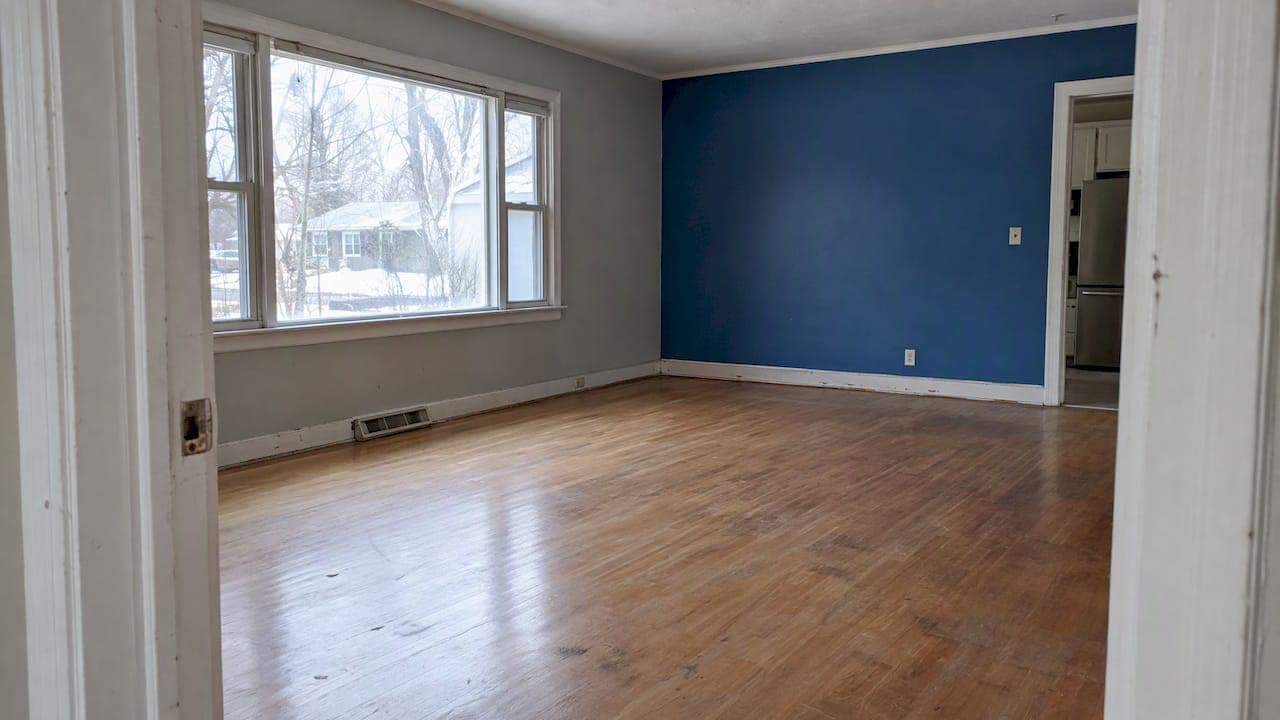
These words are not interchangeable in insurance, and policies define them differently. In general, unoccupied means nobody is living there for now but the furniture and belongings are in place, as with a seasonal home or a hospital stay. Vacant means the contents are largely gone too.
Courts have used a furniture test. A home is vacant if it lacks enough furniture for someone to reasonably live there, such as a bed, chairs or kitchen appliances. Leaving a few old items behind may not be enough. The same source warns that disputing a denied claim over vacancy can mean significant legal costs.
So a house you are clearing out for sale, with the furniture already hauled away, is exactly the situation insurers have in mind.
Situations where Michigan homes end up empty
Vacancy is rarely a choice. These are the cases we see most often among Michigan homeowners:
- Inherited homes. A family loses a parent, the estate takes months to settle, and nobody lives in the house. A common question from executors is whether the policy still holds after four or five months of vacancy. Often it does not, unless the insurer was told and agreed to terms.
- Moves for a job. You relocate before the old house sells, and utilities drop to a minimum.
- Renovations. A gutted house under construction is a different risk class from a lived-in one.
- Damaged homes. After a fire or flood, nobody can live there, and the claim and repairs drag on.
- Foreclosure or financial strain. Payments slip, the family moves out, and insurance is the first bill to lapse.
If one of these is you, the sections below apply directly.
Your coverage options, from first to last resort
1. Tell your current insurer first
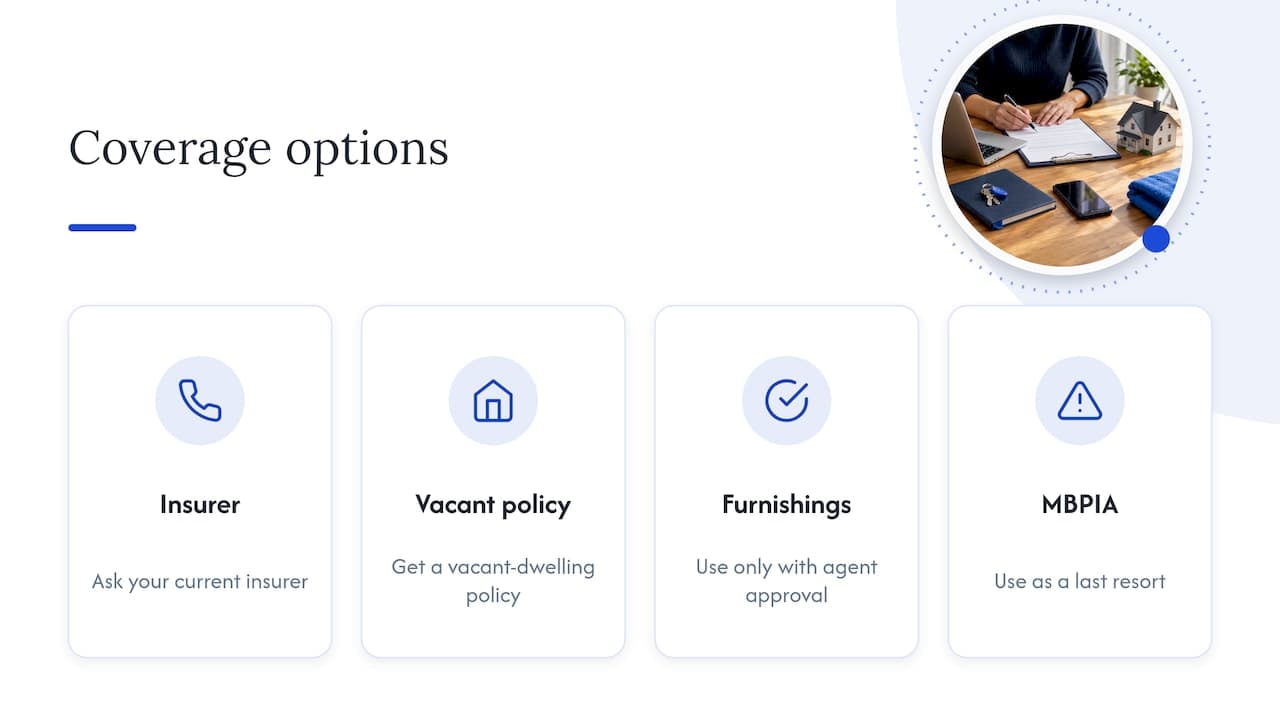
Call your agent or insurer before the vacancy starts. Ask three things: how your policy defines vacant and unoccupied, at what day count coverage changes, and which perils are excluded afterward. Then ask whether they offer a vacancy permit or endorsement. Some do, some don’t.
The Michigan Department of Insurance and Financial Services (DIFS) advises consumers to confirm an insurer or agent is licensed in Michigan before buying, and to compare quotes from more than one provider. Have your declarations page handy, since it lists your current coverages and makes quotes for similar protection easier to compare.
2. A vacant or unoccupied dwelling policy
This is a stand-alone policy or an add-on built for empty homes. Some providers offer pro-rated refunds if you cancel because the home becomes occupied, which suits a short vacancy during a sale or move. Ask about that before you sign, because terms differ by company.
Expect narrower protection than a regular homeowners policy. Vacant policies are often written for named perils only, and some limit or exclude vandalism, water damage from freezing, or theft of fixtures. Ask the agent to list exclusions in writing.
3. Temporary furnishing, only with your agent’s blessing
Because vacancy is often defined by furniture, adding furnishings can in some policy readings remove the vacancy status and keep standard coverage in place. This is not a loophole to rely on. Discuss it with your agent beforehand and get the answer in writing, since the insurer decides how its own policy applies.
4. The Michigan Basic Property Insurance Association
If the regular market turns you down, the Michigan Basic Property Insurance Association (MBPIA) offers a last-resort route for qualified properties that meet building code standards and are not used for business or illegal purposes. If a property is denied coverage, you are entitled to a written explanation. It is a safety net, not a first stop: coverage is basic, and a damaged or code-violating house may not qualify.
Do you need insurance at all?
Michigan law does not require you to carry homeowners insurance. But if you still have a mortgage, your lender will likely require it, and going without leaves you personally liable for a fire, a collapsed roof or an injured trespasser. On an empty house, we would not skip it.
What vacant home insurance costs
Nobody can quote you a number without your address, but the shape of the pricing is clear. Vacant home premiums can run 50 to 60 percent above standard homeowners costs, and in some cases 4 to 5 times higher. A policy that costs you $1,800 a year while occupied, to use an illustration, could therefore land well above $2,700 and potentially much more, prorated for the months you actually need it.
What moves the price:
| Factor | Why it matters |
|---|---|
| Length of vacancy | Longer empty periods mean more undetected-loss risk |
| Condition and age of the house | Old wiring, roofs and furnaces raise risk |
| Heating type and recent updates | Insurers ask for these details, so answer accurately |
| Security and monitoring | Alarms and regular checks can help lower premiums |
| Deductible | A higher deductible can lower the premium |
| Reason for vacancy | Renovation, sale and abandonment are priced differently |
On deductibles, DIFS explains that a deductible is the amount you pay out of pocket before the insurer pays a claim, and that a higher one can reduce the premium but requires savings you can actually reach in an emergency. On a house with no income coming in, think hard before pushing the deductible up.
Protecting an empty house in a Michigan winter
Michigan is where the cost of vacancy shows up in January. A furnace that fails or a pipe that freezes in an empty house can run for weeks before anyone knows. The Insurance Information Institute notes that steps like winterizing plumbing, installing alarms and arranging regular site checks are the standard way to manage a vacant property and may help when negotiating premiums.
A workable checklist:
- Decide on heat or drain-down. Either keep the heat on at a safe minimum, or have the system professionally drained. Check what your policy requires, because some vacant policies demand one or the other.
- Shut off the main water if you drain the lines, and open faucets as the plumber advises.
- Set up regular inspections. Have someone walk the house weekly and keep a dated log. Insurers may ask for it after a loss.
- Keep the lights, mail and yard looking occupied. Forward mail, shovel the driveway, mow in summer.
- Secure doors, windows and the garage, and consider a monitored alarm.
- Take photos and a home inventory on the day you leave. DIFS has encouraged residents to complete a home inventory to reduce stress if they ever need to file a claim.
For how freezing plumbing is handled in practice, this winter plumbing preparation guide was written for Pittsburgh homeowners, but the logic of protecting pipes in cold weather carries over to Michigan. And if you are an owner who manages a rental that has turned over, these landlord insurance management practices cover tracking policies and renewals so a vacancy does not slip past your coverage.
Mobile and manufactured homes
A reader question that comes up often is whether mobile homes are harder to insure. They are often insured differently. The NAIC explains that a mobile home that is not on a permanent foundation and still has its wheels may need auto or recreational vehicle insurance, while mobile or manufactured home policies, often written on Form HO-7, are built to cover these dwellings. If yours will sit empty, tell the insurer and ask how vacancy is treated for that policy form.
Our perspective: insurance manages the risk, selling ends it
We run a marketplace where Michigan homeowners receive and compare multiple cash offers from vetted local investors, so we talk with people in vacant-house situations all the time. Here is what we have learned from that vantage point.
Vacant home insurance is a monthly cost on an asset that is producing nothing. On top of the premium you are paying property taxes, utilities, the mortgage if there is one, and the time it takes to check on the house. Add a traditional listing, with repairs, cleaning, staging and showings, and the empty months stretch out. Each month carries premium, bills and exposure to a loss that your coverage may only partly handle.
That is why, for many owners, the best insurance decision is a shorter vacancy. We would put it this way:
- If you plan to keep the house, buy the right coverage before the vacancy begins and document everything.
- If you plan to sell, price the carrying cost of every empty month into your decision. A sale that closes in days rather than months can cost less than a slower sale at a higher headline price.
- If the home is damaged, inherited, or behind on code, a traditional listing may stall. An as-is sale to a cash investor sidesteps repair requirements.
We do not suggest skipping insurance while you wait. Keep the house covered until the day it closes, and confirm with your agent that coverage does not lapse mid-sale.
— Bryan
When selling is the better answer
Selling a vacant property is a different task from selling an occupied one. Buyers using mortgages often need the home to pass an appraisal and inspection, and an empty house with a frozen-pipe history or deferred repairs can fail both. Investors who buy for cash typically take homes as they are, which removes the repair step. Our own pages go deeper on how it works for vacant houses in Michigan, and on our blog we explain how multiple cash bids can arrive in a day or two.
A few situations where we see sellers choose this path:
- Inherited property. Heirs who live elsewhere and don’t want to manage a house. Estate questions still need an attorney, so involve yours early.
- Fire or water damage. See how we handle fire-damaged houses, since a damaged home is both hard to insure and hard to list.
- Code violations. Our guide to selling a house with code violations explains what to expect.
- Behind on payments. If you are struggling, read about options when you are behind on your mortgage.
- Moving for work. Our relocation page covers selling when you have already left.
The agent route has its own price too. We break down average agent commissions in Michigan so you can compare it with an as-is sale on your own numbers.
Get competing offers on your vacant house
If the house is empty and you would rather not pay for another winter of coverage, you can request multiple cash offers through HouseGoodbye. Local investors bid against each other, you see each offer, and you pick one or none. There are no repairs, no cleaning, no staging and no agent commission, and closings can happen in as little as seven days. If your priority is speed, our Sell Your House Fast page explains the process, and the as-is page covers homes in rough condition. For the step-by-step version, see how selling your house for cash works.
A short action plan
- Read your policy’s vacancy and unoccupancy definitions today.
- Call your agent before the move-out date and ask about endorsements.
- Get at least two quotes for vacant dwelling coverage from Michigan-licensed providers.
- If you are refused everywhere, ask about the MBPIA and request any denial in writing.
- Winterize, inspect weekly and keep a log.
- Decide on a sale timeline, and compare the cost of each empty month against your options.
FAQ
How long can a house be empty before insurance stops covering it?
It depends on your policy, but the usual window is 30 to 60 days. After that, perils such as vandalism, glass breakage and water damage may be excluded, and the insurer may cancel or not renew. Check the exact day count with your agent.
How much does vacant home insurance cost in Michigan?
There is no flat rate. Premiums can be 50 to 60 percent higher than standard coverage, or several times higher depending on the home, its condition and how long it will be empty. Quotes from several licensed providers are the only way to get your number.
What if no insurer will cover my vacant house?
Ask the Michigan Basic Property Insurance Association. It serves qualified properties that cannot get coverage in the regular market and must meet building code standards. If it denies you, you are entitled to a written explanation.
Can I leave a few pieces of furniture to avoid vacancy?
Sometimes that changes how an insurer classes the house, but a few old items may not be enough under the court definition of vacancy. Do not rely on it without written confirmation from your agent.
Sources
- Vacant Home Insurance | Foremost Insurance
- Managing the Risks of a Vacant Home | IRMI
- Insurance Information Institute
- The Michigan Basic Property Insurance Association | DIFS
- Information on Purchasing Home and Renters Insurance | DIFS
- DIFS insurance tips for National Preparedness Month, 2025
- DIFS home inventory and insurance checkups, 2026
- A Consumer’s Guide to Home Insurance | NAIC