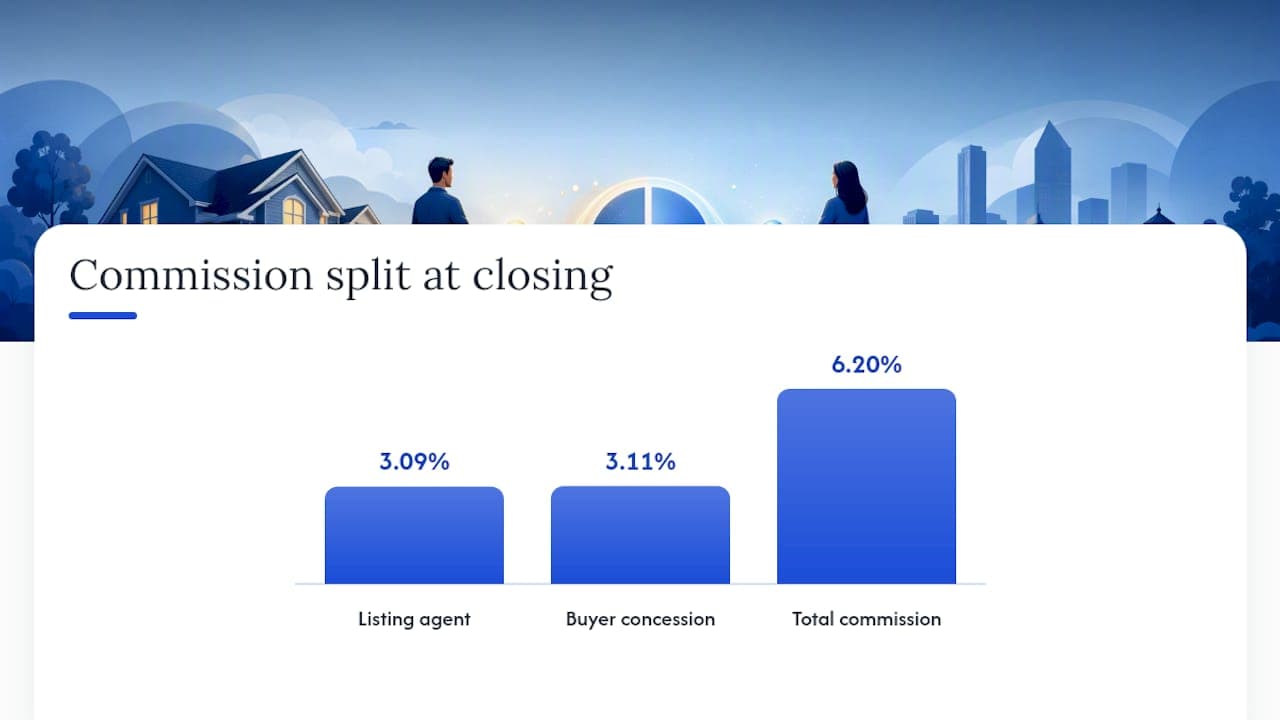
Michigan sellers pay a total real estate commission of about 6.20% on average, split roughly 3.09% to the listing agent and 3.11% to the buyer’s agent. Most sales fall somewhere in the 5% to 6% range, depending on the market and how hard you negotiate. Commissions have never been fixed by law, and recent rule changes give both buyers and sellers more room to push back on what they pay.
TL;DR:
- Agent commission rates in Michigan typically average around 6.20%, but can be negotiated down to between 5% and 6% depending on the market and home price.
- The standard split often favors roughly 3.09% for the listing agent and 3.11% for the buyer’s agent, though these vary with regional competition and home type.
- Sellers usually pay both sides of the commission upfront at closing, but buyers may be responsible for their agent’s share if contractual concessions fall short.
- Recent legislative changes require written agreements on agent compensation prior to home tours, shifting bargaining power away from automatic MLS offers.
- Alternative methods to cut agent fees include flat-fee MLS listings, limited-service agreements, selling for cash to investors, or forgoing agents entirely, especially for urgent or repair-heavy sales.
Table of Contents
- How Does the Average Agent Commission in Michigan Break Down?
- Who Pays the Commission in Michigan, and How Does It Work at Closing?
- What Michigan Law Changes Mean for Your Commission
- How Can You Lower or Avoid Realtor Fees in Michigan?
- What Does the Average Agent Commission in Michigan Cost on a Real Sale?
- What Should Buyers Know Before Signing an Agency Agreement?
- When Does Selling for Cash Beat Paying an Agent’s Commission?
- Compare Cash Offers and Skip the Commission Entirely
- Sources
- FAQ
How Does the Average Agent Commission in Michigan Break Down?
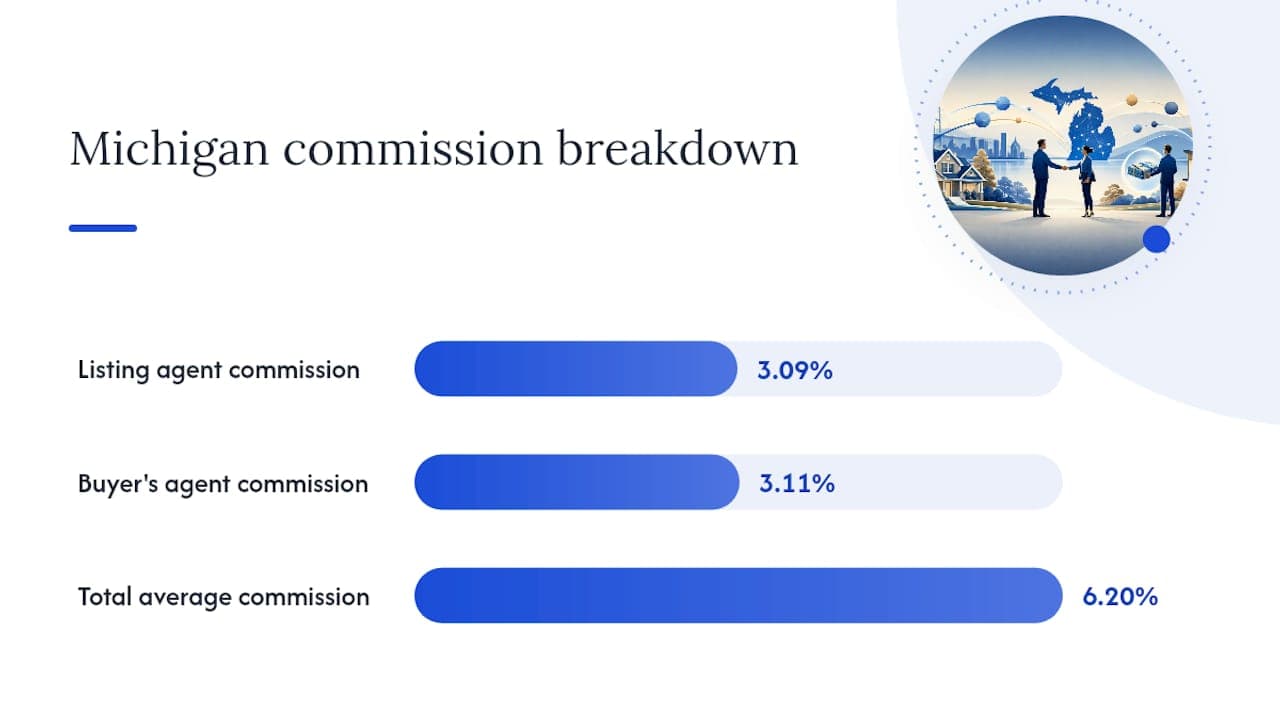
The 6.20% figure comes from a February 2026 survey of Michigan agents, which found the average split lands at roughly 3.09% for the listing side and 3.11% for the buyer’s side. That survey polled a small sample of 22 Michigan agents, so treat it as a solid directional number rather than gospel for every zip code.
Real estate commission rates in Michigan swing based on where you’re selling. A home in Farmington Hills or Sterling Heights, where competition among agents runs high, might see a listing agent accept 2.5% just to win the business. In slower rural markets, agents sometimes hold firm closer to 3% because there’s less competition and more legwork per sale. Detroit-area sales involving lower price points can also push percentage rates up slightly, since agents still have a floor for the dollar amount that makes the work worthwhile.
Here’s how the typical breakdown looks statewide:
| Component | Typical Percentage |
|---|---|
| Listing agent commission | 3.09% |
| Buyer’s agent commission | 3.11% |
| Total average commission | 6.20% |
| Common negotiated range | 5% to 6% |
A few things that push these numbers around:
- Luxury and higher-priced homes often see lower percentage rates because the dollar total is already substantial.
- Homes needing significant repairs may face resistance if a seller tries to negotiate commission down further.
- Agents representing both buyer and seller in one deal (dual agency) sometimes discount the combined rate.
Who Pays the Commission in Michigan, and How Does It Work at Closing?
Sellers have traditionally covered the full commission in Michigan, paying both their own agent and offering a concession to whoever brings the buyer. A typical deal splits close to 3.09% for the listing side and 3.11% as a buyer-agent concession, according to LegalClarity’s analysis of Michigan commission practices. That money comes straight out of the seller’s proceeds at closing, not as a separate check the seller writes.
That said, buyers aren’t automatically off the hook anymore. If a buyer signs an agreement promising their agent 2.5% and the seller only offers 1% as a concession, the buyer can be contractually responsible for covering that 1.5% gap out of pocket.
A few mechanics worth knowing:
- The commission split gets itemized on the closing statement, so both parties see exactly who’s getting paid what.
- Buyer-agency agreements are now separate, written contracts, not an assumption baked into the MLS listing.
- Sellers still negotiate their listing agreement independently of whatever buyer-side concession they choose to offer.
Pro Tip: Ask your listing agent to show you the exact concession percentage they’re advertising to buyer’s agents before you sign. That number directly affects how many agents will show your home and how quickly it sells.
What Michigan Law Changes Mean for Your Commission
Michigan lawmakers are catching up to a national shift that started with the NAR commission lawsuit settlement. House Bills 5227 through 5229 would require buyers to sign written agency agreements that spell out exactly how much their agent gets paid, before they ever tour a home. The bills also tighten up limited-service agreement rules and improve transparency on closing statements.
That builds on a bigger industry shift. The National Association of Realtors removed the old “blanket” offer of compensation that used to run automatically through the MLS. Sellers no longer commit to a set buyer-agent fee just by listing a home; every dollar amount is now a term you negotiate directly with your own agent and, indirectly, with whoever brings the buyer.
What this changes: brokers can no longer assume a standard buyer-agent split will apply. Every commission figure now gets negotiated and documented in writing before it becomes binding.
Steps worth taking at listing:
- Ask your agent for the exact buyer-agent concession they plan to advertise, in writing.
- Confirm your listing agreement states a specific percentage, not a vague reference to “customary” rates.
- Request a copy of any buyer-agency disclosure your agent uses so you understand what buyers are seeing.
How Can You Lower or Avoid Realtor Fees in Michigan?
Paying the full average agent commission in Michigan isn’t mandatory. Sellers have several legitimate paths to cut that cost, each with tradeoffs worth weighing before you commit.
- Flat-fee MLS listing. You pay a set fee, often a few hundred dollars, to get your home listed on the MLS without a traditional full-service agent. You handle showings, negotiations, and paperwork yourself.
- Limited-service agreements. An agent handles specific tasks (paperwork, MLS entry) for a reduced fee while you manage the rest. Michigan permits this with an explicit waiver, though pending legislation may tighten who can use it, according to the House Fiscal Agency’s bill analysis.
- For Sale By Owner (FSBO). You skip listing commission entirely, but you take on marketing, buyer vetting, disclosures, and negotiation without professional backup. Deals can fall through more often without an agent managing the process.
- Cash sale to an investor. You sell as-is, skip repairs, and pay no agent commission at all, trading some sale price for speed and certainty.
Pro Tip: If repairs are the real reason you’re dreading a traditional listing, run the math on what those repairs would cost versus what you’d net from a cash sale for a home with code violations. Commission savings often aren’t the biggest number in that comparison.
What Does the Average Agent Commission in Michigan Cost on a Real Sale?
Numbers get clearer with real dollar amounts.
That $337,500 example matches a real published calculation: at 6.20%, agent fees run $20,925, money that comes directly off your net proceeds. Flat-fee routes save the most on paper, but remember that number doesn’t include the value of an agent’s negotiation skill, marketing reach, or buyer screening. Broker splits also affect what your actual agent takes home from their side of the commission, which sometimes shapes how flexible they’ll be on rate.
What Should Buyers Know Before Signing an Agency Agreement?
Buyers now face a real financial risk they didn’t have to think about before the settlement: signing an agreement that promises their agent more than the seller is willing to cover. That buyer could owe the remaining 1.5% themselves at closing, according to LegalClarity’s breakdown of Michigan commission liability.
Before signing anything, confirm these details:
- The exact compensation percentage or dollar amount your agent is charging.
- How the agreement terminates if you’re not satisfied or don’t buy a home.
- What happens if the seller’s concession falls short of your agreed rate.
- Whether the agreement locks you into working exclusively with that agent.
A five-minute conversation with your agent about these terms beats a surprise bill at the closing table.
When Does Selling for Cash Beat Paying an Agent’s Commission?
Someone facing an urgent relocation, a home stuck in probate, or a property that needs $30,000 in repairs before it could even list competitively often comes out ahead skipping the agent process entirely. Commission savings stack on top of avoided repair costs and weeks of carrying costs like utilities, insurance, and mortgage payments during a slow listing period.
Housegoodbye connects Michigan homeowners with multiple competing cash offers from vetted local investors, with no repairs, no staging, and no agent fees. Closings can happen in as little as seven days. The honest tradeoff: a cash sale usually nets less than a fully marketed, agent-assisted listing at top dollar. For sellers who value speed and certainty over squeezing out the last few thousand dollars, that tradeoff often makes sense. You can see how the cash-sale process works in Michigan before deciding either way.
— Bryan
Compare Cash Offers and Skip the Commission Entirely
Instead of one agent setting your price and taking a cut, you get multiple competing cash offers from vetted local investors and pick the one that works for you.
Here’s what that looks like in practice:
- No repairs, cleaning, or staging required before you sell.
- Closings in as little as seven days when you need to move fast.
- Multiple investor bids, so you’re not stuck negotiating with just one buyer.
If a costly repair list, a tight relocation timeline, or an inherited property is pushing you toward a faster exit, check your options on the cash home buyers page for Michigan sellers and see what offers come in.
Sources
The commission figures and legal context in this article come from a handful of sources worth bookmarking if you want to dig deeper:
- Average Realtor Commission Fees in Michigan: 2026 Survey
- Who Pays Realtor Fees in Michigan: Buyer or Seller? - LegalClarity
- House Fiscal Agency HLA for House Bills 5227–5229 (Michigan)
- Average Realtor Commission in Michigan (2026 Update)
FAQ
Is 2.5% a Good Realtor Commission in Michigan?
Whether it’s “good” depends on what services that lower rate includes, so ask what’s cut before you sign.
What Percent Commission Do Most Realtors Get in Michigan?
Most Michigan agents work within the 5% to 6% total commission range, with the statewide average landing at 6.20% split close to evenly between listing and buyer’s agents.
Can I Sell My Michigan Home Without Paying Any Agent Commission?
Yes. Selling directly to a cash buyer through a service like Housegoodbye eliminates agent commissions entirely, since there’s no listing agent or buyer’s agent involved in the transaction.