
Yes, you can sell your house without cleaning it, whether that means listing it “as-is” or selling directly to a cash buyer. You’ll close faster and skip the hauling, scrubbing, and repair bills, but expect offers below what a spotless, move-in-ready home would fetch. The right next step is gathering your disclosure paperwork and picking a sale route: an as-is MLS listing or a direct offer from a cash investor.
TL;DR:
- Selling a house without cleaning typically results in offers 5% to 30% below market value, depending on the property’s condition.
- Buyers for uncleaned homes are mainly cash investors and rehabbers who price in cleanup costs and waive many contingencies.
- Speedy closings of 7 to 10 days are common with cash deals, while financed sales often take 30 to 45 days due to appraisal and underwriting processes.
- Legally, sellers must disclose known defects and provide required documents, regardless of home condition, to avoid legal liabilities.
- Pricing should start from the home’s fully repaired value, then subtract estimated repair costs, with larger discounts for severely distressed properties.
Table of Contents
- How Does Selling As-Is Without Cleaning Actually Work?
- Who Will Buy a House That Hasn’t Been Cleaned?
- Pros and Cons of Selling a House Without Cleaning
- What Legal Disclosures Can You Not Skip?
- What Price Discount Should You Expect?
- How Do You Sell Fast Without Cleaning?
- How Long Does Closing Take With Cash vs. Financed Buyers?
- What We’ve Learned Helping Sellers Skip the Cleanout
- Why the “Clean It First” Advice Doesn’t Fit Every Seller
- How Housegoodbye Gets You to Closing Without the Cleanout
- Sources
- FAQ
How Does Selling As-Is Without Cleaning Actually Work?
“As-is” is a specific legal term, not just a listing buzzword. It means you’re offering the property in its current condition and won’t be making repairs before closing, according to Zillow’s guidance on as-is sales. What it does not do is erase your disclosure duties. Buyers can still request inspections and back out during a contingency period if what they find scares them off, even on an as-is deal.
This is exactly why investors and cash buyers dominate this corner of the market, as explained in this cash-out refi pitch for realtors. They’ve priced cleanup and rehab into their offer from the start, so a garage full of boxes or a basement that hasn’t seen daylight in years doesn’t spook them the way it would a first-time buyer walking through with an agent.
Before you list anything, pull together:
- A completed property condition disclosure form (required in most states)
- Any prior inspection reports, even old ones
- Records of major systems (roof age, furnace, water heater) if you have them
A pre-listing inspection can also head off surprises that derail a deal mid-contract, since buyers often use inspection findings as leverage to renegotiate price after the fact.
Who Will Buy a House That Hasn’t Been Cleaned?
Not every buyer wants the same thing, and matching your listing to the right audience saves weeks. Cash investors and rehabbers make up the core buyer pool for cluttered or hoarder properties. Zillow notes these buyers price in cleanup costs upfront and typically waive most contingencies to close fast.
Here’s how the buyer landscape breaks down:
- Cash investors and rehabbers: Quick closings, minimal contingencies, price built around cleanup and repair costs.
- iBuyers and instant-offer companies: Fast, convenient offers, but often charge a service fee and only operate in select markets.
- Traditional financed buyers: Workable for cosmetic clutter, but hoarder-level conditions usually scare off lenders and buyers alike.
For any of these, upfront honesty wins. Post clear photos of problem areas, disclose known issues before someone schedules a walkthrough, and offer a virtual tour so buyers can self-screen before wasting your time or theirs.
Pros and Cons of Selling a House Without Cleaning
Selling without cleaning is a trade, not a free lunch. Weigh it like one.
- Pro: Speed. Cash and investor sales often close in 7 to 10 days, compared to weeks or months for a traditional listing.
- Pro: No cleanout costs. Skipping dumpster rentals, junk haulers, and deep cleaning saves real money and even more time.
- Con: Lower offers. Expect discounts of roughly 5% to 30% below move-in-ready value, depending on severity.
- Con: Smaller buyer pool. Financed buyers and their lenders can be hard to line up when a home needs serious work.
If the calendar or your energy matters more than squeezing out every dollar, as-is wins. If you have time and can afford decluttering and light staging, the price bump might be worth the effort.
What Legal Disclosures Can You Not Skip?
“As-is” limits your repair obligations. It does not limit your liability if you hide something you knew about. Most states require a written property condition disclosure, and skipping it or lying on it can trigger a lawsuit long after closing, according to LegalClarity’s breakdown of as-is disclosure rules.
Statistic Callout: Sellers who conceal known defects, even under an as-is clause, remain exposed to fraud claims. As-is wording protects you from a repair demand, not from a lawsuit over what you didn’t say.
Homes built before 1978 carry an added federal requirement: you must provide the EPA lead paint pamphlet and give buyers a window to conduct a lead inspection before the sale finalizes.
A few things to have ready before you list:
- A signed, dated property condition disclosure
- The EPA lead paint pamphlet if your home predates 1978
- Documentation of anything you’ve patched, repaired, or noticed but didn’t fix
Consider a pre-listing inspection. It costs a little upfront, but it gives you a paper trail if a buyer ever claims you hid something.
What Price Discount Should You Expect?
Pricing an as-is, uncleaned home takes a different formula than a standard listing. Start with after-repair value, the price the home would fetch fully fixed up, then subtract realistic repair and cleanup costs using contractor quotes or an appraiser’s estimate, an approach LegalClarity recommends for defensible as-is pricing.
Rough discount ranges by condition:
- Cosmetic issues only: 5% to 10% below market
- Moderate repairs needed: 10% to 20% below market
- Major structural problems: 20% to 30% below market
- Distressed or uninhabitable: 30% or more below market
Lean on distressed and investor comps rather than standard MLS comps when setting your number. A neighbor’s fully renovated sale three doors down won’t tell you what your as-is house is actually worth to the buyers who’ll actually make an offer.
How Do You Sell Fast Without Cleaning?
Speed comes down to a short list of moves that actually matter, not a full deep clean.
- Label the listing “as-is” clearly and pair it with honest, well-lit photos of problem areas.
- Hand over your disclosure forms and any inspection reports before buyers even ask.
- Mow the lawn, clear the driveway, and secure anything hazardous near entry points.
- Offer a virtual walkthrough first so only serious buyers schedule an in-person visit.
Pro Tip: Skip the deep clean but don’t skip safety. Clear pathways, secure loose railings, and make sure smoke detectors work before anyone walks through, even a hoarder home. A buyer who feels unsafe on the first visit won’t come back for a second.
How Long Does Closing Take With Cash vs. Financed Buyers?
Cash and investor deals typically close in 7 to 14 days, while financed purchases usually run 30 to 45 days once you factor in loan underwriting.
What slows things down on either path:
- Inspection contingency windows, where buyers can renegotiate or walk after finding issues
- Title searches that turn up liens or ownership questions that need resolving
- Appraisal gaps on financed deals, where the lender’s valuation comes in below the offer
If speed matters more than price, structure your offer comparison around closing date, not just dollar amount. A buyer offering slightly less with a firm 10-day close and no financing contingency often beats a higher offer that could unravel in week three.
What We’ve Learned Helping Sellers Skip the Cleanout
Working with sellers who need out fast surfaces the same handful of situations over and over: an inherited house nobody wants to sort through, a hoarder property that’s been building up for years, or a job relocation with a two-week deadline. In every one of those cases, the seller’s real problem isn’t price maximization. It’s time, energy, and avoiding a cleanout that could take weeks.

Housegoodbye built its marketplace around that reality. Instead of one buyer setting the price, multiple vetted investors compete for the property, which tends to push offers higher than a single lowball bid would. For sellers who want to compare offers before committing, Housegoodbye’s as-is selling page walks through exactly how that works and what to expect at each step.
Why the “Clean It First” Advice Doesn’t Fit Every Seller
The standard real estate advice, declutter, deep clean, stage every room, isn’t wrong. It genuinely can raise your sale price. But it assumes every seller has the time, money, and physical ability to do that work, and a lot of sellers simply don’t.
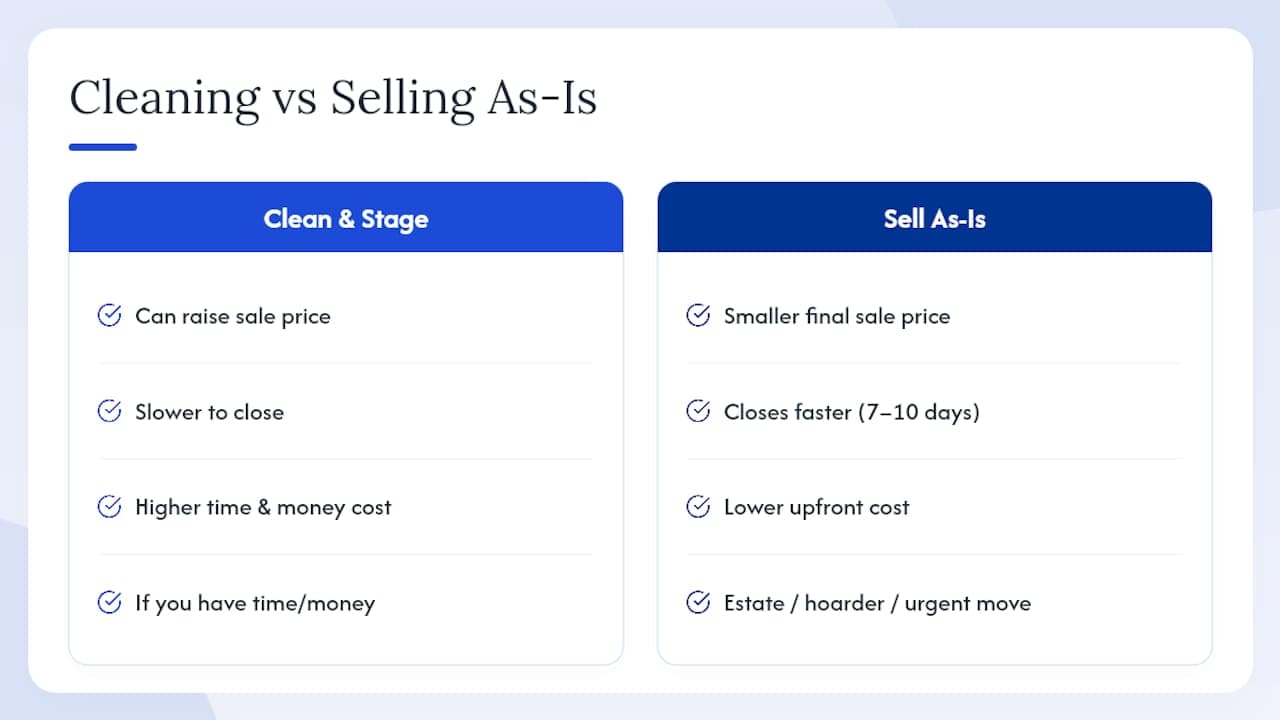
What the research actually supports is a trade-off, not a universal rule: cleaning and staging can add value, but as-is sales close faster and cost less upfront, even if the final number is smaller. The mistake I see most often is sellers treating “clean first” as a moral obligation instead of a financial decision. If you’re managing a parent’s estate, drowning in a hoarder situation, or need to relocate in three weeks, the math changes entirely.
What should come first isn’t the mop and the dumpster rental. It’s your disclosure paperwork and an honest read on how much time you actually have. A marketplace where competing investors bid against each other does more to protect your price than any weekend of scrubbing baseboards ever will.
— Bryan
How Housegoodbye Gets You to Closing Without the Cleanout
Housegoodbye is the alternative to spending weekends hauling junk and scrubbing floors before you can even list: you submit your property details once, and vetted local investors compete to buy it exactly as it sits, clutter and all.

Getting started takes a few minutes. You describe the property’s condition honestly (yes, even the messy parts) and Housegoodbye routes that information to real, competing investors instead of a single buyer setting the terms. That competition tends to push offers up, and because these buyers already price for cleanup, there’s no pressure to touch a single room before someone makes an offer. Many sellers see closings in as little as 7 days, with no repairs, no staging, and no agent commissions eating into the final number.
If you want to see what your home could bring without lifting a broom, compare cash offers from local Michigan investors and get a real read on your options before you decide anything.
Sources
- How to Sell a House As-Is When it Needs Repairs | Zillow
- How to Sell My House As Is: Disclosures, Costs & Closing - LegalClarity
- Selling a home as is: What to know | Rocket Mortgage
FAQ
Can I Sell My House Without Cleaning It?
Yes. Selling as-is or to a cash buyer lets you skip cleaning entirely, though you’ll typically receive an offer below what a fully cleaned, staged home would command.
Do Appraisers Care if a House Is Messy?
Clutter itself doesn’t lower an appraised value, but appraisers do factor in visible damage, deferred maintenance, or safety issues that clutter can obscure or worsen.
Do Sellers Have to Clean the House Before Selling?
No. There’s no legal requirement to clean before selling, but you are legally required to disclose known defects on a written property condition disclosure regardless of the home’s cleanliness.
How Long Am I Liable for a House After Selling It?
Liability depends on your state and the nature of the issue. Concealing a known defect, even in an as-is sale, can expose you to a fraud claim well after closing, which is why honest, documented disclosure matters more than the home’s condition itself.