Yes, you can sell a Detroit-area house with code violations. The fastest practical route is an as-is cash sale or a multi-offer platform that handles title and lien review for you, rather than an MLS listing that usually demands repairs first. The one catch: you must disclose known issues, and unresolved liens or Department of Appeals and Hearings default judgments can still block closing. Start by requesting cash offers or checking your BSEED/DAH case status today.
TL;DR:
- Selling with code violations is feasible through fast cash or multi-offer platforms that handle liens and title review; repairs are not required for cash buyers.
- House owners must disclose known violations, but unresolved liens or default judgments can delay or block closing regardless of disclosure.
- The most common violations include exterior damage, inoperable vehicles, open trash, missing permits, and foundation problems, with structural issues being most likely to kill a deal.
- Cash sales or competing bids usually close within three weeks with minimal or no repairs, while traditional listings require permits, repairs, and longer timelines.
- Prioritize ordering a title search and gathering all violation, lien, and tax information before negotiating to avoid surprises that could affect the sale outcome.
Table of Contents
- Common Detroit Code Violations and How Each Affects a Sale
- Do You Have to Fix Code Violations Before Selling?
- Your Realistic Selling Options With Code Violations
- How Cash Buyers and Multi-Offer Platforms Actually Work
- What Fines, Liens, and Tax Debt Do to Your Closing
- Your Checklist Before You Request an Offer
- A Local Perspective on Selling As-Is With Code Violations
- Get Multiple Cash Offers Without Fixing a Single Violation
- Where to Verify Violations, Fines, and Disclosure Rules
- Sources
- FAQ
Common Detroit Code Violations and How Each Affects a Sale
Some violations scare off traditional buyers instantly. Others barely register with an as-is cash buyer. Knowing the difference shapes which sale route makes sense for your house.
The most common Detroit and Michigan violations fall into a few buckets:
- Exterior maintenance — peeling paint, overgrown lots, damaged siding or roofing that BSEED flags during a drive-by inspection.
- Inoperable vehicles stored on the property, a frequent trigger for blight complaints from neighbors.
- Rat harborage from open trash, debris piles, or vacant structures next door.
- Missing certificate of compliance for rental properties, which stalls any sale involving tenants.
- Rental registration failures, common with inherited properties nobody re-registered after a landlord passed away.
- Unsafe wiring or plumbing found during a home inspection or a prior BSEED complaint.
- Unpermitted work, like a finished basement or added room with no inspection record on file.
- Structural or foundation problems, the most expensive category and the one most likely to kill an MLS deal.
Lenders financing a traditional buyer typically require electrical, structural, and occupancy issues resolved before closing, since appraisers flag them and underwriters won’t fund a loan against a house with open violations. An as-is cash buyer usually accepts all eight categories without requiring a single repair. Most BSEED escalations start with a complaint or routine inspection, move to a ticket, and land in the Department of Appeals and Hearings if the ticket goes unanswered or unresolved.
Do You Have to Fix Code Violations Before Selling?
No law requires you to repair every code violation before selling a Detroit house. What Michigan law does require is honesty about what’s wrong with it.
The Michigan Seller Disclosure Act obligates you to complete and sign a disclosure statement listing known defects, including code violations you’re aware of. Skip it or fudge it, and a buyer can potentially terminate the deal, or sue you for fraud after closing. Michigan courts treat the disclosure form as a good-faith document, and knowingly withholding known defects has formed the basis for real fraud claims against sellers.
If your house was built before 1978, federal rules add another layer:
- Provide buyers the EPA’s “Protect Your Family From Lead in Your Home” pamphlet.
- Keep signed disclosure acknowledgments for three years.
- Give buyers a 10-day window to inspect for lead-based paint before closing.
Here’s the part most sellers miss: disclosure alone doesn’t guarantee a clean closing. Blight fines that escalated into DAH default judgments can attach as liens, and a title search will surface them regardless of what you disclose. Pro Tip: Order a title search before you accept any offer. It’s the fastest way to find out whether a violation carries a payoff obligation that will eat into your proceeds at the closing table.
Your Realistic Selling Options With Code Violations
Once you know what’s wrong with the house and what you owe, four paths open up. Rank them by how fast you need to close and how much cash you have for repairs.
- Sell as-is to a cash buyer or multi-offer platform. This is the fastest option, closing in as little as a week to three weeks, with no repairs and no agent commissions.
- Repair and list on the open market. This can net a higher sale price, but it requires permits, contractor scheduling, and enough cash reserves to front the work before you see a dime.
- Sell to family or transfer at a nominal price. Legal and workable, but it carries tax reporting implications and requires proper deed transfer, not a handshake arrangement.
- Auction, short sale, or pre-foreclosure sale. The right move when tax delinquency or mortgage default has already limited your other options.
Your choice usually comes down to four signals: how urgent your timeline is, how much equity you actually have, whether liens already sit against the title, and whether you have the stomach and cash for repairs. A homeowner facing a Wayne County tax deadline has a very different calculus than one who just inherited a house with cosmetic issues and no rush to sell.
How Cash Buyers and Multi-Offer Platforms Actually Work
The process looks nothing like a traditional listing. There’s no staging, no open house, and no waiting on financing contingencies that fall through at the last minute.
A typical timeline runs: you request offers, investors run due diligence on the property, someone pulls title and lien records, you pick the best offer, and you close. That whole sequence usually takes 7 to 21 days depending on how clean the title comes back.
Buyers and platforms check the same things every time:
- BSEED and DAH case history tied to the address.
- Wayne County tax payment status.
- Existing mortgages, contractor liens, or judgments on title.
- Your completed seller disclosure form.
A single investor making you one offer has no incentive to sharpen their number. A multi-bid marketplace like HouseGoodbye flips that dynamic. Multiple local investors compete for the same property, which tends to push net proceeds higher than a lone cash offer, and you still pick your own closing date. Most delays trace back to unresolved liens, which get handled through escrow holdbacks or a negotiated payoff at the closing table rather than derailing the sale entirely.
What Fines, Liens, and Tax Debt Do to Your Closing
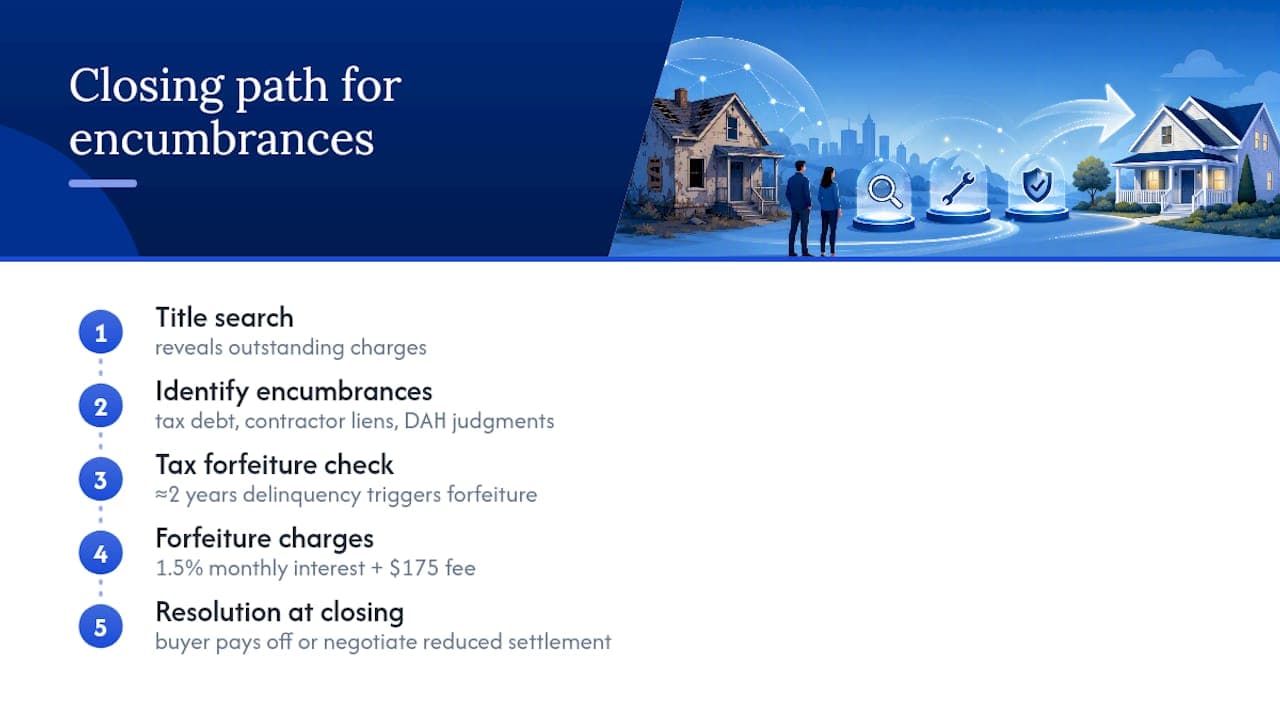
Money owed to the city or county doesn’t disappear when you sell. It shows up on the title search, and somebody has to pay it before the deed transfers clean.
Detroit blight fines range from $100 to $10,000 per occurrence, and the amount escalates the longer a violation sits unaddressed. Paying the initial ticket doesn’t necessarily close the case, either. DAH’s enforcement model is built around correcting the underlying condition, not just collecting a fine, so an unresolved case can keep accruing.
Wayne County tax debt compounds even faster. Once a property enters tax forfeiture after roughly two years of delinquency, the county applies 1.5% monthly interest retroactive to the original delinquency date, plus a flat $175 forfeiture fee. Contractor liens and DAH default judgments show up the same way: they surface in a title search, and cash buyers typically resolve them by paying off the balance at closing or negotiating a reduced settlement directly with the seller before transfer.
Your Checklist Before You Request an Offer
Getting organized before you talk to a buyer speeds up every step that follows and keeps surprises off the title report.
- Pull your signed seller disclosure form, or fill one out now if you haven’t.
- Gather lead-paint records if the house was built before 1978.
- Collect recent tax statements and your mortgage payoff amount.
- Request your BSEED and DAH case history and note any case numbers.
- Order a title search early to flag liens or judgments before you’re mid-negotiation.
- Prepare honest photos and a plain-language list of known violations to hand buyers upfront.
Buyers who see accurate information upfront move faster, because they’re not waiting on surprises to surface during due diligence.
A Local Perspective on Selling As-Is With Code Violations
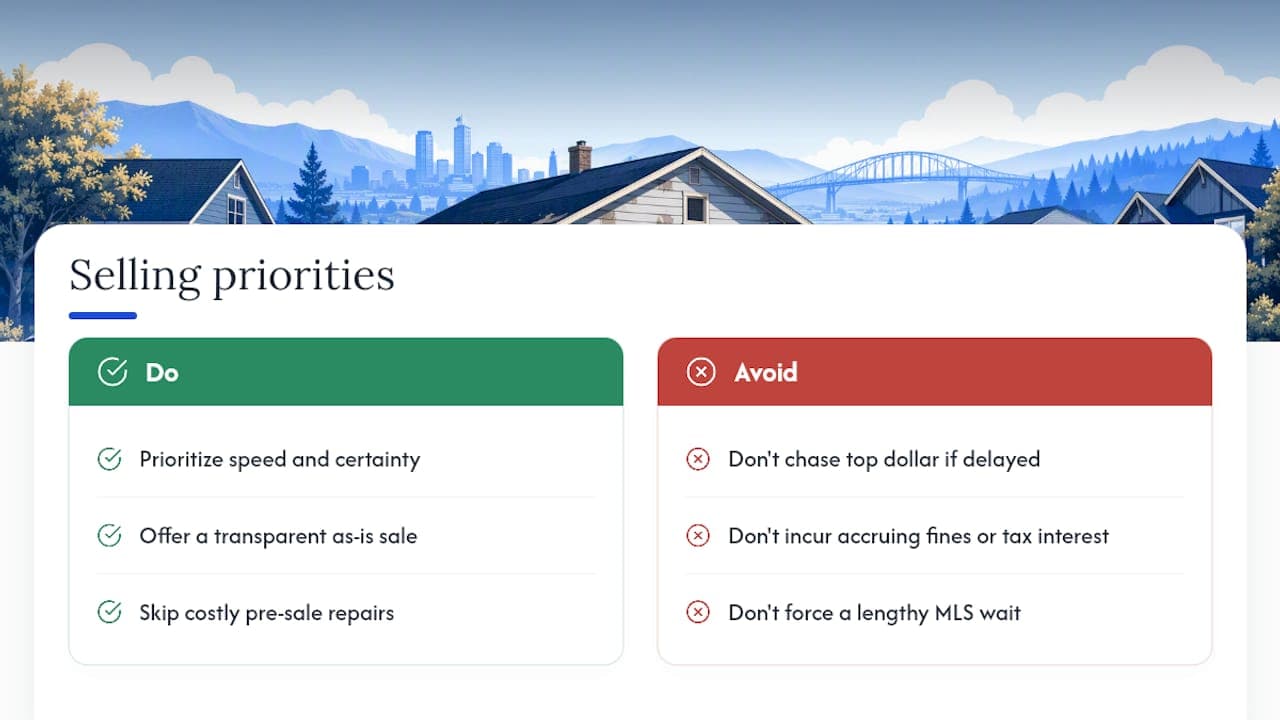
Most Village of Clarkston and Detroit-area sellers I talk to don’t have a violation problem so much as a time and cash problem. They know the wiring needs work; they just don’t have $8,000 sitting around to fix it before a buyer’s inspector shows up.
Speed and certainty should beat chasing top dollar whenever a delayed sale means more accruing fines, more monthly tax interest, or a family situation that can’t wait for a six-month MLS process. That’s exactly where a fast, transparent as-is path earns its place, which is what the next section walks through.
— Bryan
Get Multiple Cash Offers Without Fixing a Single Violation
An alternative to a single lowball cash buyer is a platform where multiple local investors bid against each other for your house, code violations and all.

Here’s what that looks like in practice. You submit your property once, and Housegoodbye routes it to vetted local investors who compete for the deal, which means you’re comparing real numbers instead of negotiating against yourself. There are no repairs, no staging, no agent commissions, and closings can happen quickly once you accept an offer. The trade-off is straightforward: an as-is sale won’t match what a fully repaired house might fetch on the open market, but it skips the months of permit pulls, contractor scheduling, and inspection contingencies that come with listing a house that has open BSEED cases. If your situation calls for certainty over squeezing out the last few thousand dollars, request your competing cash offers and see what local investors are willing to pay for your house as it sits right now.
Where to Verify Violations, Fines, and Disclosure Rules
- City of Detroit BSEED blight complaints shows how enforcement starts and current fine ranges.
- Department of Appeals and Hearings covers case status and default judgment risk.
- Wayne County Treasurer forfeiture timeline explains tax delinquency deadlines and penalties.
This article is general information, not a substitute for advice from a qualified lawyer. Consult a qualified legal professional about your own circumstances before acting on anything here.
Sources
- City of Detroit — Blight complaints / enforcement
- EPA — Lead-based paint disclosure rule
- Wayne County Treasurer — Forfeiture / Foreclosure timeline
- City of Detroit — Department of Appeals and Hearings (DAH) blight ticket information
FAQ
Can You Sell a House That Isn’t Up to Code?
Yes. Michigan doesn’t require a house to be brought up to code before a sale, but you must disclose known defects on your seller disclosure form)/documents/mcl/pdf/mcl-565-957.pdf). Cash buyers and as-is platforms routinely purchase homes with open code violations without requiring any repairs.
Who Owns All the Abandoned Homes in Detroit?
Ownership varies widely: some abandoned homes remain with the original owner or their heirs, some sit with lenders after foreclosure, and others have passed to Wayne County through tax forfeiture after unpaid property taxes. There’s no single entity that holds them all.
Does a House Have to Be Up to Code Before Selling?
No. There’s no blanket legal requirement to fix every code violation before selling in Michigan, though unresolved DAH default judgments or liens can complicate title transfer regardless of disclosure. Traditional lenders financing a buyer will typically require major safety issues fixed, which is why as-is cash sales skip that requirement entirely.
Can I Sell My House for $1 to a Family Member?
You can legally transfer property to a family member for a nominal price like $1, but it still requires a proper deed transfer and carries gift tax reporting considerations. It’s not a way to avoid disclosure obligations or existing liens, both of which follow the property regardless of sale price.
What Does Housegoodbye Charge to Submit My Property?
Housegoodbye’s current pricing and fee structure are listed directly on its site rather than a fixed published rate here. Homeowners submit their property to receive competing cash offers from local investors with no obligation to accept any bid.