
When a Michigan listing expires or falls through, you have four realistic paths: relist with a new agent and a corrected strategy, relist with your current agent after fixing what broke the deal, withdraw the property to make repairs first, or skip the relist entirely and sell fast for cash through a marketplace like Housegoodbye. If you can wait several weeks to a few months and invest in repairs or marketing, relisting usually nets more money. If you need speed, certainty, or want to skip repairs altogether, a cash sale is the more practical route.
TL;DR:
- Relisting with a new or updated agent works best if you have time and want to maximize your sale price, especially with current market data from the past 30 to 60 days.
- Investing in professional photography, staging, and pre-marketing to buyer agents can generate quicker showings and help you capitalize on the first two weeks of relisting.
- Repairing or staging the home can substantially improve appeal and value, but price adjustments should be transparent and based on current market comps rather than outdated figures.
- For urgent sales or properties in poor condition, selling as-is for cash through platforms like Housegoodbye provides speed and certainty, though typically at a lower net amount.
- Local MLS rules on status resets may limit the effectiveness of immediate relisting, so confirm rules with your broker before re-listing to avoid perceived stale listings.
Table of Contents
- Failed Listing Options in Michigan: Which One Fits Your Situation?
- How to Relaunch a Failed Michigan Listing the Right Way
- Fixes That Actually Move a Relisted Michigan Home
- Expired, Withdrawn, or Canceled: Why It Matters for Your Next Move
- A Practical Way to Decide Between Relisting and Selling Fast
- Getting Multiple Cash Offers Through Housegoodbye
- Where to Verify the Details in This Guide
- Sources
- FAQ
Failed Listing Options in Michigan: Which One Fits Your Situation?
Not every failed listing needs the same fix. The right move depends on how much time you have, how much cash you can put into the property, and whether your last agent actually did their job.
- Relist with a new agent and a fresh strategy. This works best when you have time on your side and want full market exposure. A new agent brings new eyes to your pricing, photos, and marketing plan, and Michigan buyers researching a property rarely know (or care) that it sat with a different broker last season.
- Relist with your current agent after a real rework. This only makes sense if the agent has been proactive, your listing agreement allows a mid-course correction, and the failure came down to something fixable, like weak photos or a slow start, rather than a fundamental mismatch between price and property.
- Withdraw and improve before relisting. Choose this when repairs or staging would materially change how buyers perceive the home. A kitchen that photographs badly today can look completely different after two weeks of paint, decluttering, and better lighting.
- Sell as-is for cash through a marketplace like Housegoodbye. This fits sellers who need to close fast, can’t or don’t want to fund repairs, or are dealing with a deadline like foreclosure, a job relocation, or an inherited property nobody wants to manage.
Each path solves a different problem. Relisting chases the highest sale price. A cash sale trades some of that ceiling for speed and predictability.
How to Relaunch a Failed Michigan Listing the Right Way
A relisted home doesn’t get a second chance to make a first impression online, so the relaunch has to fix the actual reason the first attempt failed, not just repeat it with a new sign in the yard.
- Reprice using current comps, not last year’s numbers. Pull sold data from the past 30 to 60 days, not the estimates your agent used six months ago. In Metro Detroit and similar Michigan markets, overpricing relative to current comps is the single most common reason homes sit unsold, and the best offer usually shows up within the first couple of weeks after relisting.
- Treat the first week or two as make-or-break. Line up your photography, marketing, and open house before the listing goes live, not after it’s already been sitting for a week with no traffic.
- Invest in professional photography and a short video walkthrough. Buyers scroll fast, and listings without quality imagery often get skipped by mobile shoppers before they ever click through to the details.
- Pre-market to buyer agents before the public listing goes live. A quiet outreach to local agents who have buyers in your price range can generate showings in the first 48 hours instead of the first two weeks.
- Interview any new agent with specific questions. Ask exactly how they’ll price the home, what their marketing budget covers, and how often they’ll report back to you. Vague answers, no references, and reluctance to discuss past DOM numbers are red flags worth walking away from.
Pro Tip: Ask any agent you’re interviewing to show you the actual photos and listing description from their last three closed sales in your price range. If the work looks generic, your listing probably will too.
Fixes That Actually Move a Relisted Michigan Home
Most failed listings don’t need a total overhaul. They need a handful of specific, low-cost fixes that buyers respond to immediately.
- Declutter and deep clean every room, including closets buyers will open during showings.
- Hire a professional photographer rather than relying on an agent’s phone camera.
- Improve curb appeal with fresh mulch, trimmed shrubs, and a repainted front door.
- Handle visible minor repairs (leaky faucets, cracked outlet covers, scuffed trim) before the first showing, not after an inspection flags them.
Staging makes the most sense for vacant homes in the mid-to-upper price bands, where empty rooms photograph poorly and buyers struggle to picture furniture placement. For lower-priced homes or ones still occupied, virtual staging or light styling with your own furniture usually delivers a similar visual boost for a fraction of the cost.
On pricing, resist the urge to anchor to what you originally wanted rather than what the market is showing you. Small, early, transparent price adjustments read as confidence. Large cuts after 60 days on market read as desperation, and buyers negotiate accordingly.
Timing matters too. Michigan winters bring fewer buyers overall, but the ones still shopping tend to be more motivated, which means a well-priced, well-presented home can still move quickly even in January or February. Budget one to two weeks for photography, cleaning, and minor repairs before your relaunch date, and build in extra lead time if you’re coordinating contractors during the winter months.
Expired, Withdrawn, or Canceled: Why It Matters for Your Next Move
The status on your old listing determines how much freedom you have right now.
- Expired means your listing agreement ran its full term and ended on its own. You’re free to sign with any agent, including a different one.
- Withdrawn means you or your agent pulled the listing while the contract was still active. The listing agreement itself may still legally bind you to that agent, depending on its terms.
- Canceled is sometimes used interchangeably with withdrawn, but some MLS boards treat it as a distinct status with its own rules on relisting and days-on-market treatment.
Days-on-market and cumulative-days-on-market often carry over when you relist quickly, which can make a fresh listing look stale to buyers scanning for “new” properties. Local MLS rulebooks set their own reset windows, and those rules vary enough between Michigan boards that you should confirm the specifics with your listing broker before deciding whether to relist immediately or wait a set number of days to reset the clock. Only a licensed agent or broker can actually change your MLS status, and most systems require that update within 24 to 72 hours of a decision.
A Practical Way to Decide Between Relisting and Selling Fast
Here’s the simplest framework: if you want top dollar and can genuinely wait out a relaunch, relist. If the repairs standing between you and a sale cost more than the gain you’d realize from making them, a cash sale usually makes more sense than sinking money into a house you’re trying to leave. If your last agent underperformed, don’t assume the entire market rejected your home. Interview two or three new agents before you write off relisting altogether.
Speed and net proceeds pull against each other, and no framework changes that trade-off. What changes is how honestly you weigh it. A homeowner facing foreclosure or an out-of-state move in three weeks shouldn’t be chasing the same ceiling as someone with a paid-off house and no deadline. That’s exactly the situation where a platform like Housegoodbye becomes a practical fit rather than a last resort.
— Bryan
Getting Multiple Cash Offers Through Housegoodbye
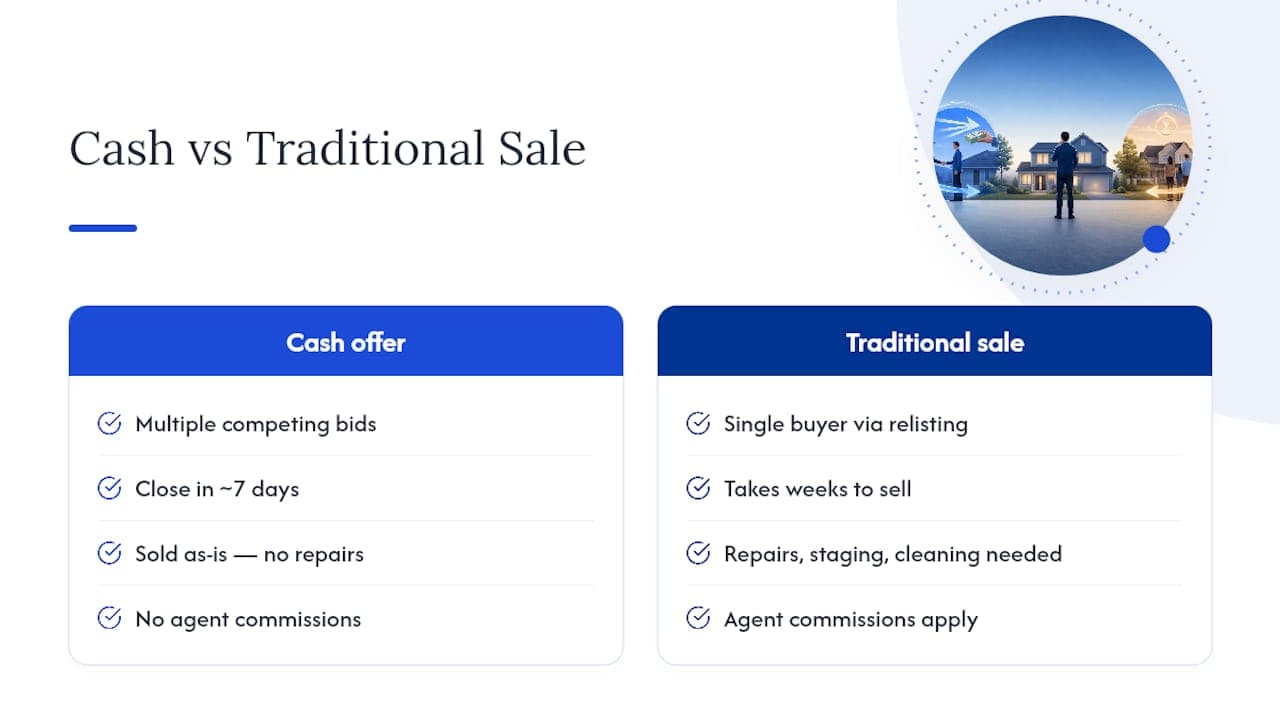
Housegoodbye is the direct alternative to another round of relisting: instead of waiting weeks for a buyer, you get multiple competing cash offers from vetted local investors and pick the one that works for you.

The process is straightforward. You submit basic details about your Michigan property, local investors review it and submit obligation-free cash bids, and you compare offers side by side before choosing one. Closing can happen in as little as seven days, and the sale is as-is, meaning no repairs, no staging, no cleaning, and no agent commissions coming out of your proceeds.
The trade-off is real: a cash sale typically nets less than a well-executed traditional sale, because investors price in the repairs and risk they’re taking on. But for sellers facing foreclosure timelines, a sudden relocation, an inherited property in rough shape, or a rental that’s become more trouble than it’s worth, the savings on repairs and commissions often close that gap. Before you start, have your mortgage payoff amount, property tax status, and any existing repair estimates on hand. If foreclosure is part of your timeline, check your options for avoiding it alongside a cash offer. You can compare real cash offers from Michigan investors or go straight to selling your house as-is to see what a no-repair sale actually looks like for your address.
Where to Verify the Details in This Guide
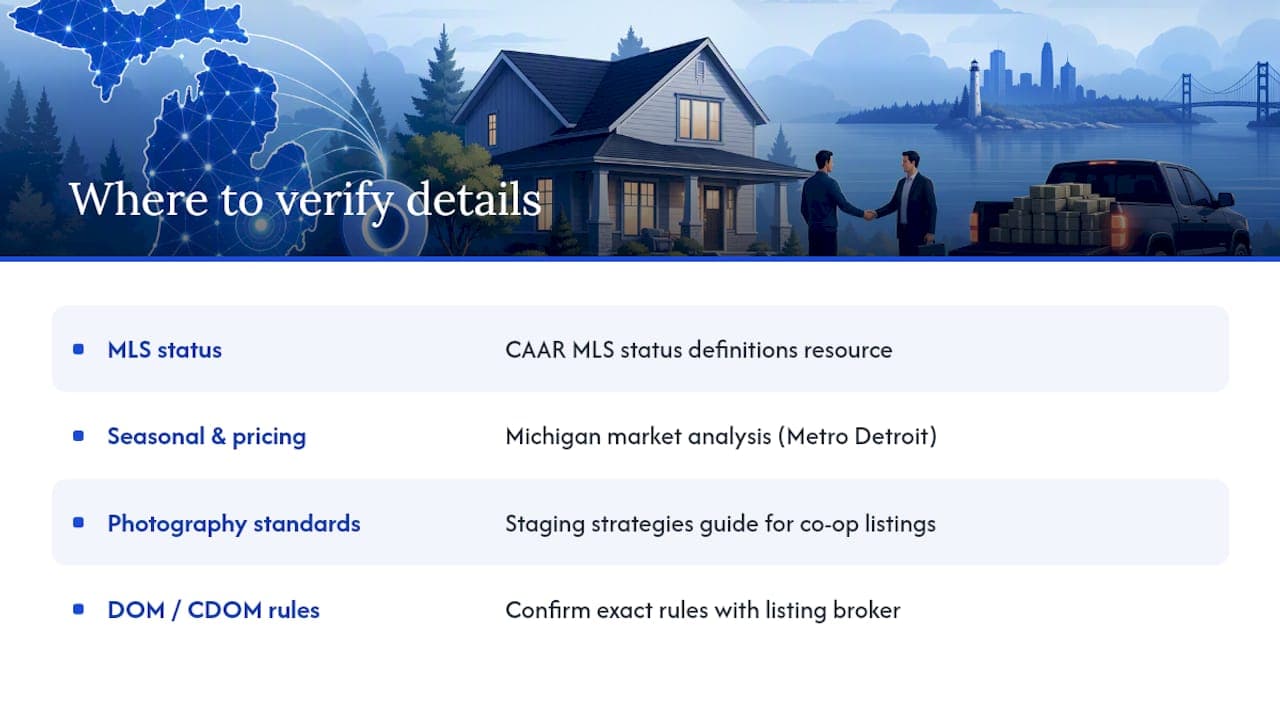
The MLS status rules referenced above come from a MLS status definition resource published by CAAR, which is worth reading if you want the exact language your local board uses. The seasonal and pricing data comes from Michigan-specific market analysis on timing your sale and why homes sit unsold in Metro Detroit. For photography standards, see this guide on staging strategies for co-op listings. Always confirm your exact DOM and CDOM rules with your listing broker before scheduling a relaunch.
Sources
- Realtor
- What is the difference between an expired and withdrawn listing? — RISMedia
- How professional real estate photography helps homes sell faster in Michigan — Leverage Real Estate Photography
- Why homes are sitting on the market in Metro Detroit (2026) — Leslie E. Martin
FAQ
What is the most common complaint filed against realtors?
Sellers most often complain about poor communication and misrepresented marketing effort, which usually shows up as vague pricing advice, weak photos, or infrequent updates during a listing period.
What is the hardest month to sell a house in Michigan?
Winter months, particularly January and February, see fewer buyers shopping overall, though the buyers still active tend to be more motivated, so a well-priced home can still sell quickly.
What are common MLS listing mistakes?
The biggest ones are overpricing against current comps, using low-quality or too few photos, and launching without a marketing plan ready for the first two weeks on market.
Does “listing removed” mean the house sold?
Not necessarily. A removed listing can mean the home sold, but it can also mean the listing expired, was withdrawn by the seller, or was pulled for repairs, since only a licensed agent or broker can change that status.
Is selling to a cash buyer a good option after a failed listing?
It’s a strong option if you need to close quickly, want to avoid repairs, or are facing a deadline like foreclosure or relocation. Some platforms let you compare multiple investor offers before committing to one.