Carrying cost for a vacant home is the total of every recurring expense you owe while the property sits empty, regardless of whether anyone lives there or pays you rent. The main components are:
- Mortgage principal and interest
- Property taxes (prorated monthly)
- Homeowner’s insurance or vacancy insurance
- Utilities kept on to prevent freeze damage or mold
- Lawn care, snow removal, and exterior upkeep
- HOA dues (if applicable)
- Security monitoring or physical security
- Vacancy-specific fees (municipal registration, pest control, routine inspections)
According to the Vacant Home Carrying Cost Calculator, these line items convert into daily, monthly, and annual totals that most owners dramatically underestimate. Your immediate next step: pull your mortgage statement, last property tax bill, and insurance premium, then run a quick monthly estimate. The number will tell you exactly how much urgency you have.
Key Takeaways
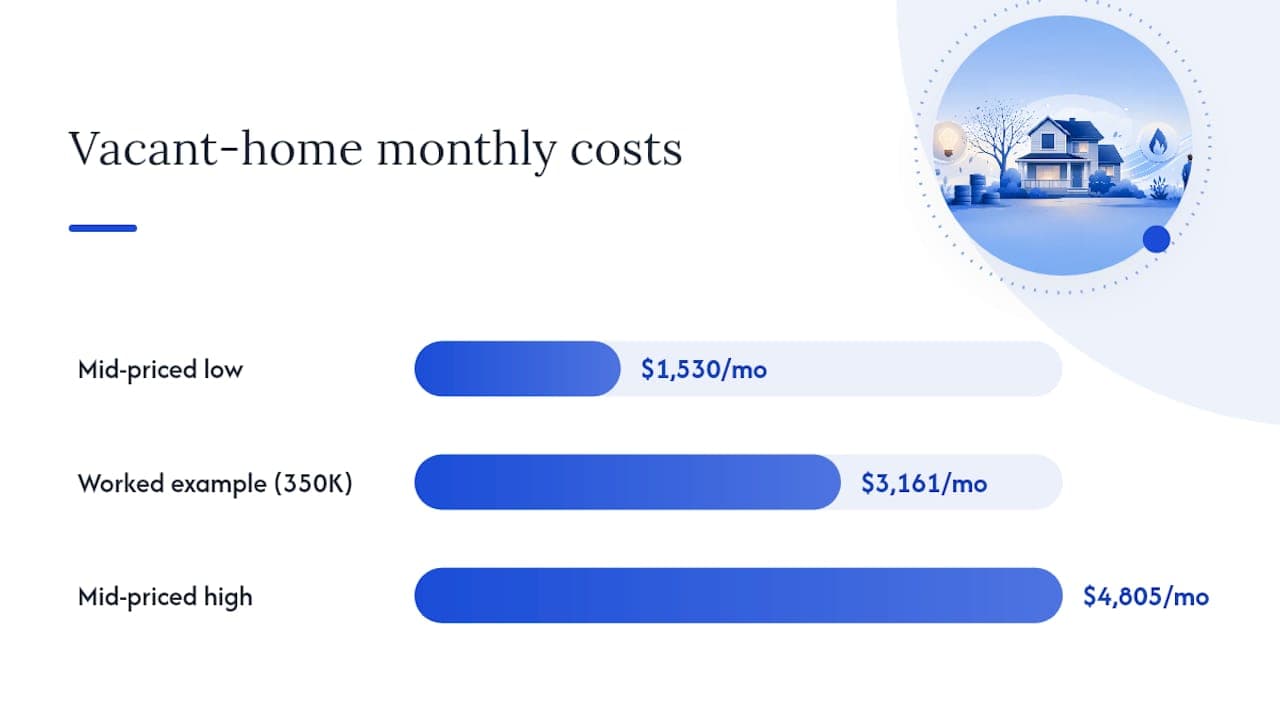
Carrying costs for a vacant home are non-negotiable monthly expenses that accumulate regardless of whether the property earns any income, and for a mid-priced US home they typically run $1,530–$4,805 per month.
| Point | Details |
|---|---|
| Carrying costs are always running | Every vacant home owes mortgage, taxes, insurance, and utilities whether occupied or not. |
| Vacancy adds a premium layer | Insurance gaps, faster deterioration, and security risks push vacant-home costs above occupied-home costs. |
| Monthly total for a $350K home | The worked example totals $3,161/month, or roughly $104 per day. |
| Hard-money loans accelerate losses | At 10–15% interest, monthly interest alone can exceed $1,500–$2,000 on a $200,000 balance. |
| Housegoodbye stops the bleed fast | Michigan homeowners can compare multiple cash offers and close in as little as seven days, ending monthly carrying costs immediately. |
Table of Contents
- What specifically counts as carrying costs for a vacant home?
- Why vacant homes usually cost more than occupied ones
- How to calculate your monthly carrying cost
- Practical ways to reduce or avoid carrying costs while a home is vacant
- How carrying costs affect your returns and decision timeline
- Benchmarks: typical US cost ranges for vacant homes
- When selling fast is the right call, not just the easy one
- Stop paying carrying costs: get multiple cash offers today
- Sources
- FAQ
What specifically counts as carrying costs for a vacant home?
Carrying cost is the industry term for all expenses required to hold an asset until it is sold or put to productive use. For a vacant property, that definition expands beyond the standard PITI stack because vacancy creates its own layer of costs.
PITI: The Foundation
- Principal and interest: The largest single monthly item for most owners. On a 30-year conventional loan at current rates, interest alone can consume 70–80% of each payment in the early years. This is money spent with no offsetting rental income.
- Property taxes: Billed annually or semi-annually but owed every month you hold the property. Divide your annual tax bill by 12 and add it to your monthly total.
- Insurance: Standard homeowner’s policies often contain a vacancy clause. After 30–60 days of vacancy, many insurers suspend coverage for vandalism, water damage, and liability. You may need a separate vacancy insurance rider or a standalone vacant-property policy, which typically costs more than a standard policy.
Vacancy-Specific Operating Costs
- Utilities: You cannot simply shut everything off. Heating must stay above roughly 55°F to prevent pipe freezes; a dehumidifier or HVAC cycling prevents mold. Expect a reduced but real gas, electric, and water bill every month.
- Lawn and snow care: Overgrown grass and unshoveled walks invite municipal fines and signal to thieves that no one is home. Budget for regular exterior maintenance even if the interior is untouched.
- HOA dues: These do not pause for vacancy. Miss them and you risk liens.
- Security monitoring: A camera system or professional monitoring service runs $20–$60 per month and can prevent losses that dwarf that cost.
- Pest control: An unoccupied home with no human activity attracts rodents and insects more quickly than an occupied one.
- Routine inspections: Many property managers or insurers require documented walkthroughs every 2–4 weeks to keep a vacancy policy valid.
One-Off and Intermittent Costs
- Code violations and municipal fines for blight, overgrowth, or unsecured entry points
- Winterization (draining pipes, adding antifreeze to traps) if the home will be unheated
- Theft and vandalism repairs: copper pipe theft, broken windows, graffiti
- Vacant-property registration fees charged by some cities and counties
Pro Tip: Check your homeowner’s insurance policy for the exact vacancy clause before the property sits empty for 30 days. Call your insurer and ask what coverage changes at 30 days and again at 60 days. Switching to a vacancy policy before the gap opens is far cheaper than discovering you had no coverage after a burst pipe.
Why vacant homes usually cost more than occupied ones
An occupied home has a built-in early-warning system: the person living there notices the dripping faucet, the soft spot in the floor, the HVAC that’s cycling too often. A vacant home has none of that. Small problems compound into expensive ones before anyone sees them.
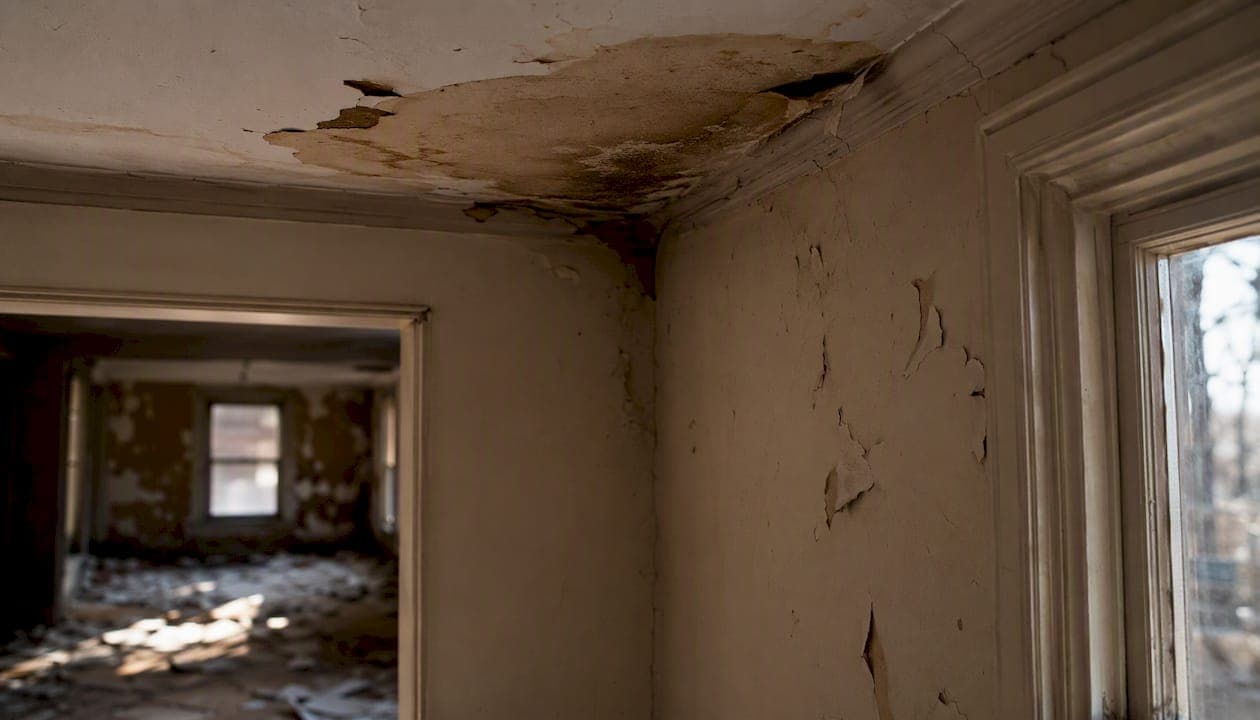
Vacant homes deteriorate faster than occupied ones, and owners often face a difficult choice between pouring money into repairs or selling as-is at a discount. The deterioration is not just cosmetic. Roof leaks that go undetected for weeks rot sheathing and framing. A failed sump pump floods a basement. A cracked pipe in January can destroy drywall, insulation, and flooring across multiple rooms.
The specific risk drivers that raise costs:
- Insurance premium increases: Vacancy policies cost more than standard policies, and some carriers simply refuse to insure vacant properties, forcing owners into surplus-lines markets at even higher rates.
- Coverage gaps: If you miss the 30–60 day notification window your policy requires, a claim can be denied entirely. That means a $15,000 vandalism repair comes entirely out of pocket.
- Security threats: Vacant homes are disproportionately targeted for copper theft, squatting, and break-ins. Evicting a squatter in many states requires a formal legal process that can take weeks and cost thousands in attorney fees.
- Municipal enforcement: Cities increasingly require vacant-property registration, charge annual fees, and conduct inspections. Failure to comply results in fines that accumulate daily.
The numbers add up fast. DealRun’s analysis of vacant property costs describes vacant properties as a “silent cash drain,” with monthly carry costs often running two to three times what owners expect once taxes, insurance, utilities, and maintenance are stacked on top of the mortgage payment.
How to calculate your monthly carrying cost
The formula is straightforward. What trips people up is forgetting the vacancy-specific line items.
Monthly Carrying Cost = Mortgage P&I + Monthly Property Tax + Monthly Insurance + HOA + Utilities + Maintenance Reserve + Security + Vacancy-Specific Fees
Step-by-step inputs you need
- Mortgage statement: Find your monthly principal and interest payment. Note the interest portion separately if you want to track the true cost of financing.
- Annual property tax bill: Divide by 12.
- Insurance premium: Get a quote for a vacancy policy if your standard policy lapses at 30–60 days. Divide annual premium by 12.
- HOA invoice: Use the monthly amount as stated.
- Utility averages: Pull the last 12 months of bills and average them, then estimate a reduced amount for minimal-occupancy settings.
- Maintenance reserve: A standard rule is 1% of home value per year for maintenance. Divide by 12. Vacant homes warrant the higher end of that range.
- Security monitoring: Monthly contract cost.
- Vacancy fees: Any municipal registration fees, inspection costs, or pest control contracts, prorated monthly.
Worked example: $350,000 home in Michigan
For a mid-priced property, the carrying-cost calculator using conservative defaults from Freddie Mac, NAIC, and the Tax Foundation estimates monthly totals in the $2,900–$3,300 range for a $450,000 home. The $350,000 example above lands in that same territory.
Add a 10–15% buffer on top of your calculated total for unexpected damage. Vacant homes generate surprises; the reserve is not optional.
Pro Tip: Use the Housegoodbye carrying-cost calculator to plug in your exact mortgage, tax, and insurance numbers. The daily cost figure is often the most motivating number — $104 per day is easier to act on than $37,932 per year.
Practical ways to reduce or avoid carrying costs while a home is vacant
Not every situation calls for the same response. Here are the options ranked roughly by how quickly each reduces your monthly outflow.
- Winterize and reduce utilities to safe minimums. If the home will sit empty through winter, drain the pipes, add antifreeze to traps, and set the thermostat to 55°F. This cuts heating costs significantly while protecting against freeze damage. Pair it with a regular cleaning and maintenance schedule to prevent code violations and deter squatters.
- Set up remote security monitoring. A $30–$60/month camera system with motion alerts is cheap insurance against the far more expensive alternative. Some systems integrate with smart thermostats so you can monitor and adjust remotely.
- Contract exterior maintenance immediately. Overgrown grass is a municipal fine waiting to happen and a signal to every opportunist on the block. Lock in a lawn service before you need it.
- Switch to a vacancy insurance policy. Call your insurer now, before the 30-day window closes. A vacancy policy costs more than a standard policy but far less than an uncovered claim.
- Rent the property, even short-term. A tenant covers your carrying costs and then some. Even a month-to-month lease at below-market rent beats paying $3,000+ per month with zero income. If a long-term tenant is not practical, a short-term rental platform may work for furnished properties.
- Hire a property manager. Property management costs typically run 8–12% of monthly rent, but a manager handles inspections, maintenance coordination, and tenant screening, which reduces the risk of the larger losses that come from neglect.
- Sell as-is to a cash buyer. This is the fastest way to stop the monthly drain entirely. No repairs, no showings, no 60-day listing period while costs accumulate. A cash sale can close in as little as seven days, which means you stop paying $100+ per day the moment the deal closes.
- Explore financial relief options. If you have a conventional loan and a genuine hardship, contact your servicer about forbearance. For investors on hard-money loans at 10–15% interest, refinancing to a conventional product or selling quickly is almost always the better math.
How carrying costs affect your returns and decision timeline
Every month a vacant property sits unsold or unrented, carrying costs reduce your net profit directly. For a house flipper, that $3,161/month comes straight off the bottom line. Hold for six months and you’ve spent nearly $19,000 before accounting for any repairs.
Carry costs are non-income-generating expenses by definition. Unlike operating expenses on a rented property, they produce no offsetting revenue. That distinction matters when modeling returns.
The opportunity cost angle
Your equity is not sitting idle in a bank account earning nothing. It is tied up in a depreciating-in-condition asset while short-term Treasury bill rates offer a real alternative return. If your home has $150,000 in equity and you could deploy that equity at a 4–5% short-term rate, you are forgoing $500–$625 per month in opportunity cost on top of your direct carrying costs.
Simple decision rules:
- If monthly carrying cost exceeds expected monthly appreciation: You are losing ground every month you hold. Calculate your market’s average monthly appreciation and compare it to your carrying cost total. If carrying cost wins, the math favors selling.
- If carrying cost exceeds potential monthly rent: You cannot break even by renting. Either the rent needs to cover carrying costs or selling is the better exit.
- If you are on a hard-money loan: At 10–15% interest, monthly interest charges alone can easily exceed $1,500–$2,000 on a $200,000 loan balance. Every month of delay compounds the loss.
- Set a hard deadline: Decide in advance at what month you will exit if the property has not sold or rented. Investors who set a 90-day threshold and stick to it consistently outperform those who extend indefinitely hoping for a better price.
The holding cost discussion is ultimately a math problem with an emotional overlay. Run the numbers first, then make the decision.
Benchmarks: typical US cost ranges for vacant homes
The ranges below reflect conservative assumptions drawn from industry calculators using Freddie Mac mortgage rate data, NAIC insurance benchmarks, and Tax Foundation property tax averages. Use them to sanity-check your own estimate, not to replace it.
Hard-money financing changes this picture dramatically. Interest costs at double-digit rates on large loans cause carrying costs to mount significantly before considering other expenses.
The DealRun carrying-cost glossary notes that mortgage interest is consistently the largest single line item in vacant-home carrying-cost breakdowns, followed by property taxes and insurance. Utilities and maintenance are smaller individually but together often exceed insurance costs for properties in cold climates.
These figures assume a property in average condition. A home with deferred maintenance, an aging roof, or an older HVAC system should carry a higher maintenance reserve, and any property in a city with a vacant-property registration ordinance should add those fees explicitly.
When selling fast is the right call, not just the easy one
There is a version of this conversation that gets framed as “patience versus panic,” as if holding a vacant property is always the disciplined choice and selling quickly is giving up. That framing is wrong, and it costs owners real money.
When a property has significant deferred repairs, a high-interest loan, or sits in a market where appreciation is flat, the math almost always favors a fast exit. Every month of delay is not a bet on future appreciation; it is a guaranteed loss of $3,000 or more. The repairs do not get cheaper while the house sits empty. They get more expensive, because vacant homes deteriorate faster and no one is there to catch the small problems before they become large ones. I have seen owners spend six months “getting ready to sell” while accumulating $18,000 in carrying costs, then sell for less than they would have gotten on day one because the condition had declined.
The owners who come out ahead are the ones who run the numbers early, set a decision deadline, and treat a fast cash sale as a legitimate financial strategy rather than a last resort. Housegoodbye exists precisely for that situation.
Stop paying carrying costs: get multiple cash offers today
Carrying costs on a vacant Michigan home can exceed $3,000 per month. Every week you spend preparing for a traditional listing, scheduling showings, or waiting on financing contingencies is another $700+ out of your pocket with nothing coming back in.

Housegoodbye connects Michigan homeowners with multiple competing cash buyers who will purchase your property as-is, no repairs, no cleaning, no agent commissions. The bidding process means you see real offers side by side, not a single lowball take-it-or-leave-it number. Closing can happen in as little as seven days, which means your carrying costs stop almost immediately.
If you are holding a vacant house in Michigan and the monthly math is working against you, the practical next step is to compare cash offers and see what a fast, as-is sale actually nets you. You may find the number is closer to a traditional sale than you expected, and the savings on carrying costs close the gap further.
Sources
- Vacant Home Carrying Cost Calculator (Free, 2026 Rates)
- The True Cost of Holding a Vacant Property | Deal Run
- What Is Carrying Cost: Definition, Types, and Tax Treatment - LegalClarity
- Understanding the Real Costs of Holding a Vacant Property
- Home
This article is general information, not a substitute for advice from a qualified financial advisor. Consult a qualified financial professional about your own circumstances before acting on anything here.
FAQ
What does carrying cost mean in real estate?
Carrying cost (also called holding cost) is the total of all recurring expenses an owner pays while a property is held but not generating income. For a vacant home, that includes mortgage payments, property taxes, insurance, utilities, maintenance, and any vacancy-specific fees.
What are examples of carrying costs for a vacant house?
Common examples include mortgage principal and interest, monthly property tax, vacancy insurance premiums, minimal utility bills to prevent freeze or mold, lawn and snow care, HOA dues, security monitoring, and municipal vacant-property registration fees.
Who pays the carrying costs on a vacant property?
The property owner pays all carrying costs. Lenders, insurers, and municipalities do not pause their obligations because a home is unoccupied. If the owner has a mortgage, the lender still expects payment regardless of vacancy status.
How do I calculate my monthly carrying cost?
Add your monthly mortgage P&I, prorated property tax (annual bill ÷ 12), monthly insurance premium, HOA dues, estimated utilities, a maintenance reserve (roughly 1% of home value per year ÷ 12), and any security or vacancy-specific fees. The worked example in this article totals $3,161/month for a $350,000 Michigan home.
How can I stop carrying costs on a vacant home quickly?
The fastest option is selling as-is to a cash buyer, which can close in as little as seven days and ends all carrying costs at closing. Housegoodbye lets Michigan homeowners compare multiple cash offers without repairs, showings, or agent commissions.