Yes, you can sell a condemned or uninhabitable house in Michigan. Most owners who need to move quickly sell as-is to cash buyers or, in some cases, to a land bank, since traditional buyers and lenders rarely touch a property with an open code violation. Expect any buyer to discount for repair or demolition costs and to require a clear path through title issues before closing. Start by pulling your deed, code notices, and any lien statements, then request competing cash offers to see what the property is actually worth to a buyer right now.
TL;DR:
- Most investors willing to buy condemned houses account for repair or demolition costs in their bids, often paying well below full market value.
- City condemnation processes in Michigan escalate quickly for hazards like structural failure or fire damage, with demolition often scheduled within a few months if owners do not respond or repair.
- Liens, unpaid fines, and unresolved title issues are common obstacles, but negotiated payoff agreements and early disclosure can help facilitate a smooth sale.
- Selling as-is to cash buyers or land banks usually closes faster, especially if multiple offers are solicited through a competing offer marketplace.
- Legal challenges or deferrals are options if owners have meaningful equity or procedural concerns, but generally, quick cash offers remain the most reliable solution when facing imminent demolition or foreclosure.
Table of Contents
- What does ‘condemned’ actually mean under Michigan municipal codes
- What triggers condemnation and how fast the clock runs
- What are your realistic options for selling a condemned property
- Legal hurdles: disclosures, liens, and clearing the title
- How much is a condemned house actually worth
- Who actually pays to tear down a condemned house
- A step-by-step checklist to sell fast
- When to challenge or defer instead of selling
- What I’d do in your position
- Getting competing cash offers through HouseGoodbye
- Where to go for official Michigan guidance
- Sources
- FAQ
What does ‘condemned’ actually mean under Michigan municipal codes
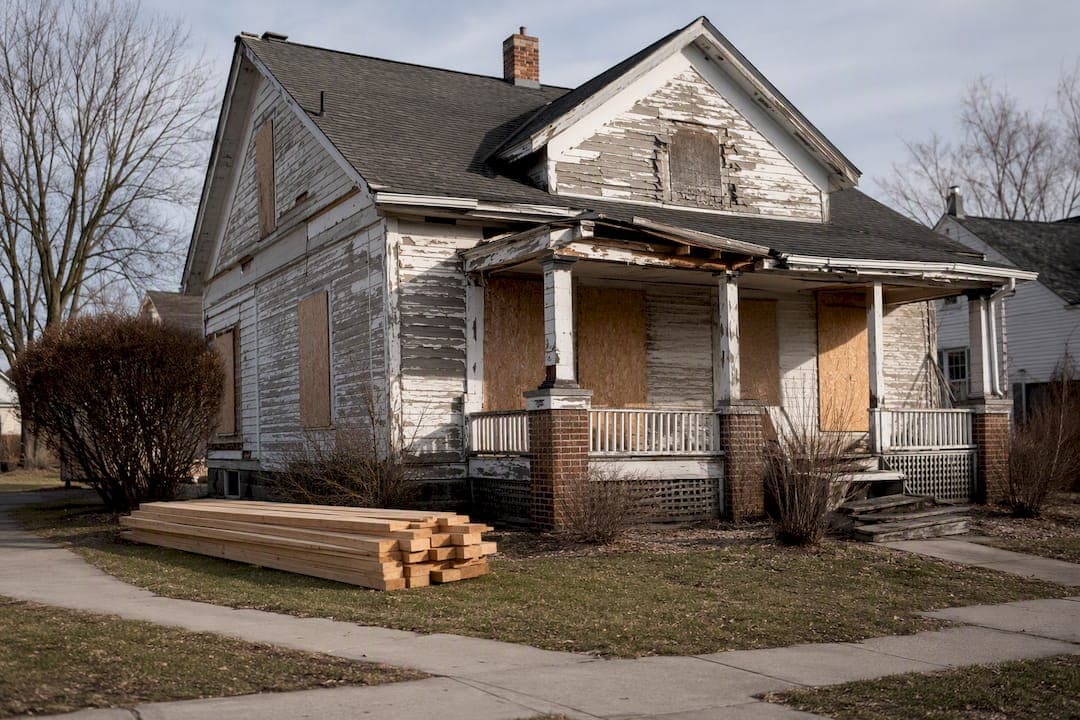
Michigan cities do not use a single legal term for a problem property. Detroit’s Buildings, Safety Engineering and Environmental Department, known as BSEED, and similar departments in other cities classify structures as dangerous, vacant, blighted, or ordered demolished, often abbreviated ODM. Each label carries different consequences, but all of them mean a city inspector has found the building unsafe to occupy or a threat to the surrounding block.
The process usually starts with a code inspection, sometimes triggered by a complaint or a routine sweep of vacant properties. If the inspector finds hazards such as structural failure, fire damage, or unsecured openings, the department issues a written order. Homeowners typically receive an inspection report, a notice to cure the violations within a set window, and a notice of a hearing where the case is formally adjudicated.
Once a property carries a dangerous-building designation, the effects are immediate:
- Occupancy is prohibited, and living in the home can expose the owner to fines or misdemeanor citations.
- Utility companies may disconnect service or refuse reconnection until the city lifts the order.
- Insurance carriers often cancel or refuse coverage on a condemned structure.
- Title companies flag the property, which slows or blocks a conventional sale until the order is resolved or disclosed.
None of this means the house is unsellable. It means the sale has to account for the order, and the buyer pool narrows to investors and cash buyers who work with distressed titles as a matter of course.
What triggers condemnation and how fast the clock runs
Most condemnation orders in Michigan trace back to a handful of recurring problems: structural instability, fire or water damage severe enough to compromise the frame, long-term vacancy paired with blight violations like broken windows or overgrown lots, and safety hazards such as exposed wiring or collapsing roofs. Cities prioritize buildings that pose a risk to neighbors, not just the owner, which is why vacant homes near occupied blocks tend to move through enforcement faster.
The timeline generally follows this sequence:
- An inspector documents the violation and issues a written notice with a deadline to cure it.
- If the owner does not respond or repair the issue, the case moves to a hearing where a hearing officer can order demolition.
- The city schedules demolition, though owners can sometimes request a deferral if they show proof of funds and a rehabilitation plan.
- If demolition proceeds and the owner has not sold or resolved the case, the city bills the cost back to the property, often as a lien.
Detroit’s BSEED, for example, outlines a deferral process that lets owners pause demolition by submitting documentation of financing and a repair timeline. That window is often the difference between losing the structure and having time to market it.
Pro Tip: Request the full case file, including inspection photos and hearing notes, the day you receive a notice. A documented rehabilitation plan or a signed purchase agreement in hand is what most deferral reviews actually look for.
If you cannot realistically cure the violations before the deadline, the more productive move is usually to start collecting offers immediately rather than waiting out the hearing process.
What are your realistic options for selling a condemned property
A condemned house closes through a narrower set of paths than a typical listing, and which one fits depends on how much time, equity, and paperwork you have.
- As-is cash sale to investors or a competing-offer marketplace. This is the fastest route because these buyers factor repair and demolition costs into their bid instead of asking you to fix anything first; they will typically want the code notices, a title search, and proof of ownership before finalizing an offer.
- Sale to a land bank or municipality. Some cities and county land banks accept blighted or condemned properties for redevelopment, particularly when the owner has no equity or cannot cover a payoff; Michigan’s statewide housing plan supports these programs as a tool for bringing vacant homes back into use, but acceptance is not automatic and program capacity varies by jurisdiction.
- Listing with an agent or selling FSBO. This works only if the buyer pool includes rehab-focused investors who already expect a distressed title, since most retail buyers cannot get financing on a condemned structure; timelines tend to run longer and marketing costs add up with little guarantee of a sale.
- Short sale, deed-in-lieu, or accepting a sheriff sale. When a mortgage balance or tax lien exceeds what the property is worth, these routes may be the only ones left, and each comes with credit and tax consequences worth discussing with a housing counselor or attorney before signing anything.
For most owners facing a real deadline, whether that is a demolition date or a foreclosure filing, the as-is cash route is the one that closes before the clock runs out. It also tends to produce the cleanest paperwork trail, since investors who specialize in distressed properties are used to working around open code cases, recorded liens, and incomplete disclosure history. Land bank transfers can make sense when the house has negative equity and no realistic buyer would pay enough to clear the debt, but those programs move on municipal timelines, not the homeowner’s.
Legal hurdles: disclosures, liens, and clearing the title
Michigan law does not exempt condemned properties from disclosure requirements. Under the Seller Disclosure Act, sellers of most one to four unit residential properties must give buyers a written disclosure statement before a purchase agreement is signed, and that statement has to reflect the property’s actual condition, including any known code violations or condemnation order. Skipping this step is not a shortcut. It gives the buyer legal grounds to walk away or pursue a claim after closing.
Title issues are usually the bigger obstacle. Common blockers include:
- Unpaid code enforcement fines attached to the property.
- Demolition liens the city has already recorded for prior work.
- Property tax liens, which can escalate toward a tax foreclosure if left unresolved.
- A recorded lis pendens, which puts the public on notice that litigation or a municipal action affects the title.
Detroit’s BSEED lis pendens guidance notes that a recorded lis pendens or dangerous-building order can prevent a sale from closing until the issuing department or a court releases it, and owners typically need to submit documentation, such as photos, deeds, or repair records, to request that release.
None of these are automatic dead ends. Sellers routinely negotiate payoff amounts with the city, structure an escrow holdback so the buyer’s funds cover an outstanding lien at closing, or work with a title company and an attorney to confirm exactly what needs to be released before the deed transfers. In rare cases where a condemnation order was issued without proper authority or through a procedural error, Michigan courts have allowed owners to challenge the action, and in limited situations recover attorney fees, according to Michigan Court of Appeals precedent. That path is the exception, not the default, and it makes sense mainly when real money or significant equity is at stake.
How much is a condemned house actually worth
Investors do not price a condemned house off the neighborhood’s market value. They start from the after-repair value, then subtract what it will cost to make the home livable or to tear it down entirely, plus holding costs like property taxes, insurance, and permit fees during the rebuild, plus the margin they need to make the deal worth doing. What is left is the offer you see.
That math explains why offers on condemned properties often land well below a home’s finished-condition value. The gap tends to widen when the property carries higher-cost problems:
- Asbestos or lead abatement, common in older Michigan housing stock, which requires licensed remediation before any other work begins.
- Structural rebuilds, such as a collapsed roof or compromised foundation, that cost more than cosmetic repairs by a wide margin.
- Full demolition and site clearing, which some buyers factor in as their baseline cost rather than a worst-case scenario.
Because every investor estimates these costs differently, and some pad their margin more than others, the single biggest lever a homeowner has is getting more than one bid. A property that draws several competing offers tends to net more for the seller than one shopped to a single buyer, since competition narrows the gap between what an investor is willing to pay and what they initially offer.
Who actually pays to tear down a condemned house
Demolition costs land on someone, and Michigan gives sellers a few different ways to decide who that is. If a city demolishes a dangerous building on its own authority because the owner did not act, it typically bills the cost back to the property as a lien, and that lien can follow the title even after a sale if it is not resolved first, based on how Detroit’s city reporting describes its demolition and cost-recovery process.
The alternative is negotiating demolition into the sale contract itself. Many cash buyers who specialize in distressed properties will agree to assume demolition responsibility as part of the deal, adjusting their offer downward to reflect that cost rather than asking the seller to handle it beforehand. This is often the cleanest outcome for an owner who has no cash left to put into the property.
A third path exists through land bank and grant-funded programs, which sometimes acquire condemned properties specifically to demolish or rehabilitate them without requiring the seller to fund the work, according to Michigan land bank policy guidelines. Availability depends on the property’s location and the land bank’s current capacity, so it is worth confirming eligibility early rather than assuming it will work out.
A step-by-step checklist to sell fast
Selling a condemned house moves faster when you have the paperwork ready before a buyer asks for it. Work through this in order:
- Gather your documents. Pull the deed, current mortgage statement, any code violation notices or demolition orders, past correspondence with the city, and recent photos of the property’s condition.
- Confirm liens and title status. Ask a title company for a preliminary search so you know about any demolition liens, tax liens, or a recorded lis pendens before a buyer finds them first.
- Prepare your disclosure statement. Complete a Seller Disclosure Statement that accurately reflects the condemned status and known defects, since Michigan law requires it for most residential transfers.
- Solicit competing cash offers. Share the property’s condition and paperwork with multiple buyers rather than one; cash marketplaces built for as-is sales commonly return offers within 7 to 21 days.
- Review offer terms carefully. Compare not just price but who covers demolition, closing costs, and any lien payoffs.
- Move to closing. A title company will handle escrow items such as lien payoffs and confirm the disclosure was delivered on time before the deed transfers.
Pro Tip: Ask each buyer for their offer in writing with a breakdown of what they are deducting for repairs, demolition, or lien payoffs. Vague verbal offers are where sellers lose the most money.
Sellers who show up with a clean paper trail, meaning code notices, a title search, and a completed disclosure, tend to move through underwriting faster because the buyer’s due diligence has less to untangle. That documentation is also what separates a 7-day close from one that drags for months while a title company chases down lien payoff letters.
When to challenge or defer instead of selling
Selling is not always the right first move. If you have significant equity in the property and the financial ability to repair it, requesting a deferral is worth pursuing before you accept a discounted cash offer. Detroit’s BSEED deferral process, for example, generally requires proof of funds and a documented rehabilitation plan, and approval buys time to either complete repairs or market the home properly instead of racing a demolition date.
A legal challenge is a narrower option, appropriate mainly when there is a real procedural problem, such as the city issuing an order without proper authority or skipping required notice steps. Michigan courts have addressed these situations before, and outcomes can include the order being canceled or, in limited cases, the owner recovering attorney fees.
For most owners, the decision comes down to three questions: how much equity is actually left after liens and fines, what it would realistically cost to bring the property up to code, and how much time you have before a demolition date or foreclosure forces the issue. When the honest answer is that repairs cost more than the equity you would recover, selling as-is stops being a fallback and becomes the practical choice.
What I’d do in your position
Getting a condemnation notice is one of the more stressful things that can land on a homeowner, and the paperwork alone can feel designed to wear you down. If you do not have the cash to bring the house up to code, my honest take is that chasing multiple cash offers beats sitting on the property while fines and interest keep accumulating.
That said, do not skip the deferral or appeal question if you have meaningful equity or a genuine procedural complaint against the city. Those cases are worth a conversation with an attorney before you sell anything away.
Whatever route you take, complete your disclosure honestly and get a title check done early. Surprises at closing are what turn a fast sale into a stalled one.
— Bryan
Getting competing cash offers through HouseGoodbye
A competing-offer marketplace connects homeowners with local investors who bid against each other for the property, rather than handing a single offer and calling it final. That competition is the mechanism: when buyers know they are not the only offer on the table, the spread between their opening bid and their best bid tends to close, which puts more money in your pocket without you doing any of the negotiating yourself.

After you submit basic information about the property, including its condition and any code notices or liens you are aware of, you can expect to hear back from multiple investors with real, obligation-free numbers. There is no requirement to fix anything, clean the property, or handle showings. The process is often built around closing in as little as seven days for sellers who need to move that fast, though the exact timeline depends on how quickly title issues get resolved on a given property.
If you are sitting on a condemned or uninhabitable house anywhere in Michigan, from Detroit to Farmington Hills to Sterling Heights, you can get competing cash offers and see what buyers are actually willing to pay before you commit to any single one.
Where to go for official Michigan guidance
A few resources are worth bookmarking as you work through a sale:
- Detroit BSEED deferral pages, which cover the documentation needed to pause a demolition order.
- Michigan’s Seller Disclosure Act text, which spells out exactly what a residential seller must disclose and when.
- Michigan’s statewide housing plan, which outlines funding aimed at land banks and rehabilitation programs.
- Michigan land bank policy documents, useful if a municipal transfer is on the table.
Share these with your title company or attorney rather than relying on secondhand summaries, since the exact procedures can shift by jurisdiction.
This article is general information, not a substitute for advice from a qualified financial advisor. Consult a qualified financial professional about your own circumstances before acting on anything here.
Sources
- Detroit BSEED — Abandoned & Dangerous Buildings: Deferrals
- Michigan Statewide Housing Plan (MSHDA)
- Michigan Seller Disclosure Act (Michigan Legislature)
FAQ
How long before a property is considered abandoned in Michigan?
Abandonment determinations vary by city ordinance rather than a single statewide rule, and cities like Detroit look at factors such as vacancy duration, unpaid taxes, and lack of maintenance rather than a fixed calendar deadline. Check with your local code enforcement or BSEED-equivalent department for the specific criteria your municipality applies.
How do you sell a condemned house?
You sell it by disclosing its condition honestly, resolving or disclosing any liens and title issues, and finding a buyer willing to purchase as-is, which is typically an investor or cash buyer rather than a retail buyer using a mortgage. Requesting competing cash offers rather than negotiating with a single buyer generally improves your final price.
How much is a condemned house worth?
A condemned house is worth its after-repair value minus the buyer’s estimated repair or demolition costs, holding costs, and profit margin, which usually results in an offer well below the value of a comparable move-in-ready home. The exact discount depends heavily on the severity of the damage and whether demolition is required.
Who pays to tear down a condemned house?
Either the municipality demolishes the structure and places a lien on the property for the cost, or the responsibility gets negotiated into a sale contract with a buyer who assumes demolition in exchange for a lower purchase price. Land bank or grant-funded programs sometimes cover demolition without cost to the seller, depending on local program availability.