Yes, you can sell a house with mold in Michigan, but state law requires you to disclose it once you know about it. You have three realistic paths: remediate then list for top dollar, disclose and sell as-is at a discount, or sell to a cash buyer for speed. If you’re facing foreclosure or a fast relocation, the cash-buyer route skips repairs entirely, if you have equity to spare and time to wait, remediation first usually nets more.
TL;DR:
- Selling a house with mold in Michigan requires full disclosure if the seller has actual knowledge of environmental problems, including mold staining or musty odors.
- Testing methods vary in cost, with visual inspections being cheapest, but air sampling and surface tests providing more detailed information for negotiations.
- Remediating before listing can increase sale price but may not be cost-effective if mold has spread into the HVAC system or foundation, where costs can surpass benefits.
- Selling to a cash buyer offers the fastest option, accepts the home as-is, and removes the need for disclosures or repairs, especially for homeowners in urgent situations.
Table of Contents
- Comparing Your Three Options to Sell a House With Mold in Michigan
- What Michigan Law Requires You to Disclose About Mold
- How Much Mold Remediation and Testing Actually Cost in Michigan
- Should You Pay for Remediation Before Listing?
- How to Sell a Home With Mold in Michigan, Step by Step
- Local Rules and Ordinances That Can Affect a Mold Sale in Michigan
- A Publisher’s Take on Selling With Mold in Michigan
- Get Multiple Cash Offers for Your Michigan Home As-Is
- Sources
- FAQ
Comparing Your Three Options to Sell a House With Mold in Michigan
Every Michigan homeowner selling a moldy house is really choosing between speed, price, and how much hassle they can absorb. There’s no universal right answer here. A retiree with 15 years of equity in Sterling Heights has different math than someone facing a job transfer in three weeks.
Remediate, then list. This path gets you the strongest sale price because buyers aren’t discounting for a problem they can see or smell. It also takes the longest. Between getting quotes, scheduling the work, waiting for clearance testing, and then listing, you’re often looking at four to eight weeks before a buyer even walks through the door. You’ll also need cash upfront, since most remediation contractors want payment before or at project completion, not at closing.
Disclose and sell as-is through a traditional listing. You keep control of the sale process and can still use a real estate agent, but expect lower offers and buyers who negotiate hard once an inspector confirms the mold. Financed buyers often struggle here too, since many mortgage underwriters flag active mold as a health and safety issue requiring repair before closing.
Sell to a cash buyer or marketplace. This is the fastest option and the one that accepts the home in its current condition without requiring remediation first. You skip inspection contingencies tied to repairs, skip staging, and typically close within one to a few weeks.
What should actually drive your decision:
- Equity cushion: less equity means remediation costs eat further into your proceeds
- Timeline pressure: divorce, job relocation, or inherited property with carrying costs favor speed
- Health concerns: occupied homes with active mold exposure argue for a faster exit
- Local buyer appetite: in tighter Michigan submarkets, financed buyers may simply pass on visible mold, narrowing your buyer pool to cash offers regardless of price
What Michigan Law Requires You to Disclose About Mold
Michigan’s Seller’s Disclosure Act, MCL 565.957, requires sellers to complete a Seller’s Disclosure Statement (SDS) before a buyer makes a binding offer. The form includes a question about known environmental problems, and the statute’s own language recommends buyers get professional inspections that cover indoor air quality and allergens, which is where mold lands squarely in scope.
The operative word in Michigan disclosure law is “known.” You aren’t required to guess at hidden problems or hire an inspector to search for issues you have no reason to suspect. But if you’ve seen staining, smelled must, paid for a partial repair, or received a complaint from a tenant or previous inspector, that counts as knowledge. Michigan courts don’t require a lab-confirmed mold species to trigger disclosure duties. They look at what you actually knew or should reasonably have known.
A Michigan Court of Appeals opinion from June 2025 makes this risk concrete. In Leandre Gholston v Scott Sherrill, the court held that contamination underneath a property can qualify as an “environmental hazard” under the disclosure act, and that failing to disclose a known hazard can lead to rescission of the sale or other legal remedies. The case didn’t involve mold specifically, but the reasoning applies directly: sellers who know about a hazard and stay silent expose themselves to a buyer unwinding the deal months or years later.
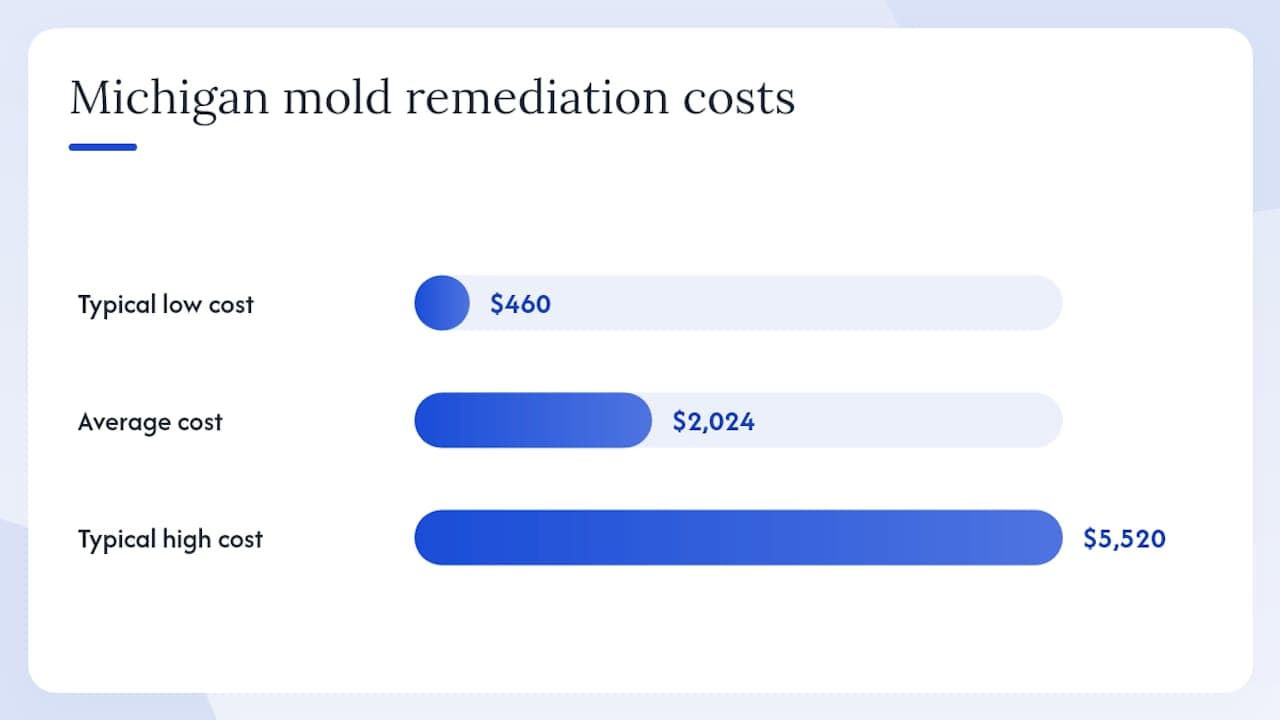
Statistic Callout: Michigan’s average mold remediation project runs close to $2,024, with a typical range of about $460 to $5,520. Weighed against the cost of a rescinded sale, a lawsuit, or a forced buyback, that’s a modest number.
Practical steps that limit your exposure:
- Answer the SDS environmental-problems question honestly, even if it lowers your asking price
- Keep every repair invoice, test result, and inspection report tied to moisture or mold issues
- Amend your SDS in writing if new information surfaces after you’ve already disclosed
- Get written buyer acknowledgment of any disclosed mold at contract signing
- Talk to a real estate attorney if you’re unsure whether a past issue counts as “known”
How Much Mold Remediation and Testing Actually Cost in Michigan
Cost drives most of the decision-making here, so get real numbers before you commit to a path. Michigan remediation projects average around $2,024, but the range swings wide depending on scope. Small, contained jobs, like a bathroom ceiling or a closet wall, often run $500 to $1,500. Medium jobs involving a full basement or multiple rooms land between $1,500 and $3,500. Large-scale jobs that involve HVAC systems or structural framing can climb past $6,000, and industry data on structural or crawlspace remediation shows costs reaching $10,000 to $30,000 or more in severe cases.
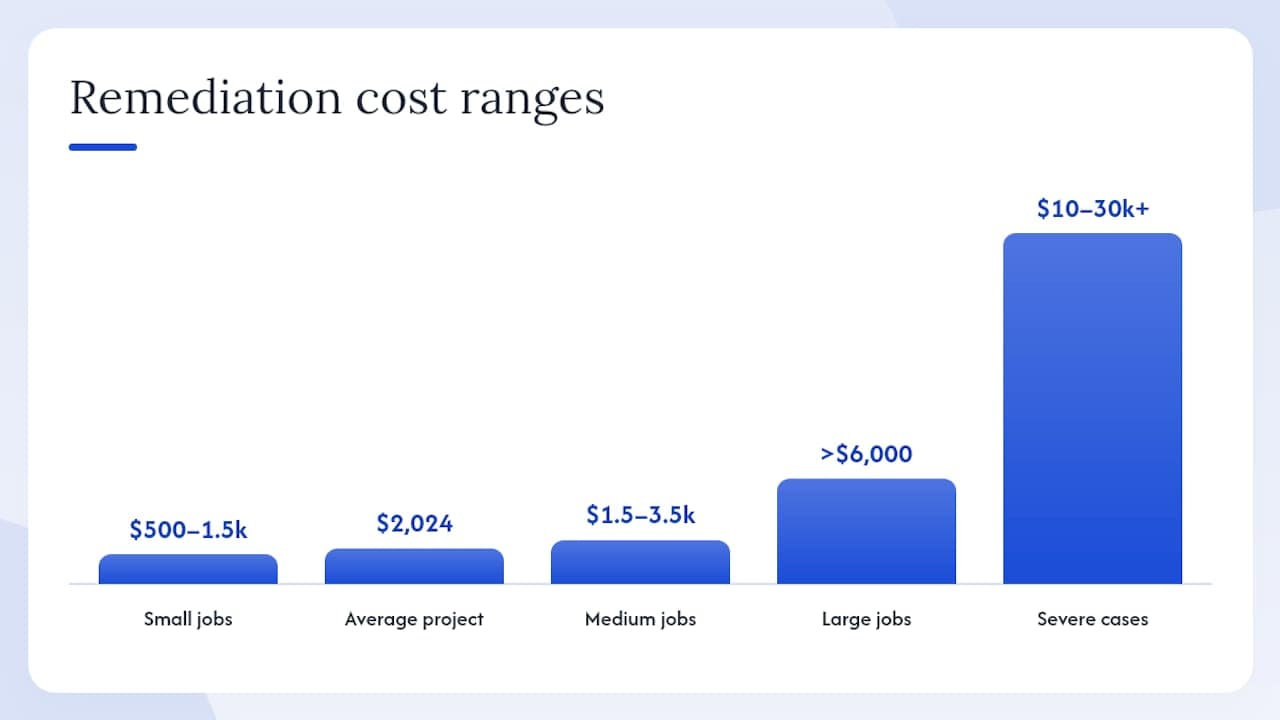
Statistic Callout: The difference in remediation scope between surface jobs and those involving HVAC or crawlspaces can be substantial, leading to significantly higher costs for the more extensive projects.
Testing options vary in cost and usefulness:
- Visual inspection: cheapest, often included with a standard home inspection, but limited to what’s visible
- Air sampling: measures spore counts in the air, useful for hidden contamination, typically $200 to $600
- Surface swabs or tape lifts: identify specific mold species on a surface, useful for legal documentation, usually $100 to $300 per sample
A clean test report or a signed contractor quote gives you leverage in negotiations either way. If you’ve already remediated, that documentation reassures a nervous buyer’s lender. If you’re selling as-is, a contractor’s written scope of work helps a buyer estimate their own remediation cost instead of assuming the worst and lowballing you.
Don’t count on your homeowners insurance to cover this. Most policies only pay for mold remediation when it’s tied to a covered peril, like a sudden pipe burst, and many cap payouts well below actual remediation costs. Gradual moisture damage from a slow roof leak or condensation almost never qualifies.
Should You Pay for Remediation Before Listing?
Run the math before you spend a dollar on remediation. Take your expected sale price after fixing the mold, subtract the remediation cost, agent commissions, and holding costs during the repair timeline. Compare that number to what you’d net selling as-is today. If the gap is a few thousand dollars in your favor, remediation might be worth the wait. If it’s a wash or negative, it isn’t.
Here’s a quick example. A Farmington Hills seller gets a $310,000 offer after a $2,500 basement remediation, versus a $290,000 as-is offer today with no repair costs. Remediating nets roughly $17,500 more after subtracting the repair bill, assuming no major delays.
The math flips when the mold has spread into your HVAC system or a crawlspace. Once containment, negative air machines, and full duct disassembly enter the picture, costs escalate quickly past what most sale-price improvements can offset. That’s usually when sellers with limited equity choose the cash-buyer route instead of chasing a full remediation.
- Get a licensed mold remediation contractor’s written scope and quote
- Get a licensed home inspector’s assessment of moisture sources, not just visible mold
- Ask each vendor directly: does this involve HVAC, insulation, or structural framing?
- Compare quotes from at least two remediation companies before committing
Pro Tip: Ask every contractor for a post-remediation clearance test in writing. Without it, you have no documentation proving the problem is actually gone, and that gap will surface again when a buyer’s inspector shows up.
How to Sell a Home With Mold in Michigan, Step by Step
Whichever path you pick, the sequence of tasks looks similar. Get organized first, then move.
Start with documentation. Pull together every repair invoice, past inspection report, and any communication where mold or moisture came up, even in passing. Complete your SDS honestly, marking the environmental-problems section, and keep a dated copy for your own records.
If you’re listing as-is, price realistically from the start rather than testing a high number and dropping it later. Disclose the mold in your listing notes or agent conversations before showings, not after an offer comes in. Expect buyers to request a mold-specific inspection contingency on top of the standard one, and budget time for that back-and-forth.
If you’re going the cash-buyer or marketplace route, solicit more than one offer before you accept anything. Compare not just the price but the actual terms:
- Is the closing date firm or flexible?
- Are there any hidden contingencies despite the “as-is” label?
- Does the buyer require their own inspection, and does that inspection carry any price-reduction risk?
Timelines here typically run from about one week to a few weeks, compared to the four to eight weeks or more a remediate-then-list approach usually takes.
To close cleanly regardless of path:
- Get the SDS signed by both parties before closing
- Retain copies of every inspection and test report for at least several years
- Get written buyer acknowledgment of any disclosed mold issue at signing
- Amend the SDS in writing immediately if new information surfaces mid-transaction
Local Rules and Ordinances That Can Affect a Mold Sale in Michigan
State disclosure law governs the sale itself, but local ordinances can still complicate a transaction in specific Michigan cities. Some municipalities, including parts of Detroit and Dearborn Heights, require a certificate of compliance or point-of-sale inspection before a residential property can legally change hands. These inspections often check for code violations tied to moisture intrusion, roof condition, and ventilation, all of which relate directly to mold risk even when mold itself isn’t named in the ordinance.
If your city requires a pre-sale inspection or rental certification and an inspector flags a moisture or mold-related violation, you may need to address it before the closing can proceed, regardless of what you and the buyer privately agree to. Rental properties face additional scrutiny in several Michigan municipalities that maintain separate healthy-housing codes for landlords.
Because these rules vary by municipality and change periodically, check directly with your city’s building or code enforcement department before listing. A five-minute call can save you a surprise mid-transaction. Local nonprofit resources, including the Southeastern Michigan Healthy Housing Alliance, also offer guidance for homeowners navigating moisture and mold issues alongside code compliance questions, particularly in older housing stock common across metro Detroit.
A Publisher’s Take on Selling With Mold in Michigan
Sellers dealing with mold usually feel two things at once: pressure to move fast, and fear that disclosing the problem will tank their sale entirely. Neither instinct serves you well. Full, honest disclosure is what actually protects you from a lawsuit landing on your doorstep two years after closing, not the other way around.
There are services that help sellers in this situation by enabling them to submit their property once and receive competing cash offers from investors who accept homes as-is, mold and all, with no repair demands and rapid closings. If you’re staring at a mold problem and dreading the next six weeks of contractor quotes and buyer negotiations, get your disclosure paperwork in order first, then request offers before you commit to a repair timeline you may not need.
— Bryan
Get Multiple Cash Offers for Your Michigan Home As-Is
Housegoodbye is the alternative to remediating and relisting when mold has already eaten into your timeline or your equity. Instead of paying a contractor upfront and waiting weeks for clearance testing, you submit your property once and let vetted local investors compete for it, sight unseen conditions included.

This fits three kinds of sellers especially well: homeowners facing foreclosure or a fast relocation who can’t absorb a multi-week repair delay, sellers whose remaining equity wouldn’t cover HVAC or structural remediation anyway, and anyone who simply doesn’t want to manage contractors, testing, and disclosure disputes on their own. Multiple competing offers also mean you’re not stuck negotiating against a single buyer’s lowball number.
Closings can happen quickly once you accept an offer, with no agent commissions and no listing prep required. If your mold situation has you leaning toward speed over a drawn-out remediation timeline, compare cash offers for your Michigan home as-is and see what investors are willing to pay before you spend a dollar on repairs.
Sources
This guide draws on Michigan’s Seller’s Disclosure Act, which sets the statutory disclosure requirement, and the Michigan Court of Appeals’ June 2025 opinion on environmental hazard disclosure. Health guidance comes from the EPA’s mold resources and CDC guidance on mold health effects. Remediation cost figures come from CostWhale’s Michigan-specific data, and insurance coverage limits are detailed by the Insurance Information Institute.
This article is general information, not a substitute for advice from a qualified lawyer. Consult a qualified legal professional about your own circumstances before acting on anything here.
- MCL - Section 565.957 - Michigan Legislature
- COA 367226 Leandre Gholston v Scott Sherrill Opinion (6/10/2025)
- How Much Does Mold Removal & Remediation Cost in Michigan? (2026) | CostWhale
FAQ
Can a Seller Legally Sell a House With Mold in Michigan?
Yes. Michigan law doesn’t ban selling a home with mold, but you must disclose known environmental problems on your Seller’s Disclosure Statement under MCL 565.957.
Are There Specific Michigan Laws About Mold Disclosure?
Michigan doesn’t have a mold-specific statute, but the Seller’s Disclosure Act requires disclosure of known environmental hazards, and a 2025 Court of Appeals opinion confirmed contamination can qualify as such a hazard.
Can I Sue if I Bought a House With Undisclosed Mold?
Possibly. If a seller knew about mold and failed to disclose it, Michigan courts have allowed remedies including rescission of the sale, based on reasoning from the Gholston v Sherrill case involving undisclosed environmental hazards.
How Much Mold Does It Take to Affect a Home Sale?
Any known mold that a seller is aware of must be disclosed, regardless of size, though the practical impact on price and buyer interest grows once contamination reaches HVAC systems or structural areas, where remediation costs commonly exceed $10,000.
Is It Better to Remediate Mold or Sell As-Is in Michigan?
It depends on your equity and the mold’s scope. Surface-level mold often justifies remediation before listing, while contamination reaching HVAC or crawlspaces frequently costs more to fix than it adds to the sale price, making an as-is sale through a cash buyer like Housegoodbye more practical.