TL;DR:
- Competitive bidding drives home sale prices 5–18% above list by creating buyer competition. Sellers can maximize profits by pricing below market value, staging well, and setting firm offer deadlines. Success depends on selecting offers based on quality and financing, not just highest price, to avoid deal failures.
Competitive bidding is a sales approach where multiple buyers simultaneously compete to purchase a property, often driving the final sale price above its market value. This process, known in real estate as a bidding war or auction-style sale, uses buyer psychology and market pressure to push offers higher than a seller could achieve through a single negotiation. Research from 2026 housing markets shows that well-executed competitive bidding regularly produces closing prices 5–18% above list price. Understanding how competitive bidding increases sale price gives sellers a real edge in any market condition.
How does competitive bidding cause sale prices to rise?
Competitive bidding raises sale prices by turning a private transaction into a public contest. When buyers know others are competing for the same property, they stop thinking about fair value and start thinking about winning. This shift in mindset is the engine behind price escalation in auctions.
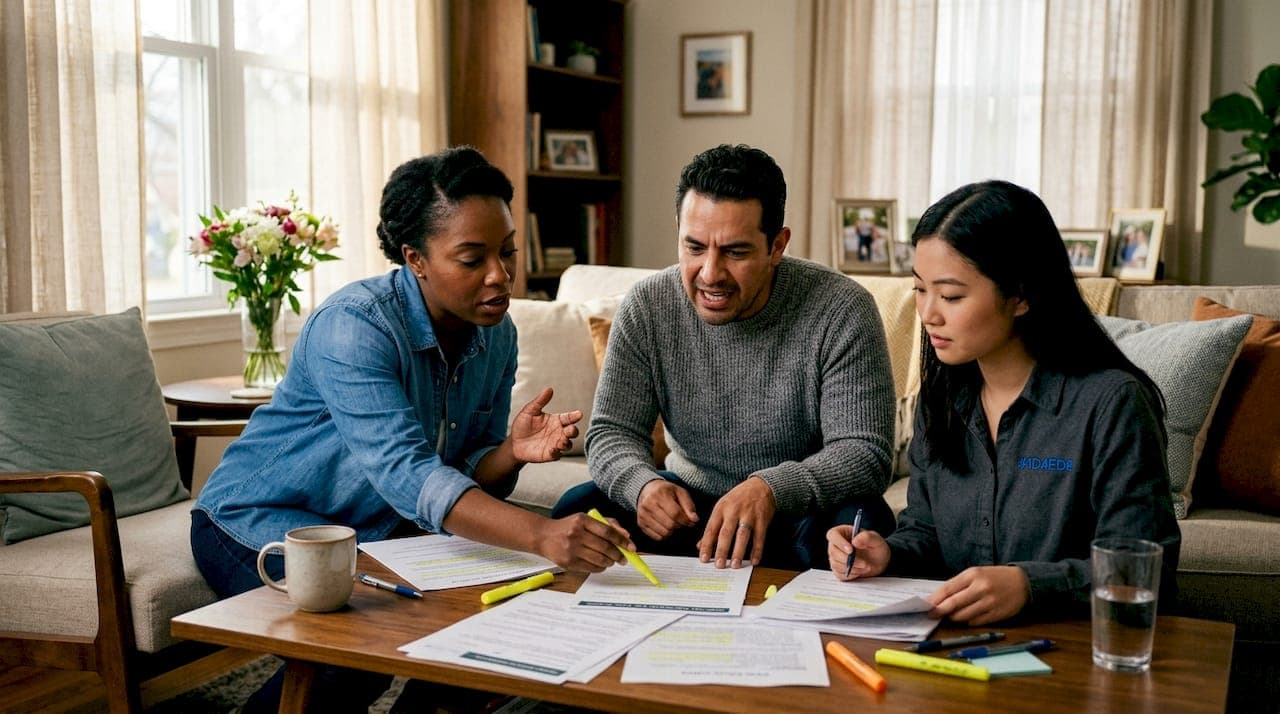
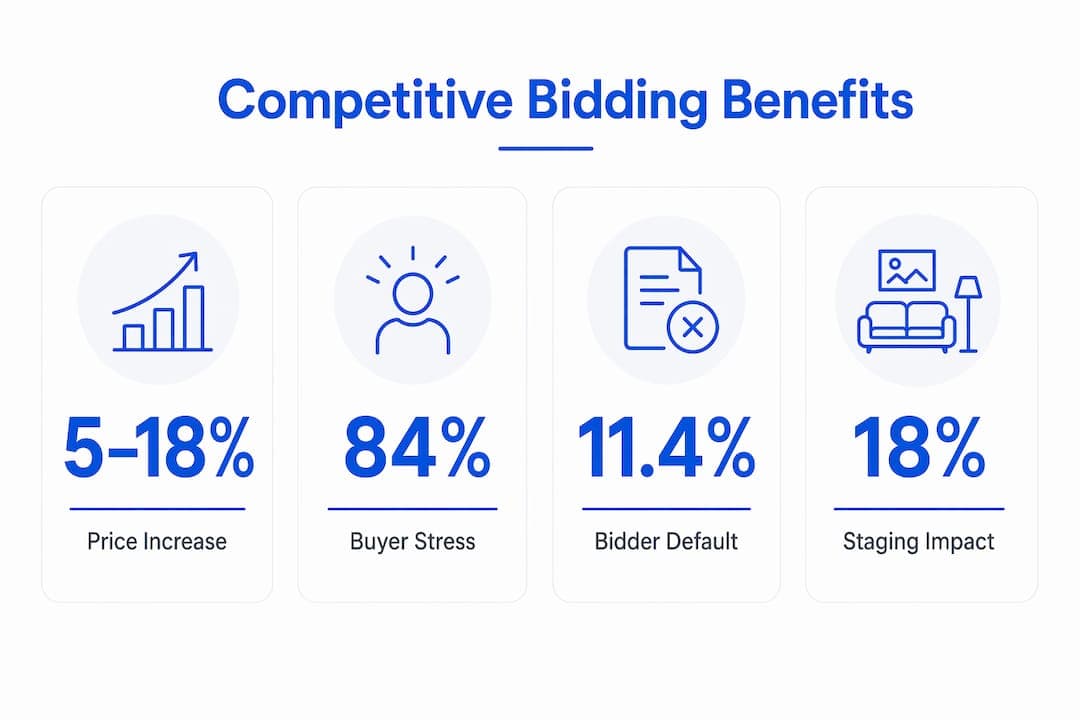
Behavioral economists call this “auction fever.” 84% of buyers experience transaction stressors that push them to bid beyond their perceived value ceiling. That statistic means most buyers in a competitive sale will exceed their own budget before the process ends.
The fear of losing a property triggers what researchers call the “winner’s curse.” Competitive bidding changes buyer mindset from rational valuation to winning at all costs, disabling the financial guardrails buyers normally rely on. A buyer who planned to offer $380,000 suddenly finds themselves at $405,000 because another offer arrived.
Artificial scarcity and time pressure amplify this effect. When a seller sets a firm offer review date, buyers feel urgency. They cannot wait to see if the market softens. They must act now or lose the home entirely.
- Buyer competition forces each bidder to put their best offer forward rather than testing the seller with a low opening bid.
- Auction fever pushes emotional investment above rational valuation, particularly in low-inventory markets.
- Time pressure from a set offer deadline concentrates buyer decisions into a short window, preventing second-guessing.
- Social proof from knowing others want the same property increases a buyer’s perceived value of the home.
Pro Tip: List your home on a Thursday or Friday and set the offer review date for the following Tuesday. This gives buyers a full weekend to tour the home and build emotional attachment before the deadline hits.
What are effective seller strategies to maximize benefits from competitive bidding?
Sellers who generate the highest prices from competitive bidding do not leave it to chance. They engineer the conditions that produce multiple strong offers.
Price slightly below market value
Listing below market value sounds counterintuitive, but it is the most reliable way to attract multiple buyers fast. Bay Area markets regularly see 5–15 offers and closing prices 5–18% above list when sellers use this tactic. A $450,000 home listed at $435,000 draws more traffic, more showings, and more competing bids than the same home listed at $455,000.
Set a defined offer review date
A single offer review date creates a structured auction environment without formally calling it an auction. Buyers know they have one shot. That knowledge concentrates their best offers into one moment.
Stage the home to maximize emotional competition
Well-staged homes increase buyer engagement and can push final prices up to 18% above list in high-demand markets. Staging works because competitive bidding is an emotional process. A buyer who falls in love with a home will outbid a buyer who merely likes it. Professional staging, quality listing photography, and strong online marketing all feed the emotional response that drives prices higher.
Use “highest and best” requests strategically
Once multiple offers arrive, a seller can issue a “highest and best” request, asking every buyer to submit their strongest final offer by a set time. This single move often produces a second round of price escalation. Buyers who thought they had won now realize they must compete again.
Here is a step-by-step approach to running a competitive bidding process:
- Price strategically. Set the list price slightly below your target sale price to attract maximum buyer traffic.
- Market aggressively. Use professional photos, video tours, and social media to reach the widest possible buyer pool before the offer date.
- Set a firm offer deadline. Announce the review date publicly in the listing so every buyer knows the timeline.
- Review all offers together. Evaluate price, financing type, contingencies, earnest money, and closing timeline as a package.
- Issue a “highest and best” request. If multiple strong offers arrive, ask all buyers to submit their final best offer within 24 hours.
- Select the strongest total package. Choose the offer that combines the best price with the most reliable path to closing.
Pro Tip: Ask your agent to call every buyer’s agent before the offer deadline. A quick conversation often reveals which buyers have flexibility to go higher, giving you negotiating intelligence before you even open the envelopes.
What are the risks and considerations for sellers in competitive bidding scenarios?
Competitive bidding produces higher prices, but it also introduces risks that sellers must manage carefully. The biggest danger is accepting a headline price that never survives to closing.
Buyers winning bidding wars default at a rate of 11.42% compared to 8.28% for buyers in non-competitive purchases. That gap exists because auction fever pushes buyers to commit to prices their finances cannot support. A seller who accepts an inflated offer from an unqualified buyer may lose weeks to a failed contract.
The “headline price trap” is a real risk. A buyer offers $30,000 above asking but includes a financing contingency, an inspection contingency, and a low earnest money deposit. If the appraisal comes in below the offer price, the deal can collapse entirely. The seller then relists a home that buyers now perceive as damaged goods.
Key risks to watch for include:
- Weak financing. Pre-approval letters are not guarantees. Verify the buyer’s lender and loan type before accepting any offer.
- Appraisal gaps. In a bidding war, the accepted price often exceeds appraised value. Confirm the buyer can cover the gap in cash or has waived the appraisal contingency.
- Excessive contingencies. Inspection, financing, and sale contingencies all create exit ramps for buyers who overpaid in the heat of competition.
- Low earnest money. A small deposit signals low commitment. A serious buyer in a competitive market should put down meaningful earnest money.
- Balanced market conditions. Highest and best requests can backfire in markets with high inventory. If buyers have alternatives, they will walk rather than escalate.
Understanding hidden real estate fees and contingency costs also affects your true net proceeds, even when the headline price looks strong.
How do competitive bidding and traditional negotiations differ in impact?
Traditional listings and competitive bidding produce fundamentally different outcomes because they operate on different information structures.
Traditional listings rely on the seller guessing a price, while auctions let the market prove the price on a fixed date. That distinction matters enormously. A seller who lists at $400,000 in a traditional sale may never know the home was worth $430,000. A seller who runs a competitive bidding process discovers that number in real time.
Private negotiations also limit buyer pressure. When a single buyer negotiates with a seller, the buyer controls the pace. They can request extensions, ask for repairs, and chip away at the price through inspection negotiations. Competitive bidding removes that leverage entirely. The buyer who wants the home must compete, not negotiate.
| Factor | Competitive bidding | Traditional negotiation |
|---|---|---|
| Price discovery | Market proves value on a set date | Seller guesses market value upfront |
| Buyer pressure | Multiple buyers compete simultaneously | Single buyer controls the pace |
| Lowball offers | Rare; competition filters them out | Common; buyers test the seller |
| Timeline | Defined and short | Open-ended and unpredictable |
| Seller anxiety | Lower; process has clear structure | Higher; outcome is uncertain longer |
| Final price | Typically above list in strong markets | Typically at or below list |
Open auctions provide sellers with transparent price discovery that reduces pricing anxiety compared to private negotiations. Sellers who have sat through weeks of back-and-forth on a traditional listing often describe the competitive bidding process as a relief by comparison.
How can sellers ensure choosing the best final offer, not just the highest price?
The highest offer is not always the best offer. More offers do not guarantee the best outcome; financing strength and contingencies directly affect net proceeds and deal reliability. A seller who ignores this principle often ends up relisting after a failed contract.
Listing agents regularly discount highest bids that carry high-risk contingencies, preferring lower but cleaner offers to avoid deal collapse and lost time. A “clean” offer with strong financing, minimal contingencies, and a flexible closing date is often worth more than a higher offer loaded with conditions. Sellers facing time pressure, such as those managing inherited property sales or urgent relocations, feel this tradeoff most acutely.
Use this checklist when evaluating competing offers:
- Financing type. Cash offers eliminate appraisal and financing risk entirely. Conventional loans are stronger than FHA or VA loans in competitive situations.
- Pre-approval quality. A fully underwritten pre-approval is stronger than a basic pre-qualification letter.
- Earnest money amount. Higher deposits signal serious buyers who have skin in the game.
- Contingencies. Count them. Fewer contingencies mean fewer ways the deal can fall apart.
- Closing timeline. Does the buyer’s timeline match your needs? A faster close often has real financial value.
- Appraisal gap coverage. Ask whether the buyer will cover any gap between the appraised value and the offer price.
Pro Tip: Build a simple spreadsheet with each offer’s price, financing type, contingencies, earnest money, and closing date. Assign a risk score to each. The offer with the best combined score wins, not just the one with the biggest number at the top.
Inspection negotiations can also erode a high headline price after the fact. Factor in the likely cost of post-inspection requests when comparing offers.
Key Takeaways
Competitive bidding increases sale price by creating simultaneous buyer competition that drives offers above market value, but sellers maximize net proceeds only when they evaluate offer quality alongside headline price.
| Point | Details |
|---|---|
| Bidding wars raise prices | Competitive bidding regularly produces closing prices 5–18% above list in active markets. |
| Auction fever is real | 84% of buyers exceed their value ceiling under competitive pressure, benefiting prepared sellers. |
| Strategy drives results | Pricing below market, staging well, and setting a firm offer date are the three levers sellers control. |
| Highest price is not always best | Clean offers with strong financing and few contingencies often outperform higher but riskier bids. |
| Market conditions matter | Highest and best requests work in low-inventory markets and can backfire when buyer demand is weak. |
What I’ve learned watching sellers win and lose bidding wars
Most sellers enter a competitive bidding process focused entirely on the number at the top of each offer sheet. That focus costs them money and sometimes the deal itself.
The sellers I have seen come out ahead treat the offer review like an underwriting exercise. They look at the buyer’s financing first, the contingencies second, and the price third. A $420,000 cash offer with no contingencies and a 14-day close is almost always worth more than a $435,000 financed offer with three contingencies and a 45-day timeline.
The other mistake I see constantly is sellers who trigger a “highest and best” round in a market that does not support it. If you have two offers and one buyer is already at their limit, asking for a final round just tells both buyers you are desperate. Read your local market before you pull that lever. A free home valuation from a knowledgeable local agent gives you the baseline you need to make that call confidently.
Timing also matters more than most sellers realize. Listing in a week with low competing inventory, setting a tight offer window, and having the home in peak condition on day one are not optional extras. They are the conditions that make competitive bidding work. Without them, you are just hoping.
— Bryan
Housegoodbye brings competitive offers directly to sellers
Competitive bidding works best when multiple serious buyers show up at the same time. Housegoodbye builds that competition into the process from the start.

Housegoodbye connects sellers with multiple competing cash investors who bid on your property simultaneously, often producing strong offers without the staging costs, agent fees, or weeks of open houses. You can sell your house fast and close in as little as seven days, with no repairs required. Sellers who need speed without sacrificing price can also compare real cash offers side by side before committing to anything. If you want the benefits of a bidding war without the uncertainty of the open market, Housegoodbye is worth a serious look.
FAQ
How much can competitive bidding increase a home’s sale price?
In active markets, competitive bidding regularly produces closing prices 5–18% above list price. Bay Area data shows homes receiving 5–15 offers commonly close well above asking.
What triggers auction fever in home buyers?
Auction fever occurs when buyers shift from evaluating fair value to focusing on winning. Research shows 84% of buyers experience stressors that push them to bid beyond their own perceived value ceiling.
Should sellers always accept the highest offer in a bidding war?
No. Financing strength, contingencies, and earnest money all affect whether a deal closes. A slightly lower clean offer with strong financing often delivers better net proceeds than a higher but risky bid.
Does competitive bidding work in all market conditions?
Competitive bidding works best in low-inventory, high-demand markets. In balanced or high-inventory markets, “highest and best” requests can backfire if buyers have enough alternatives to walk away.
How does competitive bidding differ from a traditional home sale?
Traditional sales rely on the seller setting a price and negotiating with one buyer at a time. Competitive bidding lets the market prove the price on a fixed date, reducing seller pricing anxiety and filtering out lowball offers.