TL;DR:
- Effective as-is sale price negotiation involves securing the highest cash price without repairs or concessions. Preparation, documentation, and understanding buyer psychology give sellers leverage even in urgent situations.
Effective as-is sale price negotiation is defined as the process of securing the highest possible cash price for a property sold in its current condition, without making repairs or concessions beyond price. For homeowners facing foreclosure or financial distress, mastering this process is the difference between walking away with equity and losing everything. Federal rules prevent foreclosure until 120 days of delinquency, which means you likely have more time to prepare than you think. The core insight is simple: preparation, documentation, and buyer psychology give you real negotiating power, even when your situation feels urgent.
What are the best as-is sale price negotiation tips?
The single most effective as-is sale price negotiation tip is to enter every conversation armed with data, not desperation. Buyers know when a seller is under pressure. They price that pressure into their offers. Your job is to remove as much uncertainty as possible before the first offer arrives.

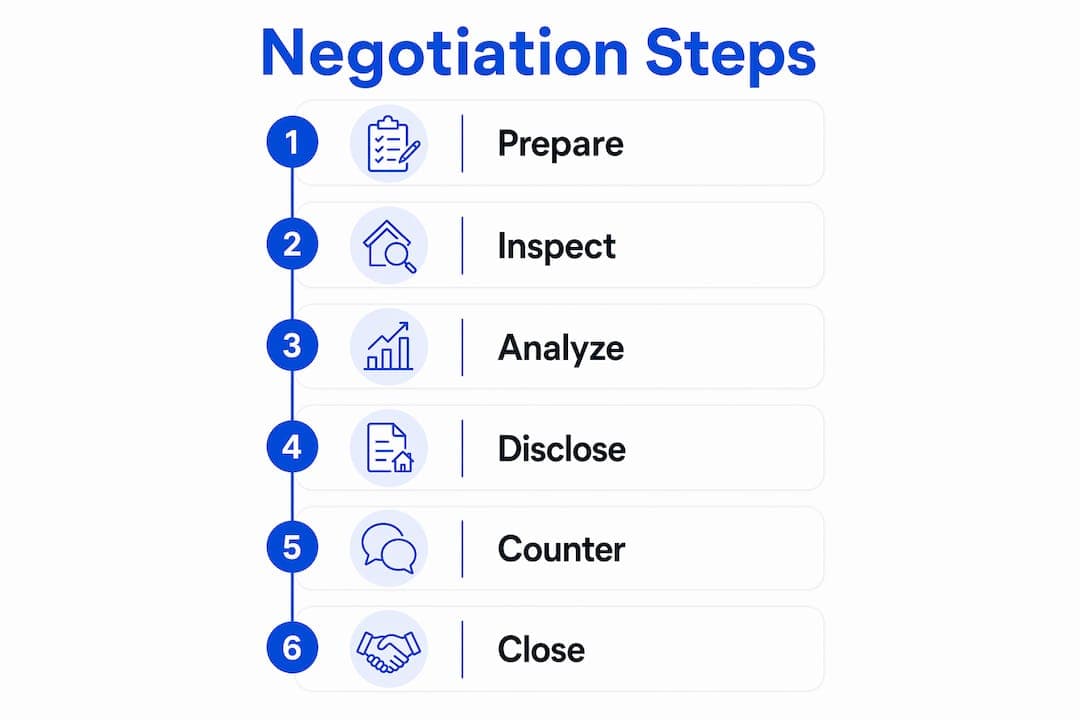
Three tools do that work: a pre-listing inspection, a Comparative Market Analysis (CMA) that includes distressed sales, and a full disclosure package. Each one shifts the negotiation from guesswork to documented facts. Buyers who have fewer unknowns make higher offers. That is not a theory. It is buyer psychology backed by how investors calculate risk.
A common misconception is that “as-is” means you can hide defects. State law mandates disclosure of known issues regardless of how the property is listed. Understanding that shifts your negotiation focus from repairs to price, which is exactly where you want it.
How does a pre-listing inspection empower your negotiation?
A pre-listing inspection is the single best $300–$500 you can spend before listing an as-is property. Pre-listing inspections support accurate pricing, satisfy legal disclosure requirements, and reduce post-offer renegotiations. That combination is a direct negotiation advantage.
Here is why it matters in practice. Without an inspection, buyers assume the worst. They pad their offers with large risk premiums to cover unknown repairs. With a report in hand, you replace their assumptions with facts. A buyer who knows the roof has five years of life left will not price in a full replacement.
The inspection also protects you legally. Sellers who fail to disclose known material defects face legal liability and buyer money-back claims. Disclosing proactively removes that risk and signals good faith, which buyers reward with more reasonable offers.
Key benefits of sharing your pre-listing inspection report:
- Buyers make more accurate offers with fewer contingencies
- Renegotiation attempts after the buyer’s own inspection drop significantly
- You control the narrative around the property’s condition
- Lenders financing the buyer’s purchase have fewer surprises
- Your asking price becomes defensible with documented evidence
Pro Tip: Share the full inspection report with every serious buyer before they submit an offer. Transparency at this stage reduces the chance of a deal collapsing after the buyer’s inspection reveals the same issues you already knew about.
For a deeper look at how inspection findings affect your final number, the guide on inspection-based negotiations breaks down the real cost of letting buyers discover problems on their own.
What pricing strategies optimize your as-is sale price?
Pricing an as-is home correctly is the most consequential decision you will make. Price too high and you sit on the market while carrying costs pile up. Price too low and you leave real money behind. The goal is a price that attracts multiple serious buyers and creates competition.
As-is homes typically sell at a 15%–25% discount compared to renovated properties. The exact discount depends on repair severity, local market conditions, and the type of buyer you attract. That range is wide for a reason. A cosmetically dated home in a hot market sits closer to 15%. A structurally compromised home in a slow market sits closer to 25%.
Investor offers vs. owner-occupant offers
The buyer type changes your price ceiling significantly. Owner-occupants typically offer 10%–15% below market value, while investors discount 20%–30% to build in their profit margin. An experienced listing agent who markets to both groups gives you access to the higher end of that range.
| Buyer type | Typical discount from market value | Primary motivation |
|---|---|---|
| Owner-occupant | 10%–15% | Affordability, location preference |
| Retail investor | 20%–25% | Flip profit, rental yield |
| Institutional buyer | 25%–30% | Portfolio scale, risk-adjusted return |
Carrying costs and timing trade-offs
Carrying costs are the silent killer in as-is negotiations. Every month you hold the property costs you mortgage payments, property taxes, and insurance. Pricing $10,000 lower to sell four months earlier can save more in carrying costs than the price concession costs you. Run that math before you reject a reasonable offer.
Never price based on your mortgage balance. Your balance is irrelevant to market value. Price from recent comparable sales, including distressed sales in your area, and adjust downward for your property’s specific condition.
Pro Tip: Pull three to five recent investor purchases in your zip code from public records. Those sale prices are your real floor. If your asking price is above that floor with documented condition advantages, you have a defensible position in any negotiation.
How to leverage transparency and documentation in negotiations?
Transparency is a negotiation tactic, not just an ethical obligation. Buyers confident in full disclosure are less likely to renegotiate after their inspection or walk away at the last minute. Both outcomes cost you time and money you cannot afford.
State disclosure laws require you to report known material defects even when selling as-is. The legal paperwork around as-is property disclosures is specific and varies by state. Getting it right protects you from post-closing lawsuits.
Build a documentation package before you list. Include:
- The pre-listing inspection report with all findings
- Repair estimates from licensed contractors for major issues
- Utility bills showing average monthly costs
- Any permits pulled for past work, completed or not
- Documentation of any health or safety issues already addressed
This package does two things. First, it counters the buyer’s assumption that you are hiding something. Second, it gives you hard numbers to reference when a buyer demands a repair credit. You can point to a contractor estimate and say the credit they are requesting exceeds the actual repair cost.
The legal implications of as-is listings are worth understanding fully before you sign anything. Sellers who skip this step often face renegotiations that wipe out any price advantage they gained upfront.
What negotiation tactics help counter lowball offers in as-is sales?
Lowball offers are not insults. They are calculations. Investors price offers as: market value minus estimated repair cost minus risk premium minus desired profit margin. Investor profit margins typically run 20%–30%, and they add extra cushion for unknown risks and title exposure. Your job is to reduce those unknowns so the risk premium shrinks.
Follow these steps when a lowball offer arrives:
- Do not respond emotionally. Treat the offer as an opening data point, not a final position.
- Calculate the buyer’s implied repair estimate. Subtract their offer from your CMA value. That gap tells you what they think repairs will cost.
- Compare their implied estimate to your contractor quotes. If your quotes are lower, present them directly in your counteroffer.
- Counter with documented evidence. Data-backed counteroffers with repair estimates and comps outperform emotional responses every time.
- Set your minimum acceptable price before negotiations start. Know your floor so you do not make concessions under pressure.
- Know when to walk away. If a buyer’s math requires a 35% discount on a property with minor cosmetic issues, they are not your buyer.
Pro Tip: When countering, present your contractor estimates as attachments, not verbal claims. A written quote from a licensed contractor carries more weight than your word. It forces the buyer to argue with a document, not with you.
Recognizing the difference between a reasonable offer and a lowball offer matters. A reasonable offer reflects actual repair costs and a fair profit margin. A lowball offer inflates repair estimates, adds excessive risk premiums, or ignores comparable sales entirely. You can spot the difference when you have done your homework.
For homeowners weighing a cash sale against the risk of foreclosure, the comparison of cash sale vs. foreclosure outcomes lays out exactly what each path costs you financially and legally.
Key Takeaways
Sellers who prepare with inspections, accurate pricing, and full documentation consistently outperform those who list without preparation in as-is negotiations.
| Point | Details |
|---|---|
| Pre-listing inspection pays off | A $300–$500 inspection reduces renegotiations and supports a defensible asking price. |
| Price from comps, not your balance | Use recent distressed sales and investor purchases as your pricing floor, not your mortgage balance. |
| Transparency reduces lowball offers | Full disclosure packages shrink buyer risk premiums and cut last-minute renegotiations. |
| Know your buyer type | Owner-occupants offer 10%–15% below market; investors discount 20%–30%, so marketing to both groups matters. |
| Counter with data, not emotion | Documented contractor estimates and comps are more persuasive than any verbal argument. |
What I have learned about negotiating as-is sales under pressure
After working with homeowners in financial distress, the pattern I see most often is this: sellers who rush skip the inspection, skip the documentation, and then wonder why every offer comes in at the bottom of the range. The urgency is real. I understand that. But two weeks of preparation routinely adds thousands of dollars to the final sale price.
The other mistake I see is treating every buyer the same. An investor and an owner-occupant have completely different motivations. An investor needs a margin. An owner-occupant needs a home. When you market only to investors, you cut your price ceiling before negotiations even start.
The most counterintuitive thing I have found is that disclosing problems upfront actually strengthens your position. Sellers who hide issues think they are protecting their price. They are not. They are setting up a renegotiation after the buyer’s inspection, usually at a worse price and with a damaged relationship.
Negotiation power exists even when you are behind on payments. Federal protections give you time. Use that time to prepare, not to panic. The sellers who come out ahead are the ones who treat the sale like a business transaction, not an emergency exit.
— Bryan
Sell your as-is home fast with Housegoodbye
Housegoodbye connects distressed homeowners with multiple competing cash buyers, so you receive real offers without repairs, agent fees, or delays. The bidding process creates competition among investors, which pushes your final price higher than a single-offer negotiation ever could.

Housegoodbye closes in as little as seven days, which stops carrying costs and foreclosure timelines in their tracks. You keep more of the sale price because there are no commissions or hidden fees. If you are ready to see what your home is worth in its current condition, get your as-is cash offer and compare real numbers from competing buyers today.
FAQ
What does “as-is” mean in a home sale?
“As-is” means the seller will not make repairs or provide credits for defects found during inspection. State disclosure laws still require the seller to report all known material defects before closing.
Can I negotiate price after an as-is inspection?
Buyers can still negotiate price after their inspection in an as-is sale. Sellers who provide a pre-listing inspection report and contractor estimates have documented grounds to hold their price or counter with evidence.
How much less should I expect for an as-is home?
As-is homes typically sell 15%–25% below renovated comparable properties. The exact discount depends on repair severity, buyer type, and local market conditions.
How do I counter a lowball offer on an as-is property?
Present licensed contractor repair estimates and recent comparable sales directly in your counteroffer. Data-backed counteroffers are more effective than verbal negotiation because they force the buyer to argue with documented facts.
What legal protections do I have before foreclosure?
Federal rules require mortgage servicers to evaluate you for loan modifications or short sales before foreclosure can begin after 120 days of delinquency. That window gives you time to prepare an as-is sale properly.