Probate is the court-supervised process that validates a will, appoints someone to manage the estate, and clears legal title to property. If a house is titled only in the deceased owner’s name, with no trust, no surviving joint owner, and no transfer-on-death deed attached, that house typically must pass through probate before anyone can sell it or refinance it.
Homes held in a revocable trust, owned jointly with right of survivorship, or transferred through a beneficiary deed usually skip probate entirely. Everything else, in most cases, lands in probate court by default.
If you’re an heir or executor facing this right now, start by gathering:
- The original will (if one exists)
- The property deed showing exactly how title is held
- Recent mortgage statements
- Homeowners insurance policy details
- A list of other known assets and debts
Key Takeaways
Probate applies to solely titled real estate and requires court-issued authority before that property can be secured, maintained, or sold.
| Point | Details |
|---|---|
| Title determines probate | A house titled solely in the deceased’s name typically requires probate; trusts, joint tenancy, and TOD deeds usually avoid it. |
| Executor authority is documented | Banks and title companies require letters testamentary or administration before recognizing anyone’s control over the property. |
| Carrying costs erode value | Insurance, taxes, and maintenance keep accruing monthly while the house sits in probate, cutting into what heirs eventually receive. |
| Court confirmation adds delay | Court-confirmed sales can include a 30 to 45 day overbidding window that creates uncertainty for conventional buyers. |
| Cash sales cut through delay | Housegoodbye lets Michigan heirs compare multiple as-is cash offers without listing, repairs, or agent fees, reducing carrying costs during probate. |
Where to find state-specific probate forms
Check your state court’s self-help or probate division website, your state bar association’s public resources, and the American Bar Association’s probate resources for forms and filing guidance. Confirm requirements with a local estate attorney, since procedures vary by state.
Table of Contents
- What Does Probate Mean for Homeowners? Does a House Automatically Go to Probate?
- Who Owns and Controls the Home During Probate?
- What Happens During Probate for a House, Step by Step?
- How Long Does Probate Take and What Does It Cost?
- Selling a House During Probate: What Are Your Options?
- Sources
- FAQ
What Does Probate Mean for Homeowners? Does a House Automatically Go to Probate?
Not every house goes through probate, and the distinction comes down entirely to how the title reads on the deed. Probate property is real estate titled solely in the deceased person’s name, with no beneficiary designation and no survivorship rights attached. That single fact, buried in a county recorder’s office, decides whether the family spends months in court or transfers the house in a matter of weeks.
Several ownership structures sidestep probate altogether:
- Revocable living trust: the house passes to the named successor trustee without court involvement
- Joint tenancy with right of survivorship: ownership passes automatically to the surviving co-owner
- Transfer-on-death (TOD) deed: a deed filed while the owner was alive that names a beneficiary, available in many but not all states
- Beneficiary deeds and payable-on-death designations: similar mechanisms used for other assets that can apply to real property in some jurisdictions
Probate rules vary significantly by state, and that variation matters more than most people expect. A property in one state might qualify for a simplified small-estate process, while the identical scenario in a neighboring state requires full formal probate. If the deceased owned property in a state other than their primary residence, the estate may also need ancillary administration there, a second, smaller probate proceeding just for that out-of-state parcel.
Pro Tip: Pull the actual deed from the county recorder before assuming anything. Families often believe a house avoided probate because “Mom mentioned a trust,” only to discover the deed was never retitled into that trust’s name.
Who Owns and Controls the Home During Probate?
Nobody personally owns the house during probate. Legal title sits with the estate, and a court-appointed personal representative, called an executor if named in a will, or an administrator if the court appoints one, controls and manages it. Banks and title companies won’t recognize that authority on a handshake. They require letters testamentary or letters of administration, the formal court documents proving who has legal power to act for the estate.
That authority comes with real obligations. The personal representative must:
- Secure the property against vandalism or unauthorized entry
- Keep homeowners insurance active without a lapse
- Pay the mortgage, property taxes, and utilities from estate funds
- Inventory and get a formal appraisal of the home’s value
- Notify heirs and known creditors as required by the court
These aren’t suggestions. Executors have a legal duty to protect and maintain estate property, and failing to do so, letting insurance lapse, missing a tax payment, ignoring storm damage, can expose the executor to personal liability. Courts have held representatives financially responsible for losses that resulted from neglect, not just fraud.
Because of that exposure, many executors bring in an estate attorney early, and some courts require the representative to post a bond, particularly when no will named them or family relationships are contentious. Executor compensation is generally set by state statute or by the will itself, often a percentage of the estate’s value or an hourly rate approved by the court, but taking on the role without understanding the liability is a common and costly mistake.
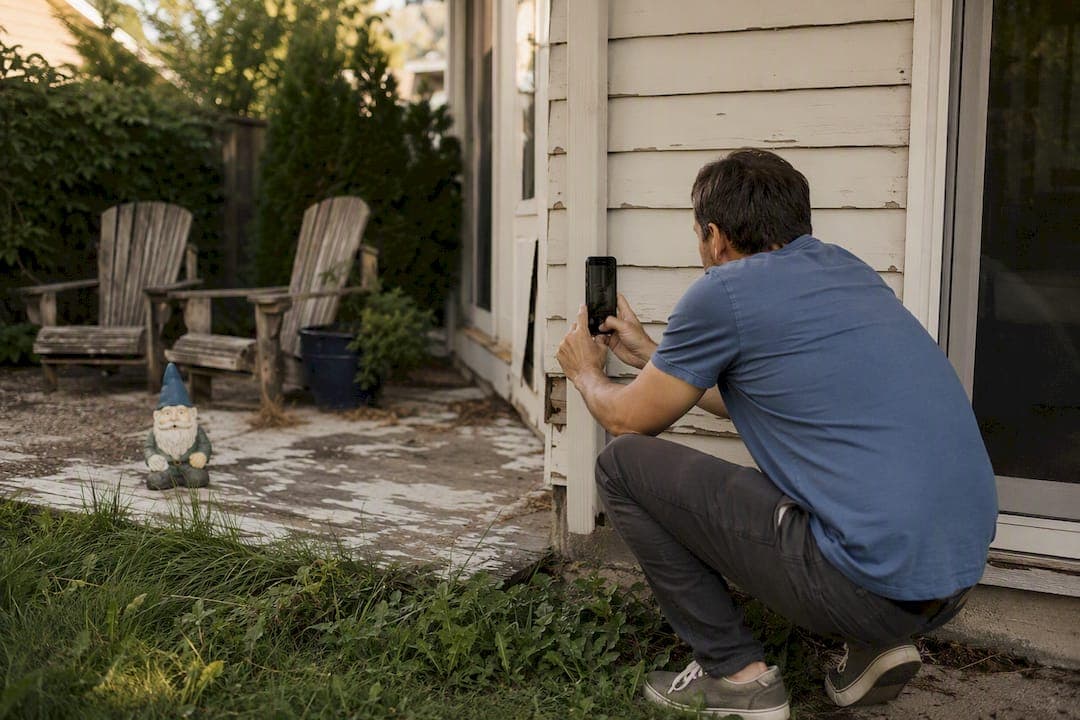
Pro Tip: Photograph the property’s condition the day you take control. If a dispute arises later over maintenance or damage, dated photos are worth more than any explanation.
What Happens During Probate for a House, Step by Step?
The probate process explained plainly looks like a checklist more than a legal maze, though each step has real deadlines attached.
-
Open probate with the court. File a petition in the county where the deceased lived, along with the will if one exists, and ask the court to appoint a personal representative.
-
Receive letters testamentary or administration. The court issues this document once the representative is appointed. Nothing involving the house moves without it.
-
Inventory and appraise the estate. The representative lists all assets, including the house, and typically orders a professional appraisal to establish its date-of-death value for tax and distribution purposes.
-
Notify creditors and open the claims window. State law requires public or direct notice to known and potential creditors, giving them a set period, often several months, to file claims against the estate.
-
Pay valid debts and resolve liens. Mortgage balances, tax liens, medical bills, and other legitimate claims get paid from estate assets before anything passes to heirs. Executors must identify, protect, and conserve estate property while paying outstanding valid debts, which is exactly why the house often can’t move quickly even when everyone agrees on what to do with it.
-
Get court approval for a sale, if required. Depending on the will’s language and state law, selling the house may need a judge’s sign-off before it can close.
-
File the final accounting. The representative reports every transaction to the court, showing where the money went.
-
Transfer title or distribute proceeds. Once the court approves the accounting, the house transfers to an heir by deed, or sale proceeds get distributed according to the will or state intestacy law.
How Long Does Probate Take and What Does It Cost?
Probate on a house usually runs anywhere from a few months to over a year, and the honest answer to “how long can a house sit in probate” is: it depends heavily on the state, the estate’s complexity, and whether anyone contests the will. A simple, uncontested estate with no out-of-state property might clear a state’s small-estate or summary process in a few months. An estate with disputed heirs, unclear title, or assets in multiple states can drag well past a year.
The costs stack up in categories that catch families off guard:
- Court filing fees, typically a few hundred dollars depending on the county
- Attorney fees, often billed hourly or set by statute as a percentage of the estate
- Executor compensation, again usually statutory or court-approved
- Appraisal fees for establishing the home’s value
- Ongoing carrying costs: property taxes, insurance premiums, utilities, and basic maintenance that continue accruing every month the house sits unsold
That last category is the one people underestimate most. A vacant house doesn’t stop costing money just because probate is in progress, and every month of delay quietly shrinks what heirs eventually receive. If estate cash runs short, the personal representative may need to liquidate assets, often the house, faster than originally planned just to keep insurance and taxes current.
Selling a House During Probate: What Are Your Options?
Selling probate property isn’t the same as a standard home sale, mainly because the seller is acting as a fiduciary, not an owner making a personal decision. That distinction shapes every option available.
Traditional market sale. The house gets listed like any other property, but buyers, lenders, and title companies will still demand proof of the representative’s court authority before closing. Financing contingencies and inspection negotiations can stretch timelines that the estate can’t always afford.
Court-confirmed sale. In states requiring formal probate sales, the court must approve the transaction, and that approval process can include a confirmation hearing where other buyers are allowed to overbid. Fidelity notes that this confirmation period often runs 30 to 45 days, during which the original buyer has no guarantee the deal survives. That uncertainty scares off a lot of conventional buyers, and it’s part of why cash buyers become an attractive option for estates that need speed and finality.
Cash, as-is sale. Selling directly to an investor or cash buyer skips repairs, staging, and financing contingencies entirely. The trade-off is usually a lower sale price in exchange for speed and certainty, a trade that often makes sense once you factor in months of avoided carrying costs and executor liability exposure.
| Sale Type | Speed | Approval Needed |
|---|---|---|
| Traditional market sale | Slower, financing contingencies common | Buyer/lender requires letters testamentary |
| Court-confirmed sale | Delayed by 30 to 45 day confirmation window | Judge approval, open to overbidding |
| Cash, as-is sale | Fastest, often days to weeks | Letters testamentary still required at closing |
Whichever route you choose, you’ll need the letters testamentary or administration, a court order if the sale requires confirmation, and a clear title report before any closing can happen.
A few mistakes I keep seeing executors make
The biggest mistake isn’t malice, it’s inertia. Executors sit on a decision for weeks because they’re grieving, overwhelmed, or waiting for family consensus that never arrives, and meanwhile insurance premiums, taxes, and a mortgage keep drawing down the estate.
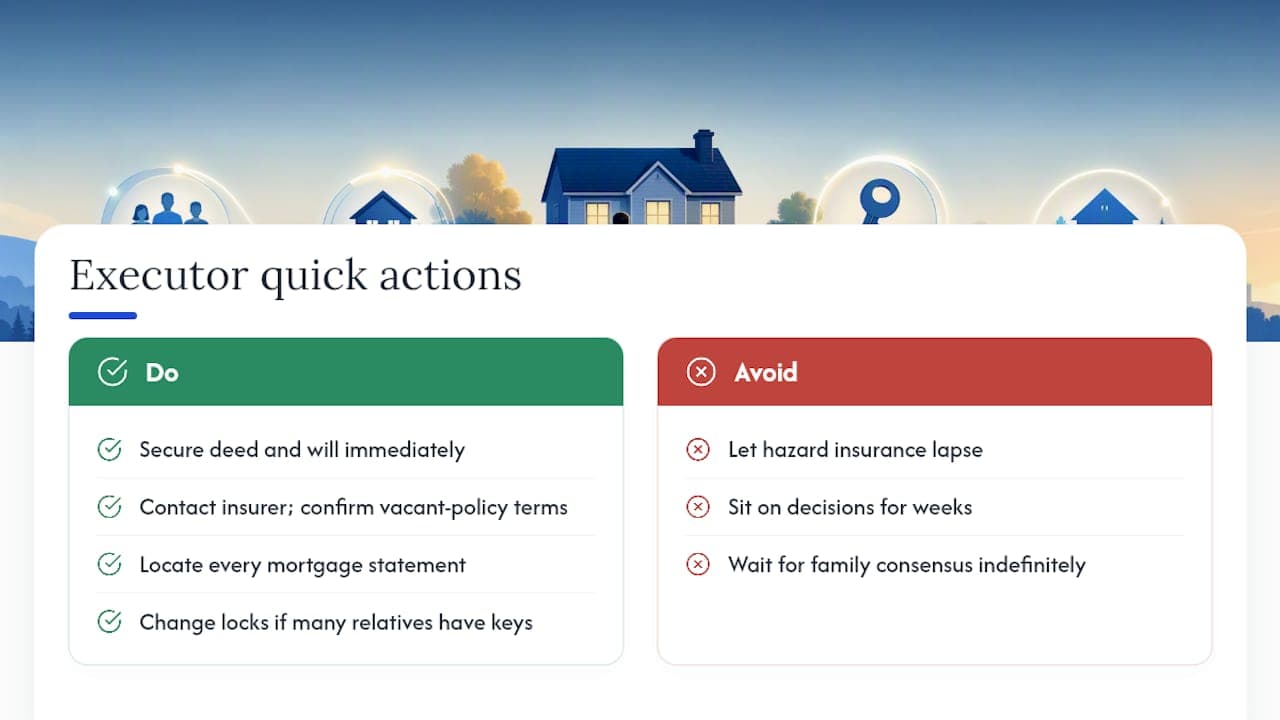
Secure the deed and the will immediately, contact the insurer to confirm the policy stays active under vacant-property terms, locate every mortgage statement, and consider changing the locks if multiple relatives have keys and tensions are high. Letting hazard insurance lapse is the single costliest error I see, because a single uninsured loss can wipe out equity the family was counting on.
When the estate is illiquid or the carrying costs are outpacing patience, a fast cash sale stops being a last resort and becomes the financially smart move.
— Bryan
A faster path when the estate needs cash now
Housegoodbye is built for exactly this moment: when an estate can’t absorb more months of insurance premiums, tax bills, and mortgage payments while waiting for a traditional buyer to close. Instead of listing the house and hoping for offers, Housegoodbye’s marketplace connects Michigan heirs and executors with vetted local investors who submit competing cash offers on the property as it sits, no repairs, no staging, no agent commissions.

Comparing multiple bids side by side, without a listing, lets you weigh a faster close against carrying costs that would otherwise keep draining the estate. That’s often the difference between distributing an inheritance intact and watching months of taxes and premiums eat into it. Still, run any accepted offer past the estate attorney handling probate before signing, since the sale may need court confirmation depending on the state and the will’s terms. If the property is in Holland, Michigan or elsewhere in the state, you can compare real cash offers and see what a fast, as-is close would actually look like for your situation.
Sources
- Probate court | Cornell Law School, Legal Information Institute
- Probate: What It Is and How It Works | Investopedia
- What is probate? | Fidelity
- Is probate needed? | Oklahoma Bar Association
FAQ
Does a house automatically go to probate?
Only if it’s titled solely in the deceased person’s name with no trust, joint survivorship right, or transfer-on-death deed attached. Homes held in those alternative structures typically bypass probate entirely.
How long can a house sit in probate?
Timelines commonly range from a few months to over a year, depending on the state, whether the will is contested, and if the estate includes out-of-state property requiring ancillary administration.
Who owns a home during probate?
Legal title sits with the estate itself, while a court-appointed executor or administrator controls and manages the property under authority granted through letters testamentary or letters of administration.
What causes a house to go to probate?
Sole ownership with no beneficiary designation, no co-owner with survivorship rights, and no trust arrangement is what triggers probate for real estate in most cases.