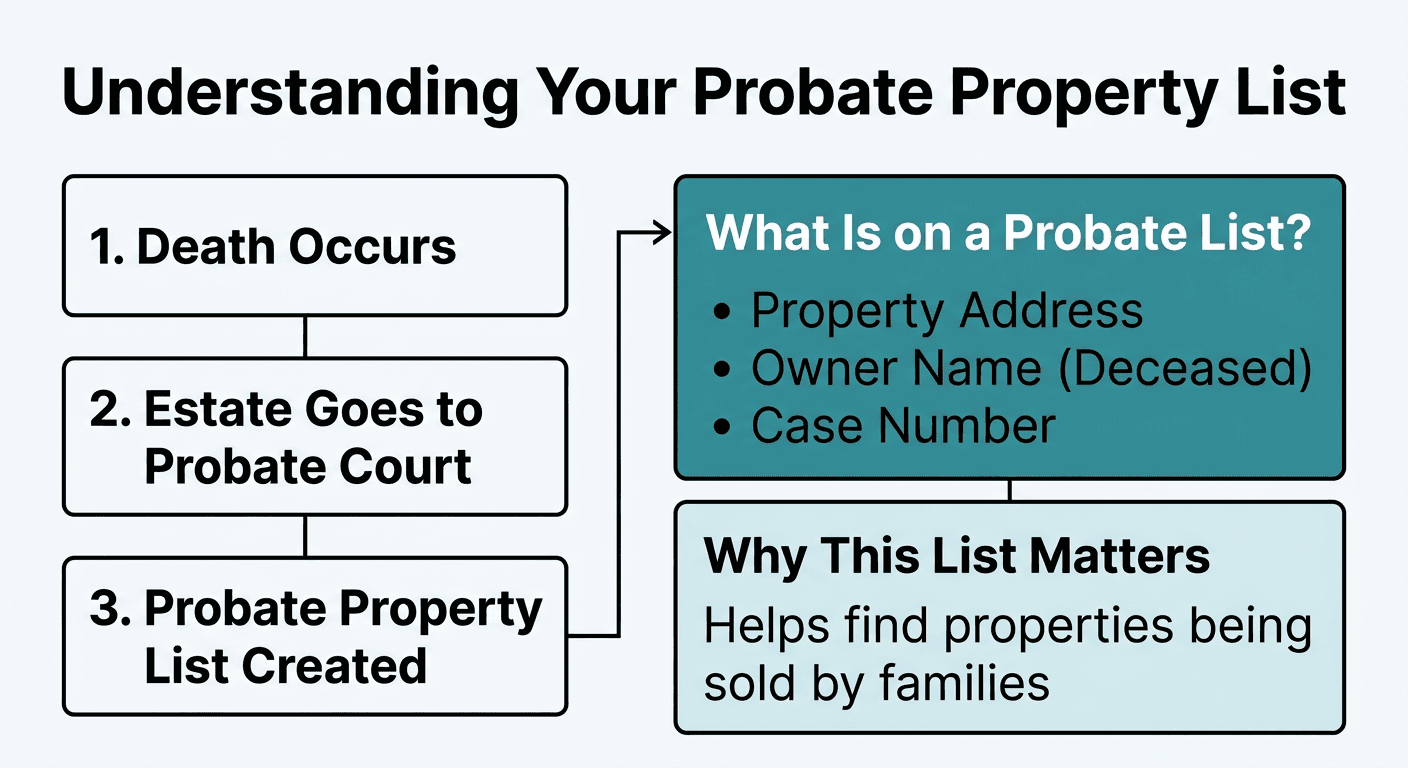
This guide helps families understand what a probate property list is, how to find one, and how to sell such a property quickly. We offer clear, step-by-step advice.
Key Takeaways
- A probate property list shows homes tied up in court because their owner passed away.
- You can find these lists at county probate court websites or in person.
- Some assets, like life insurance, avoid probate and pass directly to heirs.
- Selling a probate home can be complex, but cash buyers like HouseGoodbye make it easier.
- Properties cannot stay in a deceased person's name forever; they must go through a legal process.
What is a Probate Property List? Your Quick Guide
You can find homes that are part of an estate settlement on a probate property list. When someone dies, their belongings and property become part of their "estate." If they owned a house, that home may need to go through a legal process. This process is called probate. Probate helps a court make sure the person's debts are paid. It also makes sure their assets are given to the right heirs. This process can take many months. A probate property list is a record of houses that are part of this court process. These lists are public. This means anyone can view them. For families working through an estate, this list shows which properties are now under court review. Here are the main reasons a house ends up on a probate list:- No Will: The person died without a legal will.
- Estate Value: The total value of their estate is above a certain amount.
- Ownership: The property was only in their name.
How to Find a Probate Property List in Detroit and Nearby Areas
It's simple to find probate property lists through local county courts, both online and in person.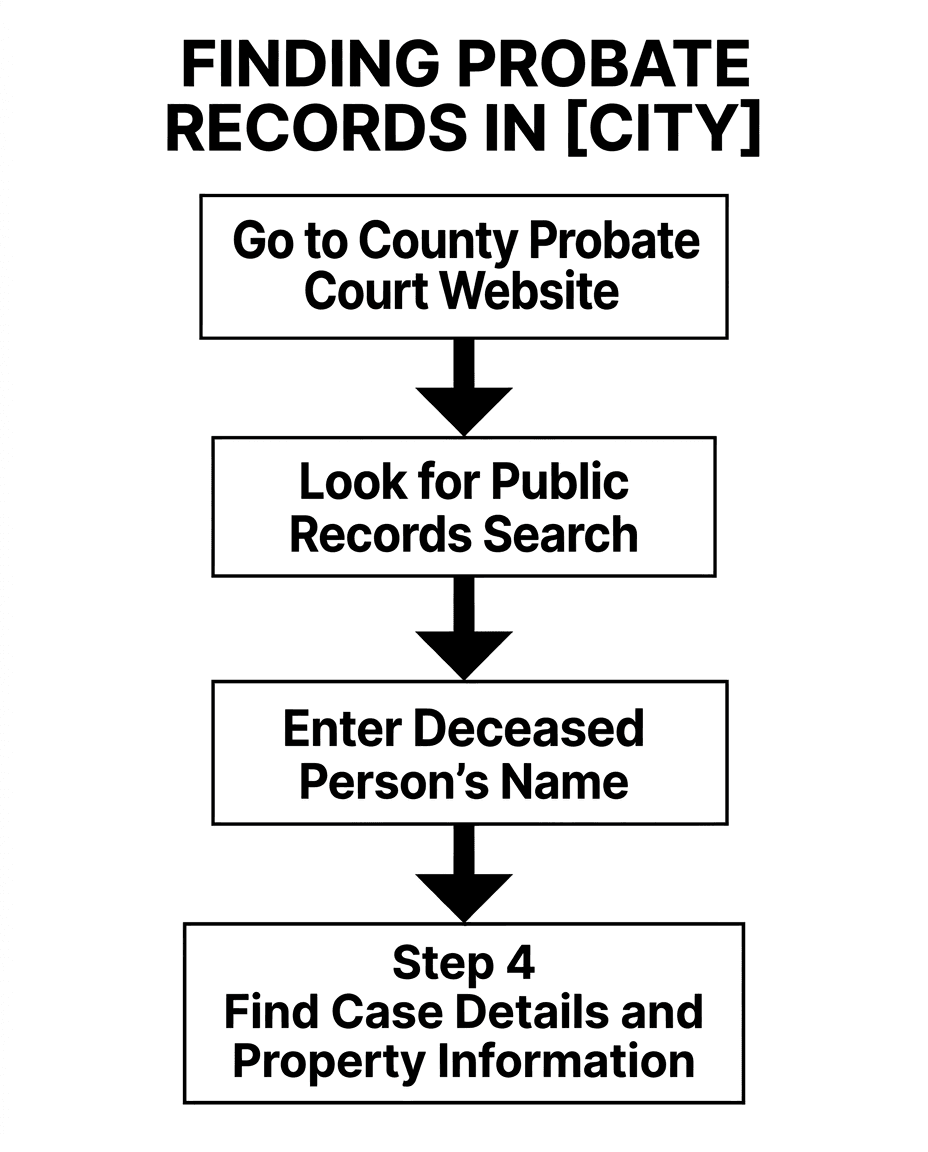
Flowchart showing steps to find probate records at the Wayne County, Michigan Probate Court website.
When a person passes away, their assets often go through probate court. This court checks the will. It also makes sure debts are paid. This process often includes real estate.
Checking Online for Probate Records
Many local courts now have online search tools. These tools let you look up case information from home. This saves you a trip to the courthouse.- Wayne County (Detroit): The Wayne County Probate Court website lets you search for cases. You can look by name or case number.
- Macomb County (Sterling Heights): Macomb County Probate Court also gives online access. You can find out about ongoing probate cases there.
- St. Clair County (St. Clair Shores): The St. Clair County Probate Court website has a public access portal. This lets you search for probate filings.
In-Person Courthouse Searches
Sometimes, you need to visit the court for more details. This is often true for older records. It can also be true if the online system has limited information. Here’s how to search at a courthouse:- Find the Probate Clerk: Ask for the probate clerk's office. They manage all probate records.
- Request Access: Tell them you want to view probate case files. Be ready to give a name or case number.
- Review Files: You can usually look through physical files. You might pay a small fee to make copies. For example, copies might cost $0.50 per page.
Your Next Steps with a Probate Property List
Once you have a probate property list, you can decide what to do. You might want to buy the house. Or you might want to help the estate sell it. Listing houses can be a lot of work. We can help make this easier. We buy houses fast for cash. Check out how HouseGoodbye.com works. We can help sell houses in any condition. This includes properties in places like Holland, MI or Ann Arbor, MI.How to Tell If a Property Is Out of Probate?
It's key to know if a property has finished the probate process. When a person dies, their assets often go through probate court. This court process ensures debts are paid. It also makes sure assets go to the right people. A property is "out of probate" when the court has closed the case. This means the court has approved the transfer of the property to the new owner. You can check a property's probate status yourself. First, gather any paperwork you have about the estate. Look for a case number or the deceased person's full name. This helps you find the court records. To check the status:- Visit the County Probate Court Website: Search for your county's probate court. For these cities, it would be the Macomb County Probate Court or Wayne County Probate Court.
- Use the Online Search Tool: Most courts have a public database. Enter the deceased person's name or case number.
- Look for Key Documents: You want to find an "Order of Discharge" or "Closing Order." These mean the probate case is officially finished.
How Long Can Property Stay in a Deceased Person's Name?
Property cannot stay in a deceased person's name forever; it must generally transfer ownership through probate. Property cannot legally stay in a deceased person's name always. The law says ownership must pass to the correct heirs. This process is called probate. It makes sure debts are paid. It also makes sure assets go to the right people. In Michigan, the probate timeline can change. A simple estate might finish in about 6 months. This is for estates with few assets and no fights. More complex cases can take a year or longer. The court watches over the transfer of deeds and titles. The property must transfer out of the deceased owner's name. This clear transfer helps protect buyers and future owners. Without probate, proving who owns the property becomes very hard. This can stop any future sale. Delays in probate can happen for many reasons. Family arguments or missing paperwork are common. Sometimes, finding all assets takes extra time. If a property is stuck, it cannot be sold or refinanced easily. If you have a property stuck in probate, we can help. HouseGoodbye.com buys houses fast, even those with probate issues. We can guide you through selling a home when the estate is still sorting things out. We work with families in Michigan to make this easier. Get a fast cash offer for your inherited property. Long delays can also lead to more costs. Property taxes and maintenance bills still need to be paid. These costs can add up fast. The National Council on Aging offers resources for understanding estate planning and probate. Knowing your options can save you money and stress.What Assets Typically Do Not Pass Through Probate?
Some assets transfer directly to new owners without court approval, saving time and stress. Not all things a person owns go through probate court. Certain assets avoid this legal process. They pass straight to the people named to receive them. This makes settling an estate much faster and easier. It also keeps these details private, unlike public court records.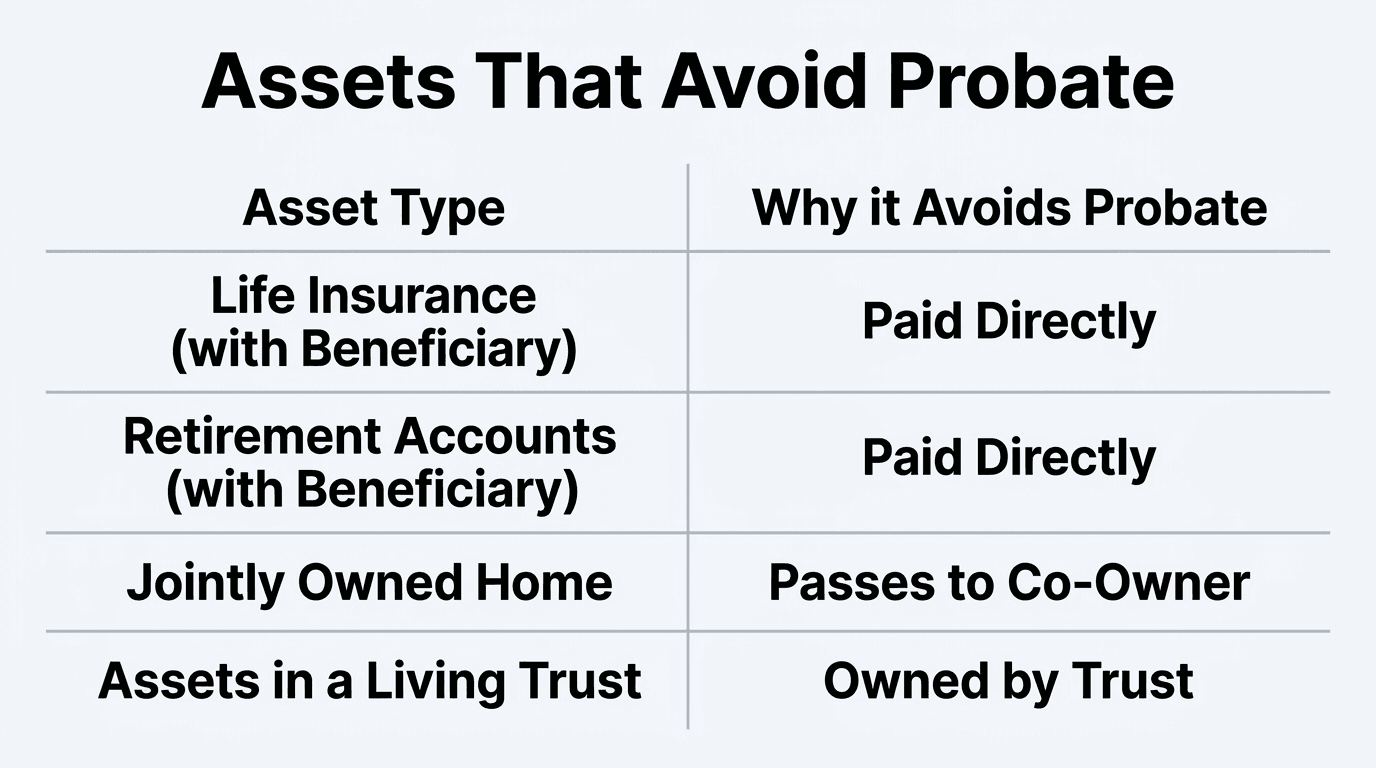
Table comparing assets that typically avoid the probate process for Michigan families.
Here are common asset types that usually avoid probate:
- Joint Tenancy Properties: This is when two or more people own property together. If one owner dies, the other automatically owns the full share. This is common for married couples with a home. You can learn more at Sell an Inherited House.
- Life Insurance Policies: The money from these policies goes directly to the named people. The insurance company pays them without any court steps.
- Retirement Accounts: These include accounts like 401(k)s and IRAs. You name a person to receive these funds. This person gets the money directly when the owner dies.
- Payable-on-Death (POD) Bank Accounts: You name a beneficiary for these bank accounts. When you die, the bank gives the money to that person.
- Transfer-on-Death (TOD) Brokerage Accounts: Similar to POD accounts, these let you name who gets your investments. The assets transfer without probate.
- Assets in a Living Trust: A living trust holds your assets while you are alive. After you die, the person managing the trust gives the assets to your chosen people. This happens outside of probate court.
The Six Worst Assets to Inherit (and What to Do)
It's good to know which inherited assets can cause trouble, so you can plan ahead. Inheriting assets often comes with feelings of loss. Sometimes, these assets also bring unwanted stress. Some items are harder to manage or sell than others. Knowing about them can help you make smart choices. Here are six tough assets to inherit and how to handle them:- Real Estate in Disrepair: A house that needs major fixes can cost a lot. Things like a bad roof (costing $10,000+) or a broken furnace add up fast. You might not have the money or time for repairs. Instead of fixing it, you can sell it as-is. We help people sell a house in disrepair quickly.
- Special Collectibles: Think rare comic books or antique toys. These are hard to value. Finding the right buyer also takes effort. Get an expert to appraise them. Then, consider a special auction house for the best price.
- Timeshares: These often have yearly fees. They can be hard to sell and might even lose value. Try to sell it back to the resort. Or look for a trusted timeshare resale company. Be ready to give it away if you cannot sell it.
- Private Business Interests: If you inherit part of a small business, it can be tricky. You might not know how to run it. Or you might not get along with other owners. Get legal and financial advice. You may want to sell your share to the other owners.
- Illiquid Investments: These are assets you can't quickly turn into cash. Examples include limited partnership shares. They can tie up your money for a long time. Talk to a financial advisor about your options. They can help you understand the real value and how to sell.
- Heavily Taxed Assets: Some inherited assets have high taxes. This can make the amount you keep much smaller. Work with an estate planner. They can help you understand tax rules. This is true for assets over a certain value. The IRS website has more details on estate taxes.
Selling a Probate Property in Detroit, Sterling Heights, or St. Clair Shores
Selling a probate property brings unique challenges, but HouseGoodbye helps local families sell fast.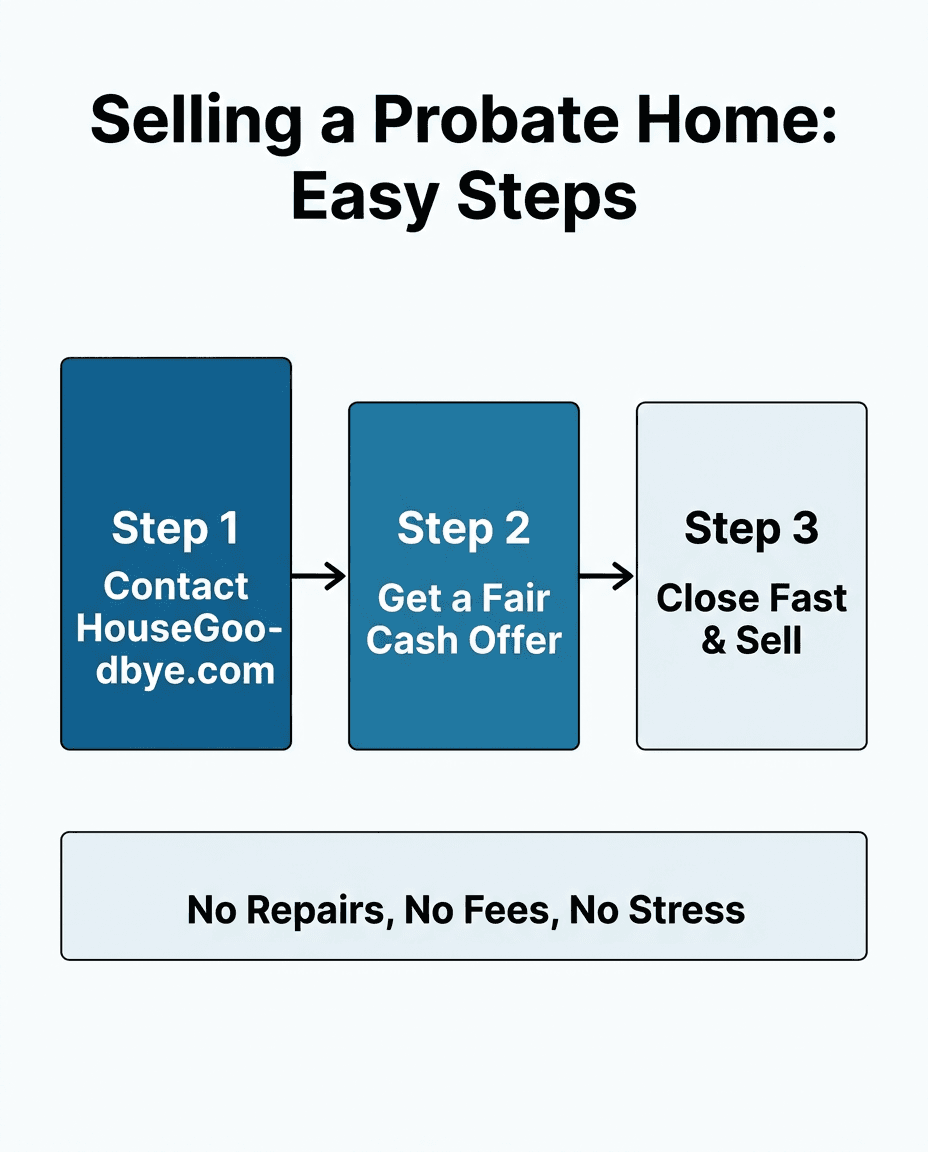
Diagram showing the simple process of selling a probate home quickly with HouseGoodbye.com in Detroit.
Selling a house after a loved one dies can be hard. You might feel stressed, especially with legal steps. The house might need repairs, or you could be short on time. Many families face these issues.
The probate process has steps before a home can sell. First, the court names a personal representative for the estate. This person has the power to manage and sell the property. Next, they often must get court approval to sell the home. This step adds time.
You might also face costs for repairs or cleaning. Real estate agents charge fees. These can be 5-6% of the sale price. These costs reduce the money left for heirs. This is where HouseGoodbye can help. We buy houses directly for cash.
We simplify selling a probate home in Michigan. We remove the common hurdles. Our process is clear and aims for a quick sale. This lets you move forward without extra stress.
Here is how HouseGoodbye makes selling easier:
- No Repairs Needed: Sell your house as-is. You do not need to fix anything.
- No Agent Fees: You pay no commissions. We are direct cash buyers.
- Fast Closing: We can close in as little as 7-10 days. This means cash in hand quickly.
- Simple Process: We handle the paperwork. This saves you time and effort.